Pods4Rail D10.1 Concept development for equipment of sample vessel Pods4Rail develops a modular, autonomous transport...
Deliverables: Results Published in October 2026
read more

A body of the
European Union

Access the list of all EU-Rail Calls for Proposals.

On 21 June 2024, the Governing Board of Europe’s Rail Joint Undertaking (EU-Rail) adopted a Call for Expression of Interest (CEI) with a view to selecting associated members with the potential to contribute to the achievement of its objectives. The Governing Board decision can be accessed here.
Discover detailed information about procurment rules and information.
Access detailed information about past tenders.

Europe's Rail regularly published Calls for Tenders. To find out about open Calls, follow link below.

Article 15 (Principle of transparency) of the EU-Rail financial rules states that the JU shall make available on its internet site no later than 30 June of the following financial year information on the recipients of funds deriving from its budget.

EU-Rail’s Innovation Pillar (IP) is tasked to deliver operational and technological solutions that contribute to a more efficient, flexible, and demand-led, yet safe and environmentally sustainable European railway system.

The System Pillar provides governance, resource, and outputs to support a coherent and coordinated approach to the evolution of the rail system and the development of the system view.
The Deployment Group advises the EU-Rail Governing Board on the market uptake of rail innovation developments and support their deployment.
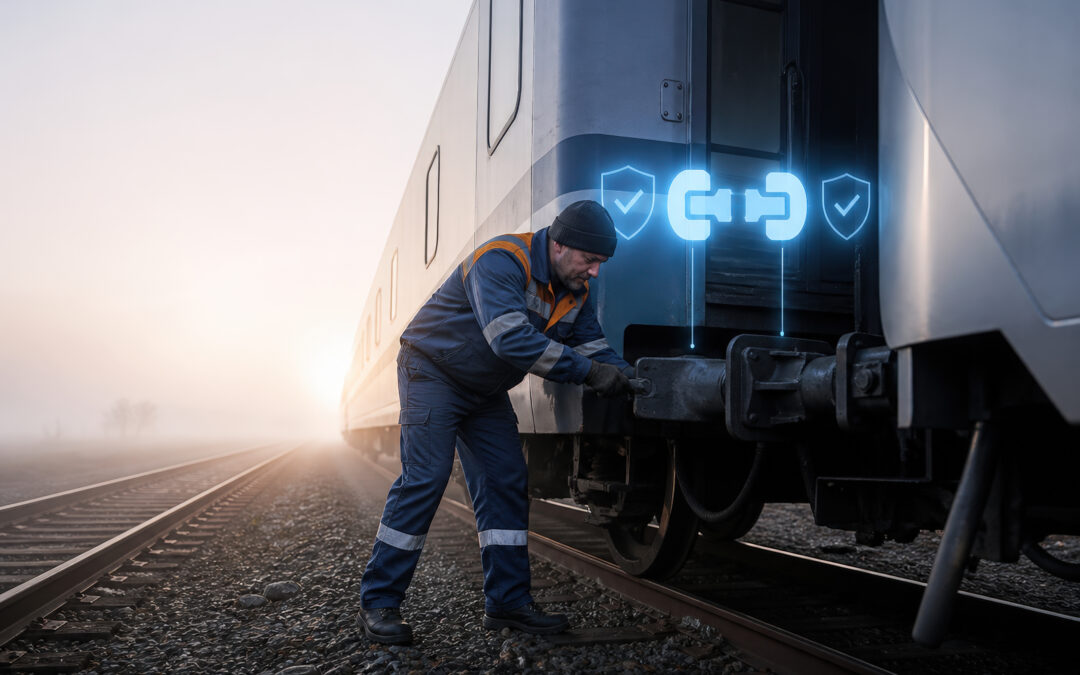
For a successful and effective implementation of the Digital Automatic Coupler for European rail freight (DAC), it is of crucial importance to have open, close and efficient cooperation between rail stakeholders. The European DAC Delivery Programme enabled by Europe’s Rail, offers a unique European platform for such cooperation and collaboration.
Discover how Europe’s Rail Joint Undertaking is calling for a bold, coordinated investment strategy to simplify and modernise rail systems across the EU. This public-private partnership model – outlined in our High-Level Paper – proposes an €18 billion investment from 2028 to 2034 to strengthen European competitiveness, deliver greener transport, and drive technological sovereignty.

The Shift2Rail Joint Undertaking is the predecessor programme of the Europe's Rail Joint Undertaking (EU-Rail), established by Council Regulation (EU) 2021/2085 of 19 November 2021.

Discover detailed information on Europe's rail innovation initiatives, showcasing flagship and other projects aimed at enhancing rail systems across Europe. It highlights collaborative efforts funded by the European Union to develop sustainable, efficient, and competitive rail transport solutions.

Europe’s Rail Catalogue of Solutions illustrates successful R&I results in the form of possible products and solutions, while highlighting the benefits for final users, operators, infrastructure managers and/or suppliers. This publication also outlines the advantages of integrating demonstrators into market solutions so that they can deliver the rail innovation Capabilities of the future.
Europe’s Rail Joint Undertaking (EU-Rail) is the European partnership on rail research and innovation established under the Horizon Europe programme (2020-2027) and the universal successor of the Shift2Rail Joint Undertaking.

Find out the full list of Europe's Rail Members.

Discover the full structure and governance of Europe's Rail, including the decisions of the Governing Board.

Get access to Europe's Rail main reference documents, including Annual Work Plans, Annual Activity Reports, Annual Accounts and other important information.
We are pleased to announce that the FP2-R2DATO podcast series is now available!
Across five episodes, the podcast explores the project’s vision, technological innovations, research activities, and the perspectives of the railway sector. It provides an accessible overview of the objectives and achievements of FP2-R2DATO.
🎧 Listen to the episodes:
Whether you attended the FP2-R2DATO Final Event or would simply like to learn more about the project and its outcomes, we invite you to discover the full podcast series.
Happy listening!
Final Event presentation and demo posters of day 1
ISoLa & AISoLA 2026 International Symposium on Leveraging Applications of Formal Methods, Verification, and Validation
This paper presents an ontology-driven modelling framework for modern ETCS-based railway systems, which are becoming increasingly distributed and complex. The approach introduces a train-centric, architecture-independent model that serves as a common basis for requirements, behaviour modelling, and validation. Different railway architectures (such as traditional, hybrid, and dynamic route concepts) are represented through constraint-based refinements rather than by changing the model structure itself. This enables the reuse of verification and testing artefacts across architectural variants and supports consistent comparison and analysis of alternative railway system designs.
ION GNSS+ 2026 conference
This paper proposes a method for achieving meter-level train localization using only speed measurements and disturbances in the Earth’s magnetic field caused by railway infrastructure. A Kalman filter combines wheel encoder data with a magnetic-field-based localization and calibration algorithm to estimate train position. Tested on real data from Deutsche Bahn’s TrainLab in Berlin, the approach demonstrates high accuracy, achieving a position error below 0.5 meters, showing the feasibility of magnetic field-based train localization.
APMS conference
This paper examines how Serious Games (SGs) can support collaboration and knowledge integration in complex innovation projects involving multiple disciplines and organizations. Using a European rail innovation project as a case study, it shows how a Serious Game helped participants understand, discuss, and refine a Business Case methodology used as a boundary object. The results demonstrate that SGs can foster shared understanding, collective sensemaking, and cross-functional dialogue, making them valuable tools for improving collaboration and methodological alignment in complex innovation environments.
Promotional presentation of R2DATO at the screen at UITP booth.
Youtube video shared by CEDEX showcasing its work as part of the ERJU’s FP2 project to promote digitalization for a more efficient rail network.
Link: https://www.youtube.com/watch?v=Zdwu8f7Vkow
Young Railcongres 2026
The workshop will consist of informing people on ATO/RTO, a presentation on the tests that were performed as part of R2DATO, and an interactive group-based challenge on the key dilemmas, choices and challenges surrounding autonomous and remote shunting.
Vehicular Technology Conference Spring 2026
This study evaluates a train-to-train communication and localization system for autonomous rail operations, particularly for virtually coupled train sets and self-driving freight wagons. Real-world tests show that short-range communication and relative positioning enable reliable data exchange and accurate ranging up to 250 m, confirming the feasibility of a decentralized framework for future autonomous trains.
TRA 2026
This paper presents the WP46 regional line demonstrator developed within the Europe’s Rail R2DATO project. The work focuses on the validation of GoA3/GoA4 automation functions developed according to the R2DATO specifications and demonstrated on a fully operational regional railway line in Czechia while ensuring interoperability with ERTMS/ETCS. The paper describes the demonstrator architecture and the role of key technical enablers, including perception, absolute safe train positioning (ASTP), remote control, and automation decision-making modules. It also explains the traceability between ATO GoA3/GoA4 use cases and requirements and the scenario-based test programme prepared for the Kopidlno–Dolní Bousov line using the EDITA experimental vehicle. The proposed approach combines laboratory validation, system integration, and on-track testing to verify system behaviour under realistic operational conditions. Particular attention is given to interoperability and interchangeability of modules provided by multiple suppliers. The work provides a practical basis for the 2026 demonstration campaign and contributes feedback to the ongoing development of GoA3/GoA4 specifications.
TRA 2026
Taking a step back on the work done in WP3, an article has been developed with some contributors of WP3, to reflect if the approach adopted for the architecture prepared in FP2-R2DATO WP3.1 was robust, considering the complexity of DATO technology introduction. The abstract prepared during the summer was accepted by TRA organizing team and they propose us to present the article as a poster during the conference.
The paper is exploratory but consistent with the work done in WP3 and overall objective of the projects. Our intension is to remind the importance and the challenge of the work we do together in the project, while giving hints on what we must continue to discuss and work out together.