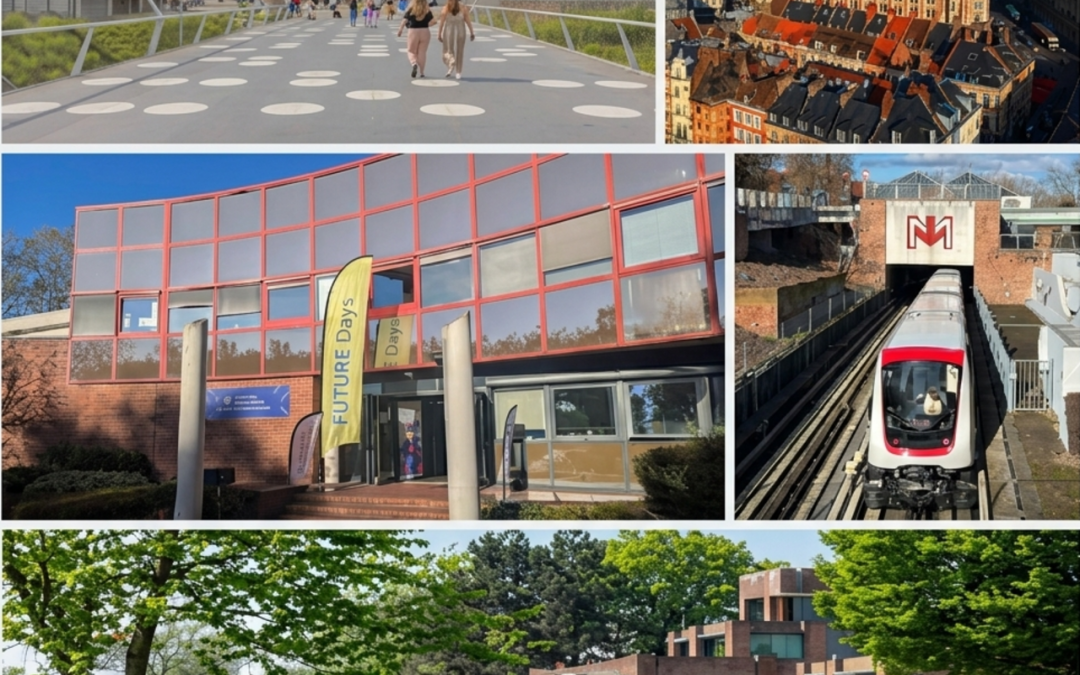
28 September 2026 - The vision of a harmonised European Rail Traffic Management System took shape today at the side...
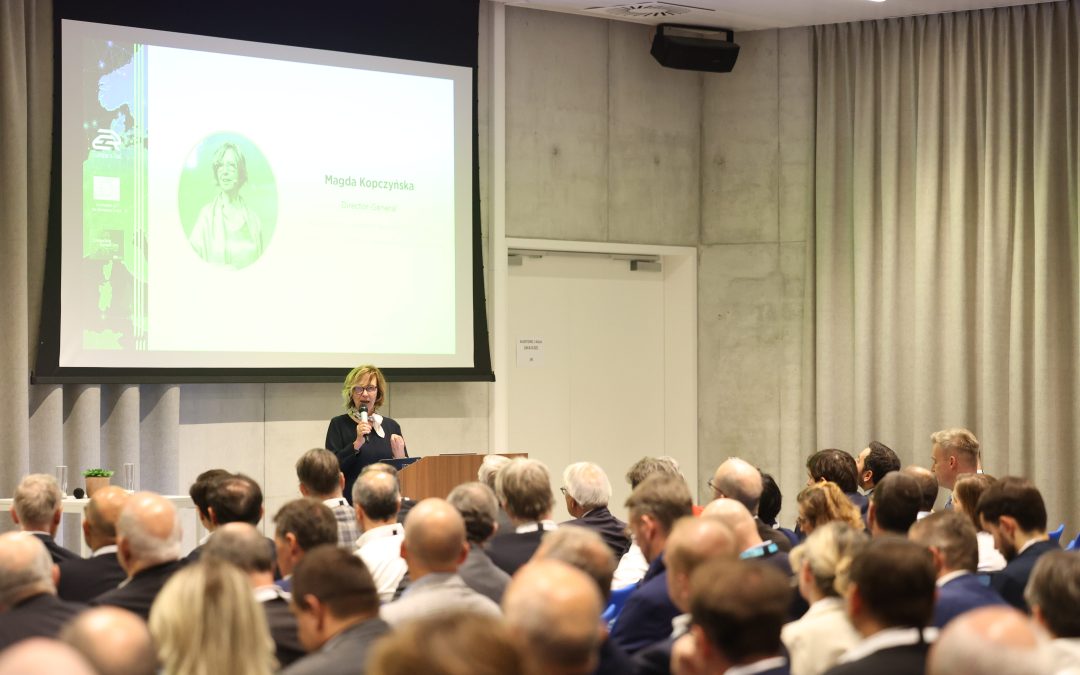
“ERTMS Deal” Side Event at Connecting Europe Days 2026: Kick-starting ERTMS Deployment in Europe
read more

A body of the
European Union

Access the list of all EU-Rail Calls for Proposals.

On 21 June 2024, the Governing Board of Europe’s Rail Joint Undertaking (EU-Rail) adopted a Call for Expression of Interest (CEI) with a view to selecting associated members with the potential to contribute to the achievement of its objectives. The Governing Board decision can be accessed here.
Discover detailed information about procurment rules and information.
Access detailed information about past tenders.

Europe's Rail regularly published Calls for Tenders. To find out about open Calls, follow link below.

Article 15 (Principle of transparency) of the EU-Rail financial rules states that the JU shall make available on its internet site no later than 30 June of the following financial year information on the recipients of funds deriving from its budget.

EU-Rail’s Innovation Pillar (IP) is tasked to deliver operational and technological solutions that contribute to a more efficient, flexible, and demand-led, yet safe and environmentally sustainable European railway system.

The System Pillar provides governance, resource, and outputs to support a coherent and coordinated approach to the evolution of the rail system and the development of the system view.

The Deployment Group advises the EU-Rail Governing Board on the market uptake of rail innovation developments and support their deployment.
For a successful and effective implementation of the Digital Automatic Coupler for European rail freight (DAC), it is of crucial importance to have open, close and efficient cooperation between rail stakeholders. The European DAC Delivery Programme enabled by Europe’s Rail, offers a unique European platform for such cooperation and collaboration.
Discover how Europe’s Rail Joint Undertaking is calling for a bold, coordinated investment strategy to simplify and modernise rail systems across the EU. This public-private partnership model – outlined in our High-Level Paper – proposes an €18 billion investment from 2028 to 2034 to strengthen European competitiveness, deliver greener transport, and drive technological sovereignty.

The Shift2Rail Joint Undertaking is the predecessor programme of the Europe's Rail Joint Undertaking (EU-Rail), established by Council Regulation (EU) 2021/2085 of 19 November 2021.

Discover detailed information on Europe's rail innovation initiatives, showcasing flagship and other projects aimed at enhancing rail systems across Europe. It highlights collaborative efforts funded by the European Union to develop sustainable, efficient, and competitive rail transport solutions.

Europe’s Rail Catalogue of Solutions illustrates successful R&I results in the form of possible products and solutions, while highlighting the benefits for final users, operators, infrastructure managers and/or suppliers. This publication also outlines the advantages of integrating demonstrators into market solutions so that they can deliver the rail innovation Capabilities of the future.
Europe’s Rail Joint Undertaking (EU-Rail) is the European partnership on rail research and innovation established under the Horizon Europe programme (2020-2027) and the universal successor of the Shift2Rail Joint Undertaking.

Find out the full list of Europe's Rail Members.

Discover the full structure and governance of Europe's Rail, including the decisions of the Governing Board.

Get access to Europe's Rail main reference documents, including Annual Work Plans, Annual Activity Reports, Annual Accounts and other important information.
The aim of this report is to gather all relevant information for the development of successful, innovative, and useful exoskeleton and augmented reality technologies for assistance in railway maintenance operations.
FP3 – IAM4RAIL WP18 was structured around 2 timeframes. In the short-term view, maintenance robots are being developed. Those robots meet business needs expressed by partners. The aims are different: some want to accompany the growth of their transport offer without having to increase the surface area of their maintenance facilities, others want to acquire new resources to accelerate an equipment deployment program, and still others want to reduce their costs or improve the quality of the information they collect.
To ensure that developments continue beyond these 4 robots, the work package aims to structure a railway robotics ecosystem in the medium-term view. This ecosystem supports the technical policy of robot modularity, which is essential for the expansion of robotics in railway maintenance.
In this first year of work, we set out to determine the main guidelines that will govern the development of common tools and methodologies for our ecosystem. The purpose of this document is to set out these orientations.
So far, the use of additive manufacturing for the repair of metal components in the railway industry has not yet seen significant adoption. These activities remain mainly labour-intensive and insufficiently industrialised. Therefore, there is considerable room for improvement and progress in the sector. On the other hand, the use of different additive manufacturing technologies with polymers for the development of railway spare parts is somewhat more developed than in the case of the repair of metallic railway elements, but even so it also has a wide field of work, in which important improvements can be made together with the development of their digital storage.
The objective of this document is to describe the general architecture and the core requirements of an Intelligent Asset management System implemented in the context of a railway scenario.
D3.1 provides the necessary information to allow the design and implementation of a IAMS platform capable of collecting data from different sources and supporting both the maintenance and TMS operators in carrying out their task more effectively.
Additionally, the 2 use cases where this system will be implemented are described in detail, providing also information about the main objectives to achieve and how the whole system will be then tested and validated at the end of the project.
This document, D10.1 in FP3-IAM4RAIL, outlines high-level system architecture aligned with EURAIL Multi-Annual Work Programme (MAWP). It is the initial output of work package 10, focusing on Intelligent Asset Management Strategies (IAMS) application refinement. Work packages 10 and 11 are vital components, addressing infrastructure asset management in FP3-IAM4RAIL. The document details the approach, use cases and architecture for WP10/11.
The present document is focused mainly on the description of the vision of the future European Railway Checkpoints (ERC) from a holistic point of view.
This deliverable summarizes the activities covered in Work Package (WP) 5 as part of the Europe’s Rail Joint Undertaking (ERJU) Flagship project 3 – IAM4RAIL. The aim of this WP has been to align, develop and to some extent test different strategies and technologies to collect and transfer data using on-board technology for rolling stock. In this work package, several different companies, including Alstom, CAF, Talgo, the Dutch Railways (NS), Faiveley and Knorr-Bremse have collaborated to create concepts that are feasible and target current pain points across the fleets. Some solutions are based on new sensing equipment implemented at key points of the subsystems, while others target a wider harnessing of variables available on the train in order to support large scale data analysis. Moving on from WP5, these concepts will be applied in the demonstrators planned throughout the project as part of WP6.
Definition of Use Cases, including Innovation, Business Assessment, KPIs definition and roadmap (first issue)