As part of the preparations and impact assessment for the next legislative framework governing European partnerships...

Public Consultation: Shape the future of European partnerships
read more

A body of the
European Union

Access the list of all EU-Rail Calls for Proposals.

On 21 June 2024, the Governing Board of Europe’s Rail Joint Undertaking (EU-Rail) adopted a Call for Expression of Interest (CEI) with a view to selecting associated members with the potential to contribute to the achievement of its objectives. The Governing Board decision can be accessed here.
Discover detailed information about procurment rules and information.
Access detailed information about past tenders.

Europe's Rail regularly published Calls for Tenders. To find out about open Calls, follow link below.

Article 15 (Principle of transparency) of the EU-Rail financial rules states that the JU shall make available on its internet site no later than 30 June of the following financial year information on the recipients of funds deriving from its budget.

EU-Rail’s Innovation Pillar (IP) is tasked to deliver operational and technological solutions that contribute to a more efficient, flexible, and demand-led, yet safe and environmentally sustainable European railway system.

The System Pillar provides governance, resource, and outputs to support a coherent and coordinated approach to the evolution of the rail system and the development of the system view.

The Deployment Group advises the EU-Rail Governing Board on the market uptake of rail innovation developments and support their deployment.
For a successful and effective implementation of the Digital Automatic Coupler for European rail freight (DAC), it is of crucial importance to have open, close and efficient cooperation between rail stakeholders. The European DAC Delivery Programme enabled by Europe’s Rail, offers a unique European platform for such cooperation and collaboration.
Discover how Europe’s Rail Joint Undertaking is calling for a bold, coordinated investment strategy to simplify and modernise rail systems across the EU. This public-private partnership model – outlined in our High-Level Paper – proposes an €18 billion investment from 2028 to 2034 to strengthen European competitiveness, deliver greener transport, and drive technological sovereignty.

The Shift2Rail Joint Undertaking is the predecessor programme of the Europe's Rail Joint Undertaking (EU-Rail), established by Council Regulation (EU) 2021/2085 of 19 November 2021.

Discover detailed information on Europe's rail innovation initiatives, showcasing flagship and other projects aimed at enhancing rail systems across Europe. It highlights collaborative efforts funded by the European Union to develop sustainable, efficient, and competitive rail transport solutions.

Europe’s Rail Catalogue of Solutions illustrates successful R&I results in the form of possible products and solutions, while highlighting the benefits for final users, operators, infrastructure managers and/or suppliers. This publication also outlines the advantages of integrating demonstrators into market solutions so that they can deliver the rail innovation Capabilities of the future.
Europe’s Rail Joint Undertaking (EU-Rail) is the European partnership on rail research and innovation established under the Horizon Europe programme (2020-2027) and the universal successor of the Shift2Rail Joint Undertaking.

Find out the full list of Europe's Rail Members.

Discover the full structure and governance of Europe's Rail, including the decisions of the Governing Board.

Get access to Europe's Rail main reference documents, including Annual Work Plans, Annual Activity Reports, Annual Accounts and other important information.
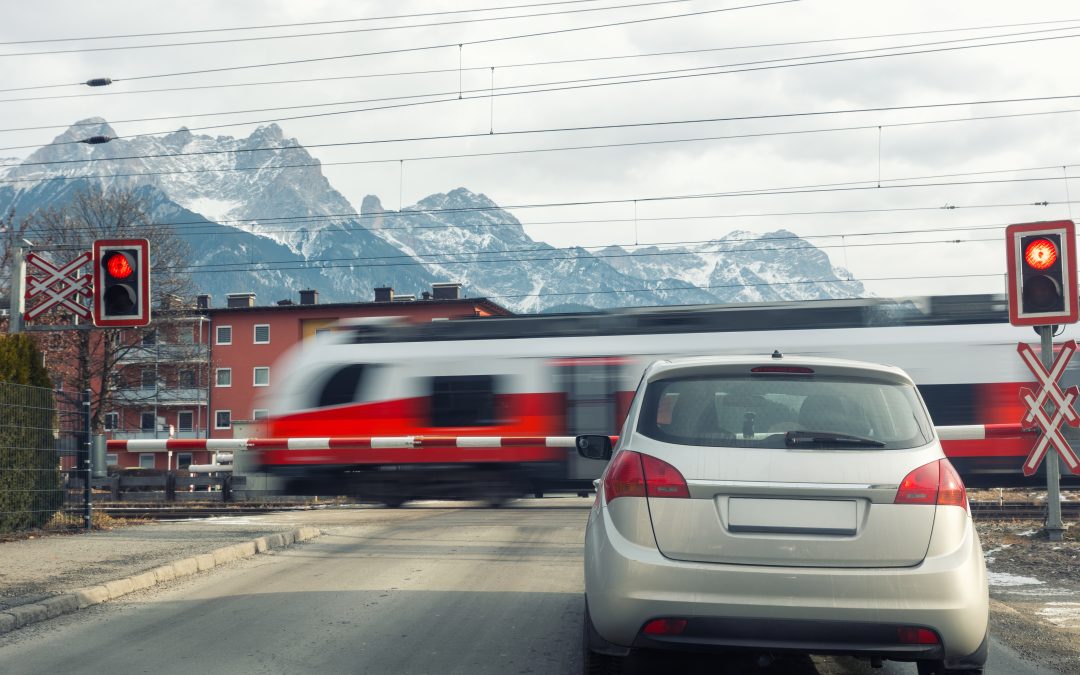
Across Europe, railway networks combine high-capacity mainlines with a large number of regional lines operating under different technical and operational conditions. Ensuring consistency and interoperability across these environments is a key focus area. Europe’s Rail (EU-RAIL) contributes to this transition through an integrated control platform.

A safety-certified integrated Interlocking (IxL)/Radio Block Center (RBC) platform has been demonstrated to enable movement authority issuance and remote control within a unified framework, with a specific focus on Group 2 (G2) regional lines*. These lines often face budget constraints and rely on legacy systems, requiring solutions that ensure high safety while reducing lifecycle costs.
The integrated IxL/RBC architecture centralises signalling functions within a single Operational Control Centre (OCC), combining movement authority management, route setting, train detection and remote operations.
It supports radio‑based supervision through continuous train-to-RBC communication, simplifying and enabling more scalable and cost-efficient deployment.
Designed with a modular architecture, the solution supports different levels of automation, digital supervision features, and flexible integration with existing infrastructure components, including level‑crossing control systems, remote diagnostic tools and energy‑autonomous field devices. This modularity allows the solution to be adapted to the varying degrees of complexity found across European regional networks, ensuring interoperability and long‑term upgradability.
In addition, the IxL/RBC solution is designed to become a key enabler for digitalised, customer‑oriented regional operations. Its cloud‑ready architecture also allows future migration toward virtualised interlocking environments, further reducing total cost of ownership and enabling centralised fleet and infrastructure management.
The next industrialisation phase focuses on extended pilot deployments, integration with low‑cost onboard positioning sources and progressive alignment with evolving EU‑Rail reference architectures for signalling and remote‑operation concepts.
TRL 5 .
Up to 40% CAPEX/OPEX reduction can be achieved across wayside, Radio Block Center (RBC) and interlocking by consolidating functions in a Operational Control Center.


This integrated IxL/RBC approach enables more consistent and scalable regional railway systems, acting as a key enabler for digitalised, customer-oriented regional operations.

This solution has been developed within the EU-Rail Flagship Project FP6-FutuRe, whose overall objectives are to ensure the long-term viability of the regional railway by reducing the total cost of ownership (TCO), while ensuring high service quality and operational reliability.