Pods4Rail D10.1 Concept development for equipment of sample vessel Pods4Rail develops a modular, autonomous transport...
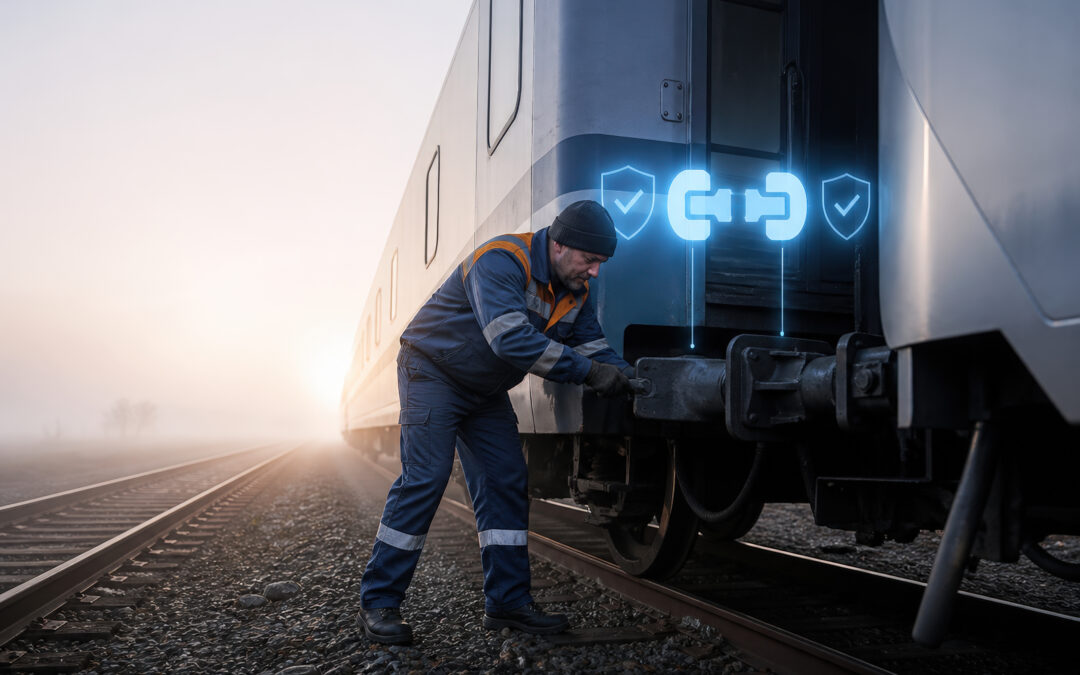
Deliverables: Results Published in October 2026
read more


A body of the
European Union

Access the list of all EU-Rail Calls for Proposals.

On 21 June 2024, the Governing Board of Europe’s Rail Joint Undertaking (EU-Rail) adopted a Call for Expression of Interest (CEI) with a view to selecting associated members with the potential to contribute to the achievement of its objectives. The Governing Board decision can be accessed here.
Discover detailed information about procurment rules and information.
Access detailed information about past tenders.

Europe's Rail regularly published Calls for Tenders. To find out about open Calls, follow link below.

Article 15 (Principle of transparency) of the EU-Rail financial rules states that the JU shall make available on its internet site no later than 30 June of the following financial year information on the recipients of funds deriving from its budget.

EU-Rail’s Innovation Pillar (IP) is tasked to deliver operational and technological solutions that contribute to a more efficient, flexible, and demand-led, yet safe and environmentally sustainable European railway system.

The System Pillar provides governance, resource, and outputs to support a coherent and coordinated approach to the evolution of the rail system and the development of the system view.

The Deployment Group advises the EU-Rail Governing Board on the market uptake of rail innovation developments and support their deployment.
For a successful and effective implementation of the Digital Automatic Coupler for European rail freight (DAC), it is of crucial importance to have open, close and efficient cooperation between rail stakeholders. The European DAC Delivery Programme enabled by Europe’s Rail, offers a unique European platform for such cooperation and collaboration.
Discover how Europe’s Rail Joint Undertaking is calling for a bold, coordinated investment strategy to simplify and modernise rail systems across the EU. This public-private partnership model – outlined in our High-Level Paper – proposes an €18 billion investment from 2028 to 2034 to strengthen European competitiveness, deliver greener transport, and drive technological sovereignty.

The Shift2Rail Joint Undertaking is the predecessor programme of the Europe's Rail Joint Undertaking (EU-Rail), established by Council Regulation (EU) 2021/2085 of 19 November 2021.

Discover detailed information on Europe's rail innovation initiatives, showcasing flagship and other projects aimed at enhancing rail systems across Europe. It highlights collaborative efforts funded by the European Union to develop sustainable, efficient, and competitive rail transport solutions.

Europe’s Rail Catalogue of Solutions illustrates successful R&I results in the form of possible products and solutions, while highlighting the benefits for final users, operators, infrastructure managers and/or suppliers. This publication also outlines the advantages of integrating demonstrators into market solutions so that they can deliver the rail innovation Capabilities of the future.
Europe’s Rail Joint Undertaking (EU-Rail) is the European partnership on rail research and innovation established under the Horizon Europe programme (2020-2027) and the universal successor of the Shift2Rail Joint Undertaking.

Find out the full list of Europe's Rail Members.

Discover the full structure and governance of Europe's Rail, including the decisions of the Governing Board.

Get access to Europe's Rail main reference documents, including Annual Work Plans, Annual Activity Reports, Annual Accounts and other important information.
D4.1 List of use cases and optimisation criteria
QUIETERRAIL aims to support the development of quieter and more sustainable railway infrastructure by addressing noise and vibration challenges through a whole-system approach. The Deliverable 4.1 presents the outcomes of Task 4.1 which focuses on defining representative use cases and optimisation criteria for railway track systems, based on extensive consultations with infrastructure managers and other railway stakeholders. The work identifies typical track configurations, relevant cost data, mitigation measures, and key technical constraints.
The project also establishes a set of optimisation criteria that will support a web-based decision-support tool. These include noise and vibration performance, life-cycle costs, RAMS parameters, and health, environmental and societal impacts. Together, these criteria provide a framework for evaluating infrastructure solutions and support more informed, evidence-based decision-making for railway planning and maintenance.
How it brings us closer to achieving better rail for Europe: QuieterRail supports more sustainable and cost-effective railway infrastructure management. This helps improve the environmental performance and public acceptance of rail transport, contributing to a more attractive railway system across Europe.
Target audience: Rail stakeholders, Infrastructure managers, Member States, Researchers
More information on this topic: QUIETERRAIL
D2.1 Architecture and working plan of the continuous ERJU scientific observatory
Academics4Rail aims to establish a stable and long-lasting scientific community that facilitates structured knowledge exchange between academia, Europe’s Rail, and ERRAC. This collaboration spans multiple levels, from strategic research agendas to concrete technical innovations through coordinated scientific contributions.
The deliverable 2.1. presents the methodology used in Task 2.1. containing a study and synthesis of past and ongoing research activities and establishes a data base and framework upon which the proposed scientific observatory may be built. The data base contains a review of Shift2Rail MAWP, calls, deliverables, assessment reports and an analysis of the documents generated. The goal of the Task is to setup the observatory by reviewing Shift2Rail Outputs, providing an analysis of Migration Documents from Shift2Rail to Europe’s Rail and a synthesis and roadmap development.
This task sets the foundation for a scientific observatory to monitor and guide future research. Shift2Rail has made notable progress in rail technology by improving interoperability, cost-efficiency, and sustainability, particularly through its structured Innovation Programs (IPs). In the transition to Europe’s Rail, the focus has expanded to AI, IoT, and Big Data, while addressing automation, green initiatives, and intelligent asset management. However, gaps remain, particularly in advancing research outputs to higher technology readiness levels (TRLs) and ensuring continuity in funding and partner involvement.
How it brings us closer to achieving better rail for Europe: Academics4Rail strengthens Europe’s research and innovation capacity in railway technologies. This project ensures continuity between research programmes and supports evidence-based decision-making.
Target audience: Rail stakeholders, Member States, Researchers, Policy-makers
More information on this topic: ACADEMICS4RAIL
D2.2. Position paper on detected research gaps and proposals to cover them
Academics4Rail aims to establish a stable and long-lasting scientific community that facilitates structured knowledge exchange between academia, Europe’s Rail, and ERRAC. This collaboration spans multiple levels, from strategic research agendas to concrete technical innovations through coordinated scientific contributions.
This document highlights key gaps in current research activities, drawing on the UIC 12 Capabilities assessment and academic surveys on future research areas, to better understand how research efforts can support long-term sector needs.
Building on the transition from Shift2Rail (S2R) to the Europe’s Rail Joint Undertaking (ERJU), the paper reviews past Innovation Programmes and their contribution to technology development and higher Technology Readiness Levels. The analysis identifies remaining gaps, particularly in long-term foundational research, interdisciplinary collaboration, and emerging technologies, and proposes strategic actions to improve coherence between academic research and railway sector priorities, ensuring stronger innovation impact and future competitiveness.
A strong alignment with the European Goals was identified, with sustainability as a core priority and a need for greater Industry-Academic Integration and some research challenges. A systematic approach to research gaps is recommended and a framework for future collaboration to ensure alignment with long-term transport and sustainability goals.
How it brings us closer to achieving better rail for Europe: Academics4Rail strengthens Europe’s research and innovation capacity in railway technologies. This work helps better align future research priorities with Europe’s strategic rail objectives and supports a more coordinated and impactful research ecosystem, improving the transfer of knowledge into innovation and deployment.
Target audience: Rail stakeholders, Member States, Researchers
More information on this topic: ACADEMICS4RAIL