Europe’s Rail Newsletter – September Edition The September edition of the Europe’s Rail newsletter is out! 🚆 This...
EU-Rail September 2026 Newsletter
read more
A body of the
European Union

Access the list of all EU-Rail Calls for Proposals.

On 21 June 2024, the Governing Board of Europe’s Rail Joint Undertaking (EU-Rail) adopted a Call for Expression of Interest (CEI) with a view to selecting associated members with the potential to contribute to the achievement of its objectives. The Governing Board decision can be accessed here.
Discover detailed information about procurment rules and information.
Access detailed information about past tenders.

Europe's Rail regularly published Calls for Tenders. To find out about open Calls, follow link below.

Article 15 (Principle of transparency) of the EU-Rail financial rules states that the JU shall make available on its internet site no later than 30 June of the following financial year information on the recipients of funds deriving from its budget.

EU-Rail’s Innovation Pillar (IP) is tasked to deliver operational and technological solutions that contribute to a more efficient, flexible, and demand-led, yet safe and environmentally sustainable European railway system.

The System Pillar provides governance, resource, and outputs to support a coherent and coordinated approach to the evolution of the rail system and the development of the system view.

The Deployment Group advises the EU-Rail Governing Board on the market uptake of rail innovation developments and support their deployment.
For a successful and effective implementation of the Digital Automatic Coupler for European rail freight (DAC), it is of crucial importance to have open, close and efficient cooperation between rail stakeholders. The European DAC Delivery Programme enabled by Europe’s Rail, offers a unique European platform for such cooperation and collaboration.
Discover how Europe’s Rail Joint Undertaking is calling for a bold, coordinated investment strategy to simplify and modernise rail systems across the EU. This public-private partnership model – outlined in our High-Level Paper – proposes an €18 billion investment from 2028 to 2034 to strengthen European competitiveness, deliver greener transport, and drive technological sovereignty.

The Shift2Rail Joint Undertaking is the predecessor programme of the Europe's Rail Joint Undertaking (EU-Rail), established by Council Regulation (EU) 2021/2085 of 19 November 2021.

Discover detailed information on Europe's rail innovation initiatives, showcasing flagship and other projects aimed at enhancing rail systems across Europe. It highlights collaborative efforts funded by the European Union to develop sustainable, efficient, and competitive rail transport solutions.

Europe’s Rail Catalogue of Solutions illustrates successful R&I results in the form of possible products and solutions, while highlighting the benefits for final users, operators, infrastructure managers and/or suppliers. This publication also outlines the advantages of integrating demonstrators into market solutions so that they can deliver the rail innovation Capabilities of the future.
Europe’s Rail Joint Undertaking (EU-Rail) is the European partnership on rail research and innovation established under the Horizon Europe programme (2020-2027) and the universal successor of the Shift2Rail Joint Undertaking.

Find out the full list of Europe's Rail Members.

Discover the full structure and governance of Europe's Rail, including the decisions of the Governing Board.

Get access to Europe's Rail main reference documents, including Annual Work Plans, Annual Activity Reports, Annual Accounts and other important information.
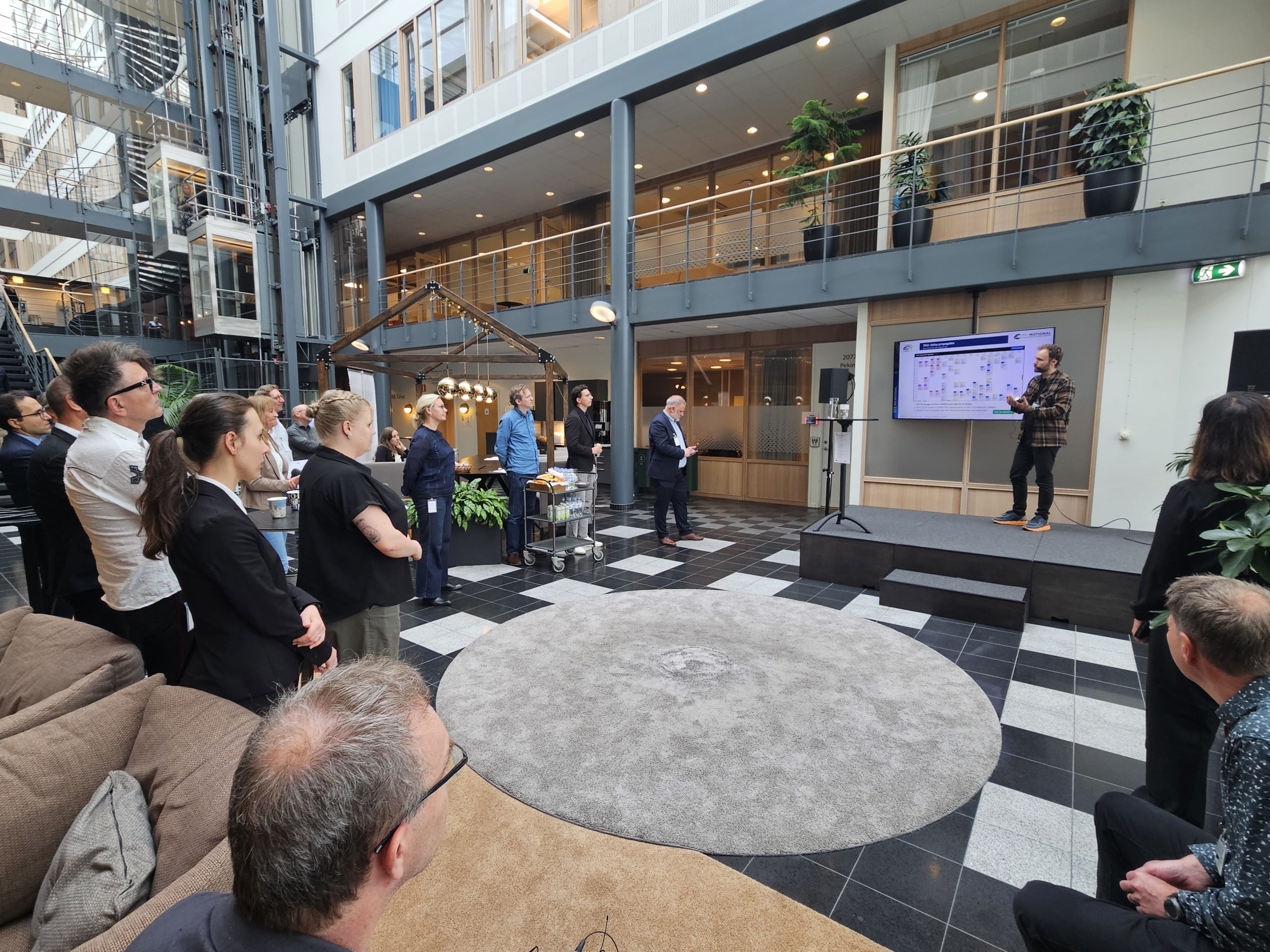
How can Europe’s railway system become more efficient, reliable and competitive? This was the central theme Cross Border Operation event on 12 May in Stockholm, Sweden, that brought together railway operators, infrastructure managers, researchers, technology providers and public authorities to showcase the latest innovations in traffic management, capacity planning and digitalisation.
A series of demonstrations highlighted how digital technologies are helping to transform both national and cross-border rail operations. A key focus was the creation of seamless information flows between organisations through the use of common European standards. Automated data exchange, real-time updates and intelligent algorithms are enabling planners and operators to identify and resolve timetable conflicts more quickly and efficiently than ever before.
Several presentations showcased advanced decision-support tools designed to help timetable planners identify available network capacity and manage ad hoc requests for additional train paths. By reducing reliance on manual processes, these solutions provide planners with better information, support more robust operational decisions and contribute to improved punctuality and network performance.
Freight operations and marshalling yards also featured prominently. New coordination systems demonstrated how infrastructure managers, railway undertakings and terminal operators can share a common real-time operational picture. These solutions are intended to improve collaboration, optimise the use of available capacity and support fair and transparent access to railway infrastructure.
Throughout the event, speakers emphasised that digitalisation alone is not enough. Success depends on effective cooperation across the sector, the adoption of interoperable standards and the ability to translate research and innovation into practical, deployable solutions. The demonstrations illustrated how the railway community is moving from concepts and prototypes towards operational tools capable of supporting the objectives of Europe’s future rail system.
The event concluded with a shared view that continued collaboration, innovation and deployment will be essential to creating a more integrated, resilient and competitive European railway network.
A collection of posters from the event is available here.