The adoption of the EU Space Programme in the rail sector has been increasing steadily over the past years. The EU´s...
Space-enabled rail: European Union partners drive interoperability, safety and digital transformation
read more
A body of the
European Union

Access the list of all EU-Rail Calls for Proposals.

On 21 June 2024, the Governing Board of Europe’s Rail Joint Undertaking (EU-Rail) adopted a Call for Expression of Interest (CEI) with a view to selecting associated members with the potential to contribute to the achievement of its objectives. The Governing Board decision can be accessed here.
Discover detailed information about procurment rules and information.
Access detailed information about past tenders.

Europe's Rail regularly published Calls for Tenders. To find out about open Calls, follow link below.

Article 15 (Principle of transparency) of the EU-Rail financial rules states that the JU shall make available on its internet site no later than 30 June of the following financial year information on the recipients of funds deriving from its budget.

EU-Rail’s Innovation Pillar (IP) is tasked to deliver operational and technological solutions that contribute to a more efficient, flexible, and demand-led, yet safe and environmentally sustainable European railway system.

The System Pillar provides governance, resource, and outputs to support a coherent and coordinated approach to the evolution of the rail system and the development of the system view.

The Deployment Group advises the EU-Rail Governing Board on the market uptake of rail innovation developments and support their deployment.
For a successful and effective implementation of the Digital Automatic Coupler for European rail freight (DAC), it is of crucial importance to have open, close and efficient cooperation between rail stakeholders. The European DAC Delivery Programme enabled by Europe’s Rail, offers a unique European platform for such cooperation and collaboration.
Discover how Europe’s Rail Joint Undertaking is calling for a bold, coordinated investment strategy to simplify and modernise rail systems across the EU. This public-private partnership model – outlined in our High-Level Paper – proposes an €18 billion investment from 2028 to 2034 to strengthen European competitiveness, deliver greener transport, and drive technological sovereignty.

The Shift2Rail Joint Undertaking is the predecessor programme of the Europe's Rail Joint Undertaking (EU-Rail), established by Council Regulation (EU) 2021/2085 of 19 November 2021.

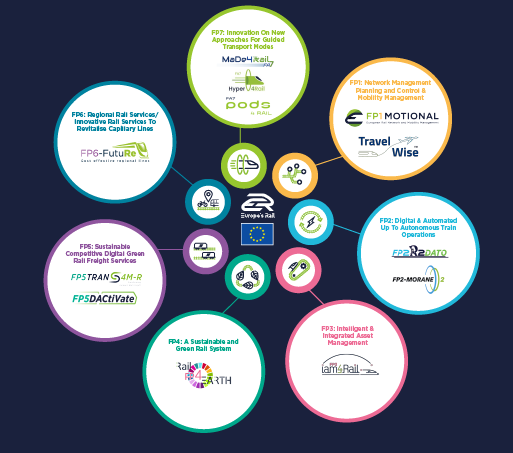
Discover detailed information on Europe's rail innovation initiatives, showcasing flagship and other projects aimed at enhancing rail systems across Europe. It highlights collaborative efforts funded by the European Union to develop sustainable, efficient, and competitive rail transport solutions.

Europe’s Rail Catalogue of Solutions illustrates successful R&I results in the form of possible products and solutions, while highlighting the benefits for final users, operators, infrastructure managers and/or suppliers. This publication also outlines the advantages of integrating demonstrators into market solutions so that they can deliver the rail innovation Capabilities of the future.
Europe’s Rail Joint Undertaking (EU-Rail) is the European partnership on rail research and innovation established under the Horizon Europe programme (2020-2027) and the universal successor of the Shift2Rail Joint Undertaking.

Find out the full list of Europe's Rail Members.

Discover the full structure and governance of Europe's Rail, including the decisions of the Governing Board.

Get access to Europe's Rail main reference documents, including Annual Work Plans, Annual Activity Reports, Annual Accounts and other important information.
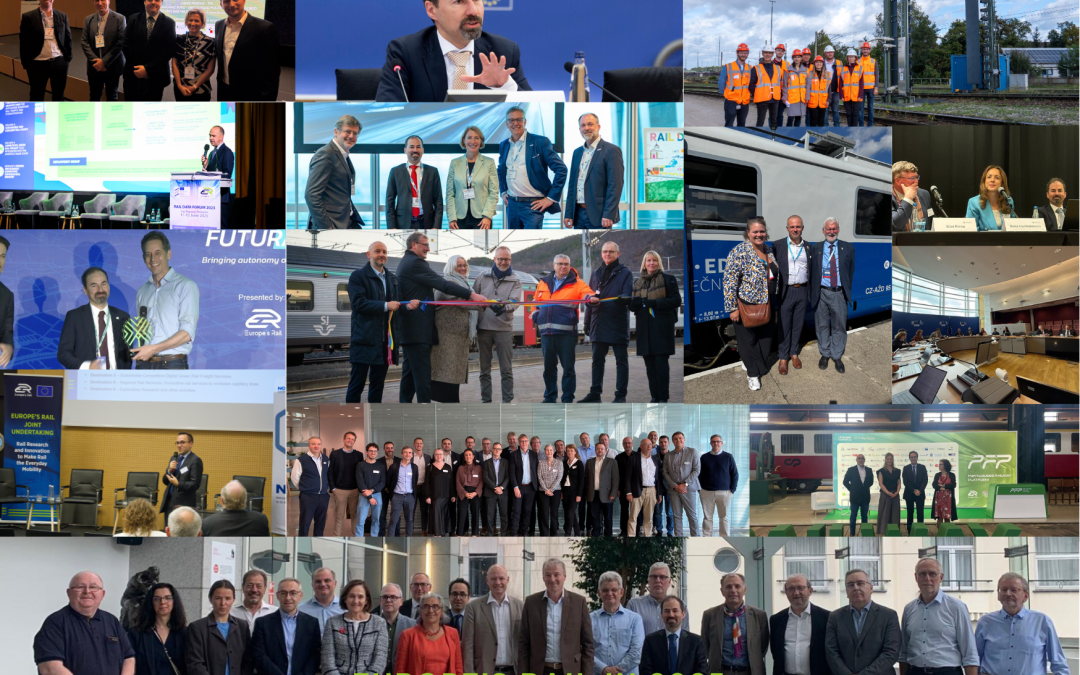
2025 saw Europe’s Rail (EU-Rail) make significant progress across multiple initiatives, fostering partnerships and advancing cutting-edge technologies. This article provides an overview of the key milestones and achievements that demonstrate EU-Rail’s commitment to building a more competitive, resilient, and efficient rail network for Europe.
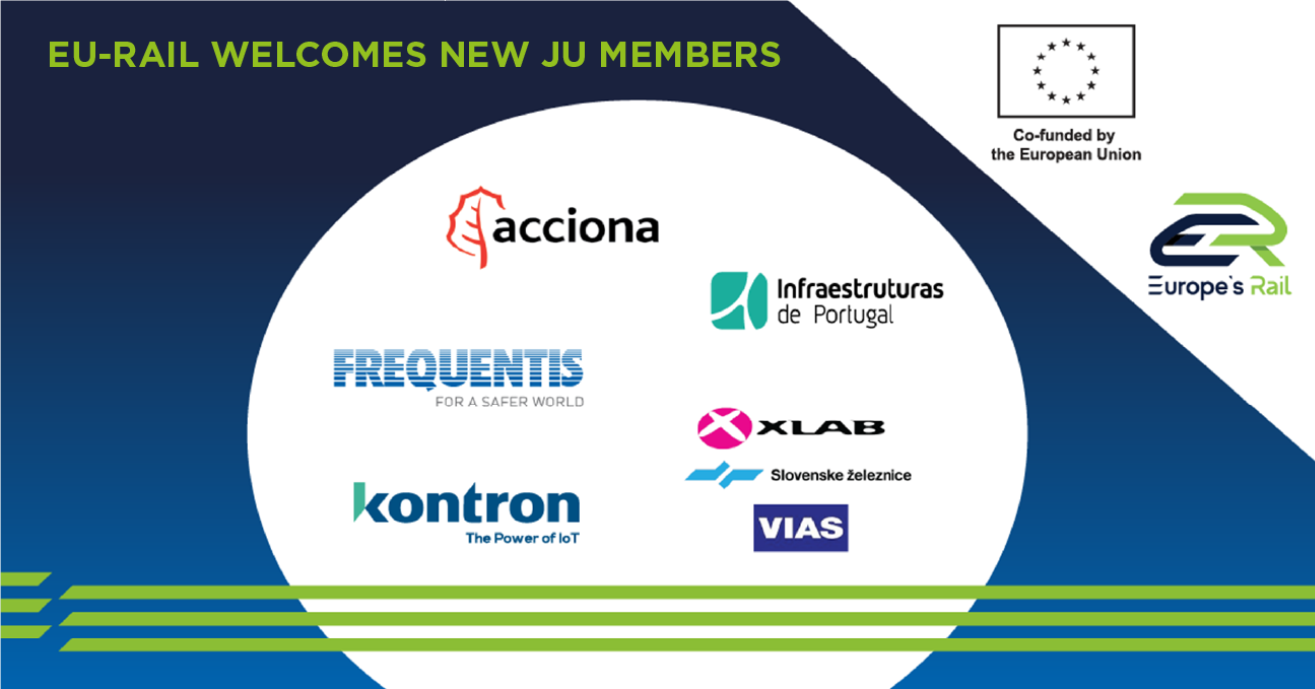
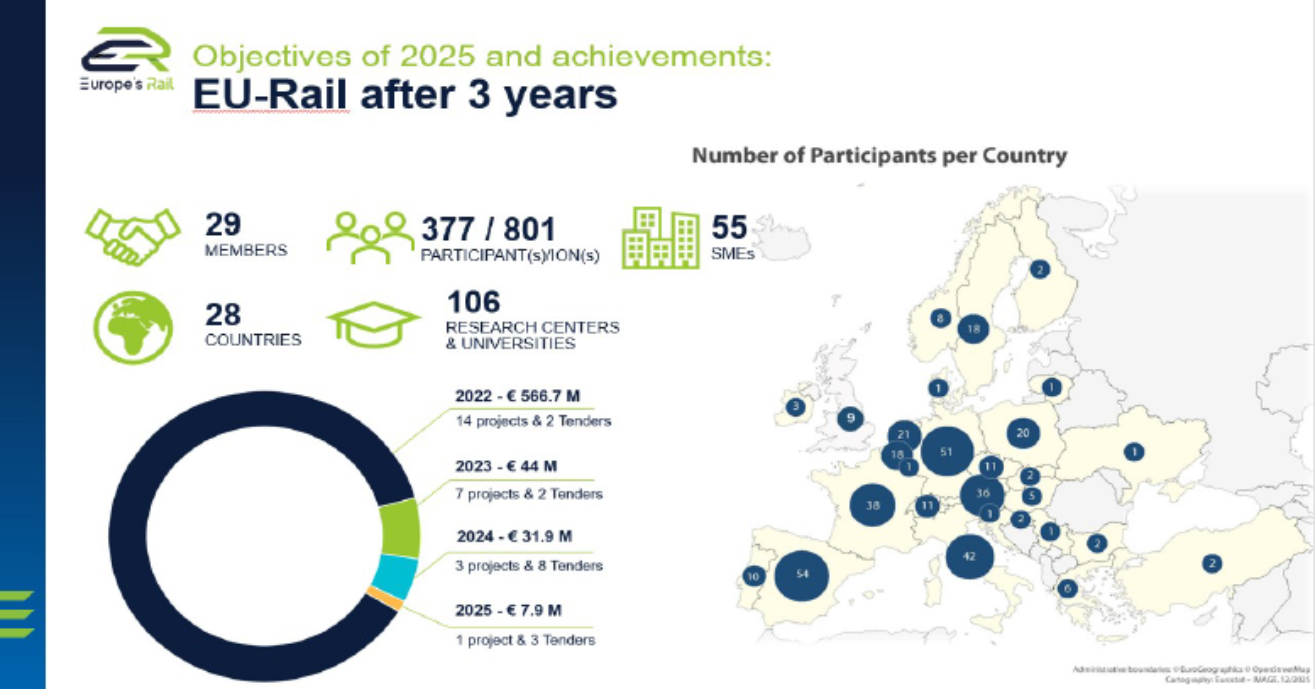
Following the open selection procedure for Associated Members launched in 2024, the EU-Rail Governing Board on 5th of February selected and, EU-Rail welcomed five new JU Members:
By bringing unique expertise in key technological and operational areas, each of these members will help advance EU-Rail’s commitment to delivering a more competitive, digital, resilient, and sustainable railway system.
The European rail sector is a strategic asset. It supports jobs, enables clean transport, and drives economic value. Rail is also central to achieving sustainability in transport, being the greenest and most energy efficient mode of mass transport.
To preserve rail’s competitive position, this year EU-Rail called for a bold, coordinated investment strategy that simplifies and modernises rail systems across the EU. As outlined in our high-level paper entitled A Future Policy-Based Public-Private Partnership for Rail (adopted on 24th June by the Governing Board), the entire membership call for a EUR 18 billion investment from 2028 to 2034, with EUR 3 billion earmarked for research and innovation and EUR 15 billion for the pre-deployment of harmonised technologies and system-wide implementation.
EU-RAIL’s High-Level paper Annexes (adopted on 2nd December by the Governing Board) outline the key strategic areas of R&I and pre-deployment needed to simplify the rail system, boost performance, and strengthen Europe’s agility, resilience, and global competitiveness. It reflects an enlarged partnership perspective, looking across the full portfolio of actors and capabilities needed to deliver meaningful and lasting change.
The high-level paper and its annex received the positive opinion of the State Representative Group, Scientific Steering Group and was also developed in full cooperation with the European Union Agency for Railways.
Two exploratory projects finished in 2025:

In addition to holding its inaugural meeting, the Group set up a first dedicated deployment group on FRMCS (Future rail mobile communication system). They already conducted a comprehensive FRMCS questionnaire to gather insights from key stakeholders and to create awareness of the upcoming large transition. The initiative aims to assess stakeholder perspectives and readiness for FRMCS implementation. The results are used to already advice ERA on optimising Test & validation and authorisation processes, a first initial cost-driver report and FRMCS migration scenario’s.
This year EU-Rail launched two new calls for proposals. The first call sought potential solutions to address current transport challenges and enhance the performance of the existing rail system through the introduction of Maglev-Derived Transport Systems (MDS).
The second call builds on the results of EU-Rail’s Flagship Projects and paves the way to the deployment of innovative operational and technological solutions in Europe, closing on 11 February 2026. The call was introduced during Europe’s Rail Info Day, where over 250 participants joined to gain key insights into the objectives of the Europe’s Rail Research and Innovation Programme and to learn how they can contribute to a smarter, more attractive, and more sustainable rail system for passengers and businesses across Europe.
To further strengthen networking and collaboration, Europe’s Rail opened a dedicated online matchmaking platform designed to connect key stakeholders from across Europe’s rail ecosystem and facilitate partnership building. The platform attracted over 500 registered participants and will remain open until the end of the call.
EU-Rail also held a Brokerage Event where participants could take part in a series of bilateral meetings to exchange ideas, build partnerships, and explore potential collaborations.
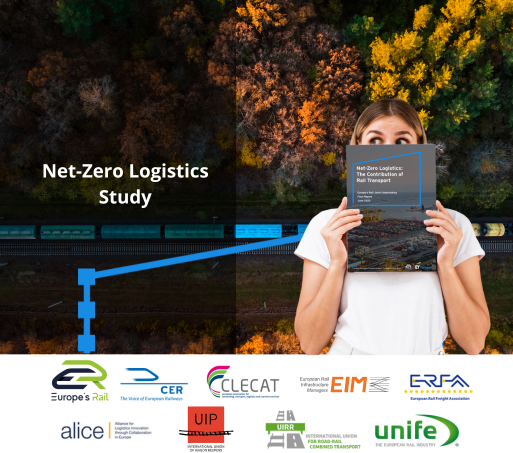
EU-Rail, together with European rail and logistics stakeholders, commissioned a groundbreaking study on the critical role rail freight plays in achieving a competitive and climate-neutral transport system. The study shows how a strong shift toward rail can deliver substantial reductions in CO₂ emissions, energy consumption, and external costs.
The findings demonstrate how investing in rail freight not only supports decarbonisation but, by offering long-term socio-economic returns, contributes to Europe’s competitiveness.
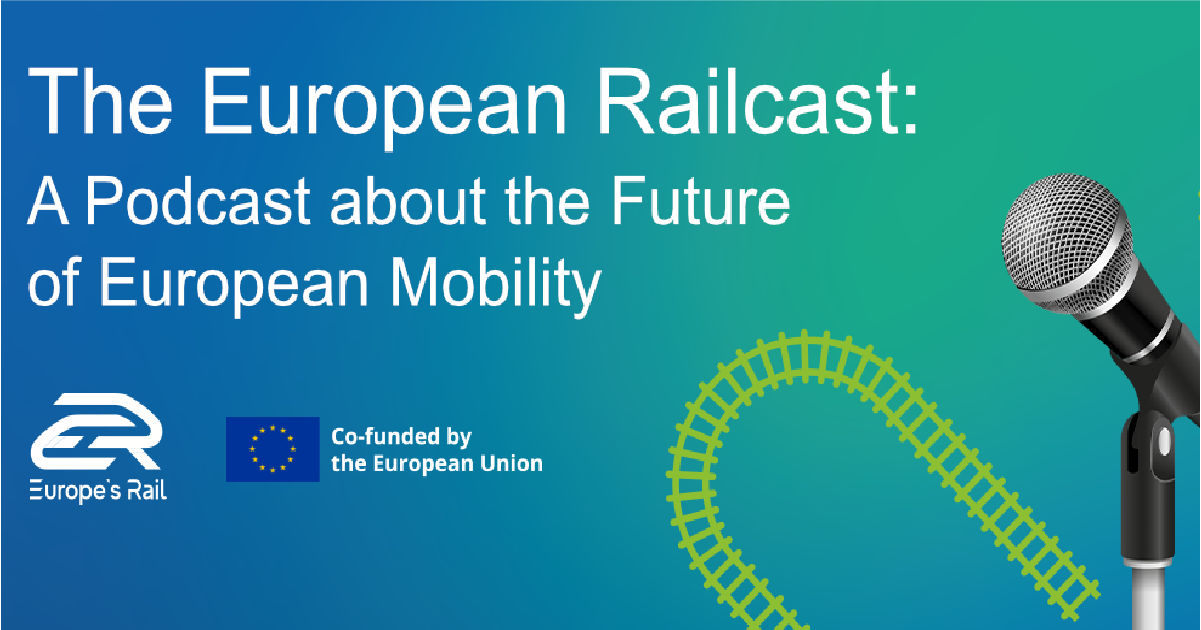
This year EU-Rail launched an exciting new podcast about the future of European mobility!
From cross-border travel to cutting-edge rail innovations, The European Railcast takes listeners inside the transformation of Europe’s rail system. Each episode brings together voices from across the sector and explores how rail is advancing Europe’s goals on climate, connectivity, competitiveness, and resilience.
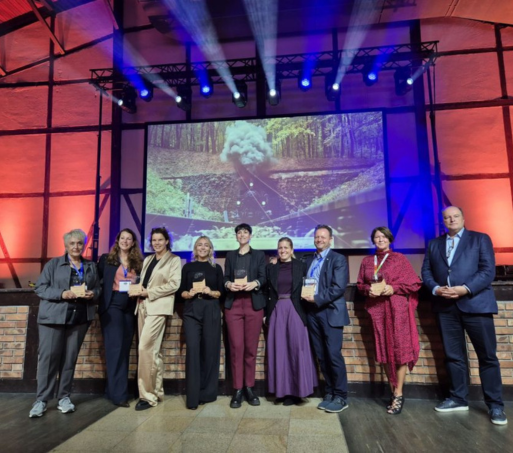
Now in its third edition, the Women in Rail Award celebrates the outstanding contributions made to gender equality, innovation, and inclusion happening across the European rail sector. This year’s winners are:
The award served as an occasion to release the 2025 Women in Rail Report, which highlights steady progress in female representation across the sector. According to the report, women now make up 23% of the railway workforce, an increase from 21% in 2018. Encouragingly, 80% of surveyed companies have adopted gender equality policy frameworks, with gains also seen in roles such as train drivers, traffic managers, on-board personnel, and middle- to senior management positions.
EU-Rail also participated in the European Startup Prize for Mobility, an initiative that celebrates Europe’s top clean mobility innovators. This year’s Rail Mobility Prize went to Futurail, a pioneer in safety-certified technology for self-driving trains.
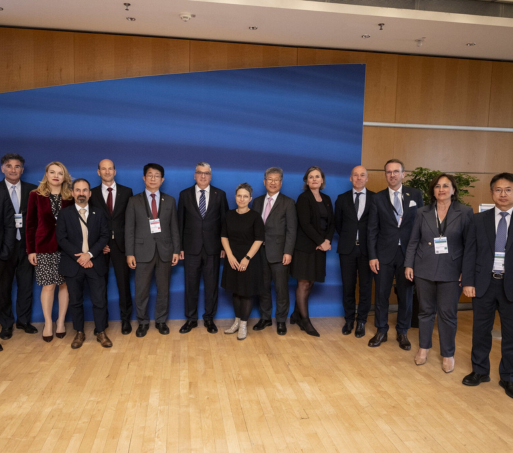
EU-Rail is convinced that strong collaboration across all stakeholders is key to improving cost-efficiency, fostering innovation, and building a more competitive, sustainable railway system for Europe. That’s why this year once again saw us participate in a range of industry and regulatory events and discussions, including the International Transport Forum Summit (ITF).
Not only did EU-Rail join ERA at ITF with an exhibit showcasing how policy, innovation, and regulation are shaping the future of rail, our Executive Director Giorgio Travaini participated in a roundtable discussion on transport and climate change. EU-Rail also hosted a media event highlighting our innovations, achievements, and goals.
EU-Rail had an active presence at the UITP Summit, where we highlighted some of our projects and participated in a number of discussions on the future of rail mobility, including on how technology, governance, and customer needs are reshaping the rail sector. The event served as an opportunity to engage with our members and stakeholders to further strengthen collaboration.
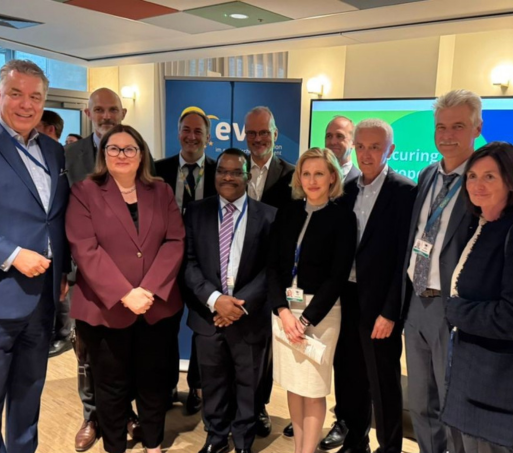
This year EU-Rail met with the European Parliament’s Committee on Transport and Tourism to highlight the importance of coordinated collaboration at the EU level in rail research and innovation. A key message of the meeting was the need to develop standardised solutions validated across Member States. EU-Rail also joined other Joint Undertakings at the European Parliament to discuss how public-private partnerships can help advance Europe’s strategic objectives.
Last but not least, EU-Rail participated in a high-level event on cutting cost in rail hosted by the Danish Presidency of the Council of the European Union. Representatives from EU-Rail contributed to a panel discussion on supply market competitiveness and a workshop about ETCS. EU-Rail with its High-Level paper in particular, but also with its ongoing R&I projects set the needed basis for a simplified and cost-effective rail system.
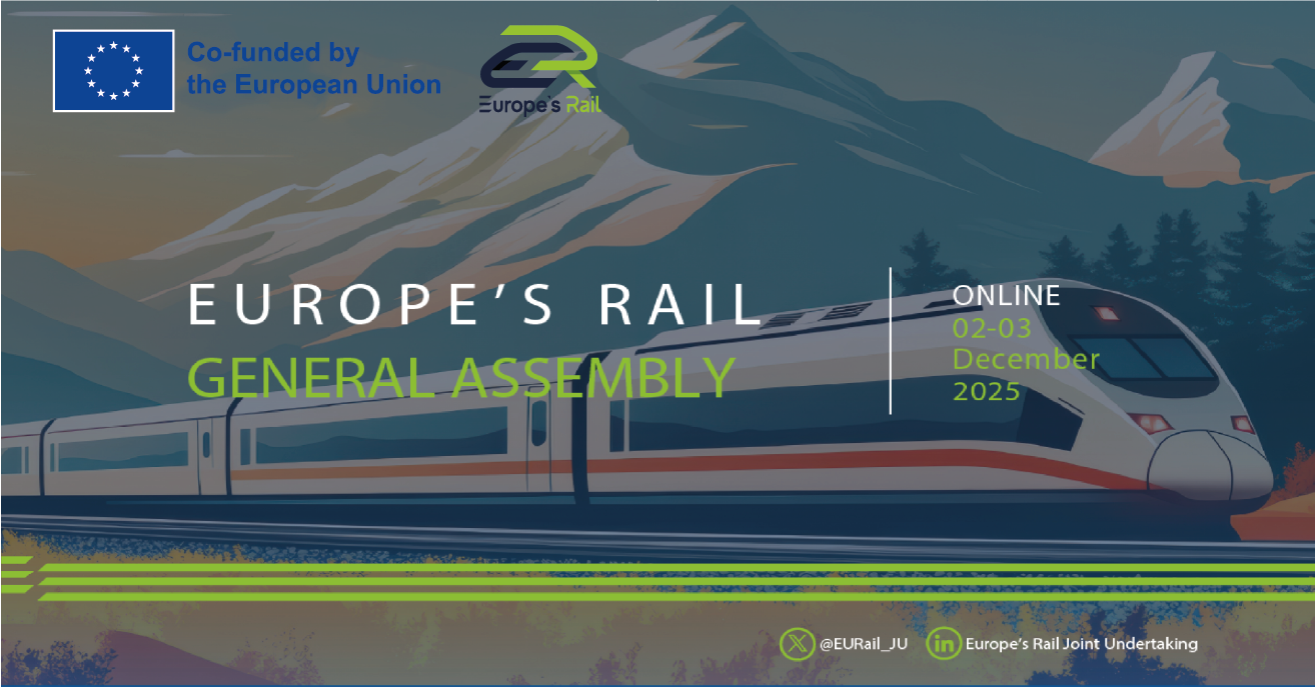
On 2–3 December, the Europe’s Rail General Assembly 2025 took place, providing a valuable occasion to look back at the achievements of the past year and to outline priorities for the year ahead.
The first day was dedicated to Europe’s Rail Strategic Reports, including the next chapter of EU-Rail and an update on the state of play. This session also highlighted a clear commitment from DG MOVE to support a next Joint Undertaking, alongside a strong commitment from all private members to continue their engagement in the next JU, confirming shared ambition and long-term alignment across the partnership.
The second day was hosted as an open online event, bringing together over 100 participants from across the sector. Following opening words by Kristian Schmidt, Director for Land Transport at the Directorate-General for Mobility and Transport (European Commission), participants delved into the operational reports, including presentations from advisory bodies. Teams from the System Pillar, Innovation Pillar, Deployment Group and the European DAC Delivery Programme (EDDP) shared insights into their ongoing work and key achievements.
Overall, EU-Rail confirmed that the programme is on track and delivering. Important discussions also took place on the use of data across the programme, complemented by the technical results presented on Day 2.
For those who were unable to join us, or who wish to revisit the discussions, the recording is now available here.