Pods4Rail D10.1 Concept development for equipment of sample vessel Pods4Rail develops a modular, autonomous transport...
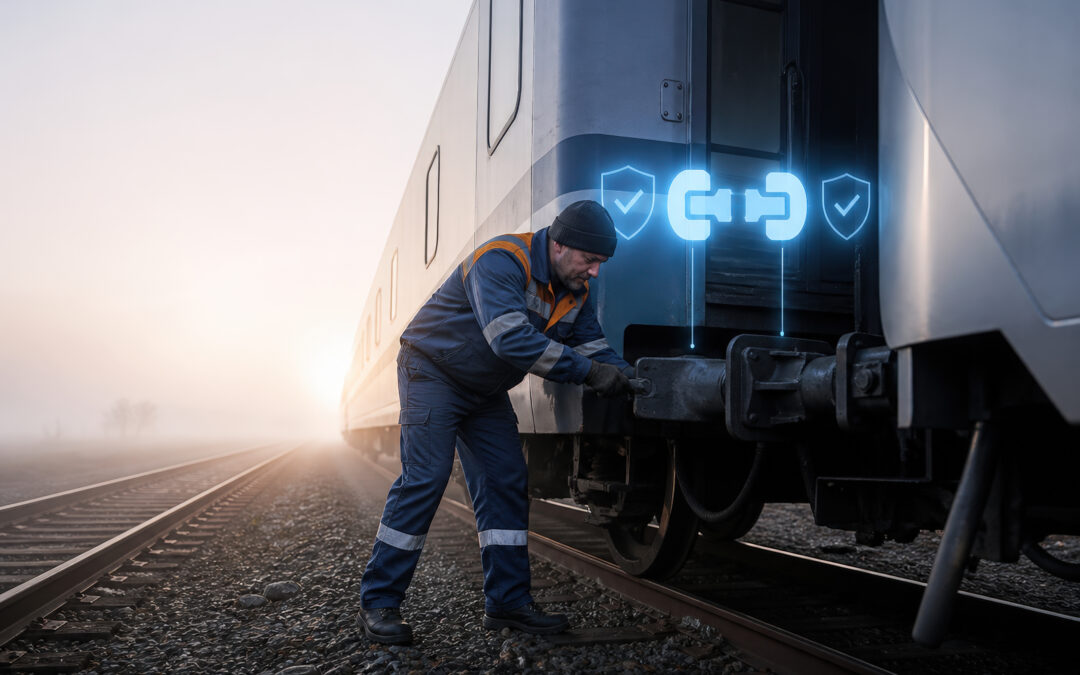
Deliverables: Results Published in October 2026
read more

A body of the
European Union

Access the list of all EU-Rail Calls for Proposals.

On 21 June 2024, the Governing Board of Europe’s Rail Joint Undertaking (EU-Rail) adopted a Call for Expression of Interest (CEI) with a view to selecting associated members with the potential to contribute to the achievement of its objectives. The Governing Board decision can be accessed here.
Discover detailed information about procurment rules and information.
Access detailed information about past tenders.

Europe's Rail regularly published Calls for Tenders. To find out about open Calls, follow link below.

Article 15 (Principle of transparency) of the EU-Rail financial rules states that the JU shall make available on its internet site no later than 30 June of the following financial year information on the recipients of funds deriving from its budget.

EU-Rail’s Innovation Pillar (IP) is tasked to deliver operational and technological solutions that contribute to a more efficient, flexible, and demand-led, yet safe and environmentally sustainable European railway system.

The System Pillar provides governance, resource, and outputs to support a coherent and coordinated approach to the evolution of the rail system and the development of the system view.

The Deployment Group advises the EU-Rail Governing Board on the market uptake of rail innovation developments and support their deployment.
For a successful and effective implementation of the Digital Automatic Coupler for European rail freight (DAC), it is of crucial importance to have open, close and efficient cooperation between rail stakeholders. The European DAC Delivery Programme enabled by Europe’s Rail, offers a unique European platform for such cooperation and collaboration.
Discover how Europe’s Rail Joint Undertaking is calling for a bold, coordinated investment strategy to simplify and modernise rail systems across the EU. This public-private partnership model – outlined in our High-Level Paper – proposes an €18 billion investment from 2028 to 2034 to strengthen European competitiveness, deliver greener transport, and drive technological sovereignty.

The Shift2Rail Joint Undertaking is the predecessor programme of the Europe's Rail Joint Undertaking (EU-Rail), established by Council Regulation (EU) 2021/2085 of 19 November 2021.

Discover detailed information on Europe's rail innovation initiatives, showcasing flagship and other projects aimed at enhancing rail systems across Europe. It highlights collaborative efforts funded by the European Union to develop sustainable, efficient, and competitive rail transport solutions.

Europe’s Rail Catalogue of Solutions illustrates successful R&I results in the form of possible products and solutions, while highlighting the benefits for final users, operators, infrastructure managers and/or suppliers. This publication also outlines the advantages of integrating demonstrators into market solutions so that they can deliver the rail innovation Capabilities of the future.
Europe’s Rail Joint Undertaking (EU-Rail) is the European partnership on rail research and innovation established under the Horizon Europe programme (2020-2027) and the universal successor of the Shift2Rail Joint Undertaking.

Find out the full list of Europe's Rail Members.

Discover the full structure and governance of Europe's Rail, including the decisions of the Governing Board.

Get access to Europe's Rail main reference documents, including Annual Work Plans, Annual Activity Reports, Annual Accounts and other important information.

Currently available work packages:
This WP intends to provide information and fundamental guidelines for defining the potential benefits of future ATO operations and preparation guidelines/requirements for future ATO demonstration and operations. The main objective is to illustrate the attractiveness of DATO and to smoothen and accelerate the deployment of DATO technology in European networks.
This WP intends to provide information for migration & deployment strategies. The main objective is to illustrate the potential to deploy DATO technology in European networks, both from a technical and a people-oriented perspective. This will be based on the inventory of optimal migration strategies toward applying DATO technology, partly based on lessons learned from field demonstrators. Integration and alignment of best practice and lessons learned from practical field tests and result coming from other demonstrators in FP2-R2DATO.
The aim of this demonstrator is to implement and validate a prototype and blueprint of the future-proof onboard connectivity and IT platforms that are required in a highly automated rail system, with the expectation that latest from EU-RAIL phase 2 on all larger-scale demonstrators would utilize these platforms. The aim of this demonstrator is to implement and validate in a lab environment (up to TRL 5/6) how railway application(s) can be hosted on a modular computing platform, making use of a safe Runtime Environment (RTE), standardized Platform Independent (PI) API, onboard FRMCS functions and a unified diagnostics service API. As a key outcome, the demonstrator will help to determine an appropriate level of onboard platform modularity and aggregation (e.g., by utilising a common hardware pool, most likely through the usage of virtualisation or hypervisor technology), and to prove the feasibility of hardware independent integrability and potential certifiability as a blueprint for EU-RAIL phase 2 and future larger-scale demonstrators.
Given the readiness for deployment of ETCS Hybrid Level 3 methods to reduce lead-time to implementation and smart line-design methodologies will be developed.
The objectives of the demonstrator are testing the performance of the technical enabler(s) incorporated in the demonstrator, providing feedback to the TE-developer, in order to improve the functioning of the TE, or to enhance/improve/modify the specifications and performing measurements to show the improvement of the new (sub)system over the existing system, to contribute to the realisation of the KPIs defined in the call.
Mainline, is here defined as the most complex kind of operations in a network, mostly around large nodes that can’t be demonstrated in full service by 2026. Therefore, modelling ATO and its operational concept as well the linkage of TMS to ATO dynamically anticipating in these complex nodes will be developed, tested and designed. Furthermore, showing the relevant advantages deriving from the synergy between the digital automatic train operation up to GoA 4 and the CCS evolution, increasing the capacity and punctuality of railway lines, by enabling ETCS L3 moving block with minimum infrastructure elements.
To allow a smooth deployment of GoA 4 technology with different possible technological solutions, the systems need to be tested in real conditions in a demonstrator. The freight demonstrator will be equipped with sub-systems studied in the Technical Enablers. Tests will be performed, enhancing autonomous freight train operations.
The main objective of this WP is to provide the bridge between FP2-R2DATO and FA6 demonstrations by supporting validation and testing of technical enablers in regional line environment before they are handed over to FA6 for further adaptation and integration. The improved CCS and automation functions will be the main technologies tested and validated, building on the activities already performed in the scope of Shift2Rail ATO (up to GoA4) tests (the very same line and vehicle). Further, the line will be used to support development process of technical enablers, even on lower TRL levels, due to simplified operational environment and flexible demonstrations planning (no regular commercial service, the line fully dedicated to tests) and approval process. Minimal set of technical enablers needed:
Currently available deliverables:
All deliverables, results and publications herewith provided reflects only the author's view and the EURAIL is not responsible for any use that may be made of the information it contains.