Pods4Rail D10.1 Concept development for equipment of sample vessel Pods4Rail develops a modular, autonomous transport...
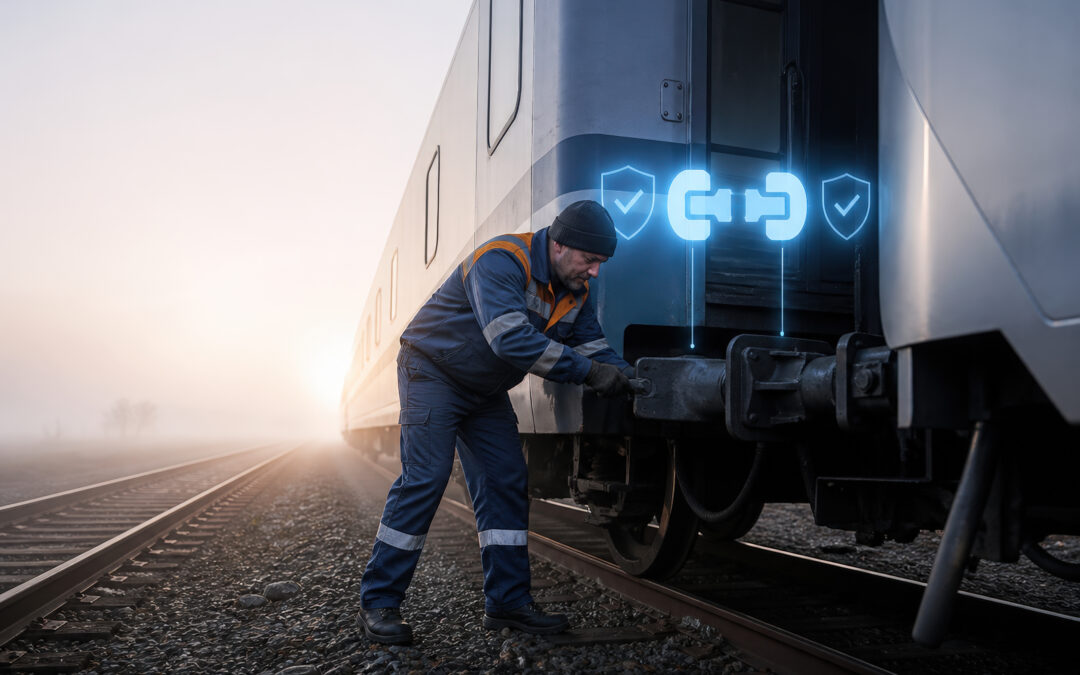
Deliverables: Results Published in October 2026
read more

A body of the
European Union

Access the list of all EU-Rail Calls for Proposals.

On 21 June 2024, the Governing Board of Europe’s Rail Joint Undertaking (EU-Rail) adopted a Call for Expression of Interest (CEI) with a view to selecting associated members with the potential to contribute to the achievement of its objectives. The Governing Board decision can be accessed here.
Discover detailed information about procurment rules and information.
Access detailed information about past tenders.

Europe's Rail regularly published Calls for Tenders. To find out about open Calls, follow link below.

Article 15 (Principle of transparency) of the EU-Rail financial rules states that the JU shall make available on its internet site no later than 30 June of the following financial year information on the recipients of funds deriving from its budget.

EU-Rail’s Innovation Pillar (IP) is tasked to deliver operational and technological solutions that contribute to a more efficient, flexible, and demand-led, yet safe and environmentally sustainable European railway system.

The System Pillar provides governance, resource, and outputs to support a coherent and coordinated approach to the evolution of the rail system and the development of the system view.

The Deployment Group advises the EU-Rail Governing Board on the market uptake of rail innovation developments and support their deployment.
For a successful and effective implementation of the Digital Automatic Coupler for European rail freight (DAC), it is of crucial importance to have open, close and efficient cooperation between rail stakeholders. The European DAC Delivery Programme enabled by Europe’s Rail, offers a unique European platform for such cooperation and collaboration.
Discover how Europe’s Rail Joint Undertaking is calling for a bold, coordinated investment strategy to simplify and modernise rail systems across the EU. This public-private partnership model – outlined in our High-Level Paper – proposes an €18 billion investment from 2028 to 2034 to strengthen European competitiveness, deliver greener transport, and drive technological sovereignty.

The Shift2Rail Joint Undertaking is the predecessor programme of the Europe's Rail Joint Undertaking (EU-Rail), established by Council Regulation (EU) 2021/2085 of 19 November 2021.

Discover detailed information on Europe's rail innovation initiatives, showcasing flagship and other projects aimed at enhancing rail systems across Europe. It highlights collaborative efforts funded by the European Union to develop sustainable, efficient, and competitive rail transport solutions.

Europe’s Rail Catalogue of Solutions illustrates successful R&I results in the form of possible products and solutions, while highlighting the benefits for final users, operators, infrastructure managers and/or suppliers. This publication also outlines the advantages of integrating demonstrators into market solutions so that they can deliver the rail innovation Capabilities of the future.
Europe’s Rail Joint Undertaking (EU-Rail) is the European partnership on rail research and innovation established under the Horizon Europe programme (2020-2027) and the universal successor of the Shift2Rail Joint Undertaking.

Find out the full list of Europe's Rail Members.

Discover the full structure and governance of Europe's Rail, including the decisions of the Governing Board.

Get access to Europe's Rail main reference documents, including Annual Work Plans, Annual Activity Reports, Annual Accounts and other important information.
Demonstration activities were a priority within Shift2Rail, as they enable the entire rail sector to visualise and concretely test the transformations that they are able to bring about. Demonstrations enabled a more appropriate quantification of the impact of each new technology (either alone or combined with other innovations). Demonstration activities also helped provide a first estimate of the anticipated potential for sector improvement (at regional, national and EU transport network levels) as a result of the developed innovations.
It is also vital that in the next decade the rail industry demonstrates a tangible step change which is visible to the public and generates interest in the railway domain. In addition, the realisation of key flagship demonstrations is expected to enhance the perceived innovation potential of the sector and revitalise the industry by attracting the next generation of top graduates from universities across Europe.
Furthermore, the development of collaborative demonstrators has fostered internal industry communication and collaboration. Shift2Rail also promoted the realisation of Integrated Technology Demonstrators (ITDs), which combined the testing of different solutions in a single demonstrator, thereby achieving economies of scale for the project development. This allowed a more collaborative system approach towards innovation, breaking down possible silos between subsystems developers. It also helped early-stage identification of possible compatibility issues in the integration of different solutions.
The demonstration of technical achievements, up to TRL 7, was based on the threefold architecture presented in Figure 3 below: Technology Demonstrators (TDs), ITDs and System Platform Demonstrators (SPDs).
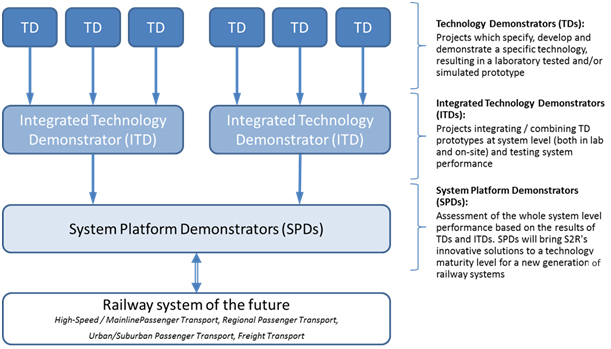
TDs will focus on the development or adoption of innovative technologies and models within the rail subsystems identified in the IPs. They will pave the way for groundbreaking progress in key areas such as traction, automatic train operation and intelligent diagnosis and maintenance systems, while seeking inspiration from innovative technologies, materials and methods used or explored in other sectors. The innovations developed may consist of software and/or hardware systems.
Before being combined into ITDs, each TD will be tested (in labs on test benches, or existing trains) in one or more prototypes (differentiated if different business segments are addressed) to assess the individual performance of the technologies thus developed. Where possible, compliance with the technical requirements of the product being developed will be demonstrated.
ITDs allowed for the testing of combinations of components and subsystems already verified and validated within the TDs within virtual or physical railway environments, for demonstrating the innovation potential of the components in different subsystems and systems. Functional and operational specifications and technical interfaces across the various TDs were taken into account.
ITDs also enabled the analysis of compliance with the regulatory requirements; the validation of technologies was followed up with a controlled approach to future authorisation and certification work.
Ultimately, Shift2Rail carried out proof and analysis of rail systems, design and functions on fully representative innovative railway configurations in an integrated environment, simulating real operational conditions.
To simulate and test the interaction and impact of the various systems in different rail market segments, demonstration platforms were proposed that covered high-speed/mainline passenger rail, regional passenger rail, urban/suburban passenger rail and rail freight. The choice of demonstration platforms was geared to the most promising and appropriate market opportunities, to ensure the best and most rapid exploitation of Shift2Rail’s results.