Europe’s Rail Newsletter – September Edition The September edition of the Europe’s Rail newsletter is out! 🚆 This...
EU-Rail September 2026 Newsletter
read more


A body of the
European Union

Access the list of all EU-Rail Calls for Proposals.

On 21 June 2024, the Governing Board of Europe’s Rail Joint Undertaking (EU-Rail) adopted a Call for Expression of Interest (CEI) with a view to selecting associated members with the potential to contribute to the achievement of its objectives. The Governing Board decision can be accessed here.
Discover detailed information about procurment rules and information.
Access detailed information about past tenders.

Europe's Rail regularly published Calls for Tenders. To find out about open Calls, follow link below.

Article 15 (Principle of transparency) of the EU-Rail financial rules states that the JU shall make available on its internet site no later than 30 June of the following financial year information on the recipients of funds deriving from its budget.

EU-Rail’s Innovation Pillar (IP) is tasked to deliver operational and technological solutions that contribute to a more efficient, flexible, and demand-led, yet safe and environmentally sustainable European railway system.

The System Pillar provides governance, resource, and outputs to support a coherent and coordinated approach to the evolution of the rail system and the development of the system view.

The Deployment Group advises the EU-Rail Governing Board on the market uptake of rail innovation developments and support their deployment.
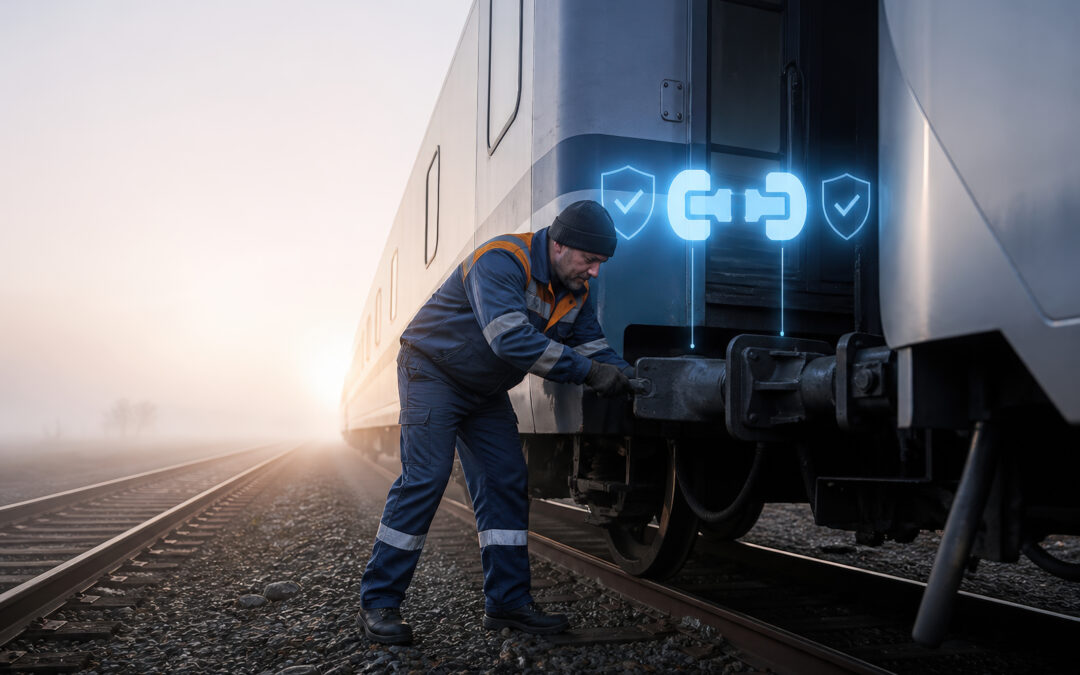
For a successful and effective implementation of the Digital Automatic Coupler for European rail freight (DAC), it is of crucial importance to have open, close and efficient cooperation between rail stakeholders. The European DAC Delivery Programme enabled by Europe’s Rail, offers a unique European platform for such cooperation and collaboration.
Discover how Europe’s Rail Joint Undertaking is calling for a bold, coordinated investment strategy to simplify and modernise rail systems across the EU. This public-private partnership model – outlined in our High-Level Paper – proposes an €18 billion investment from 2028 to 2034 to strengthen European competitiveness, deliver greener transport, and drive technological sovereignty.

The Shift2Rail Joint Undertaking is the predecessor programme of the Europe's Rail Joint Undertaking (EU-Rail), established by Council Regulation (EU) 2021/2085 of 19 November 2021.

Discover detailed information on Europe's rail innovation initiatives, showcasing flagship and other projects aimed at enhancing rail systems across Europe. It highlights collaborative efforts funded by the European Union to develop sustainable, efficient, and competitive rail transport solutions.

Europe’s Rail Catalogue of Solutions illustrates successful R&I results in the form of possible products and solutions, while highlighting the benefits for final users, operators, infrastructure managers and/or suppliers. This publication also outlines the advantages of integrating demonstrators into market solutions so that they can deliver the rail innovation Capabilities of the future.
Europe’s Rail Joint Undertaking (EU-Rail) is the European partnership on rail research and innovation established under the Horizon Europe programme (2020-2027) and the universal successor of the Shift2Rail Joint Undertaking.

Find out the full list of Europe's Rail Members.

Discover the full structure and governance of Europe's Rail, including the decisions of the Governing Board.

Get access to Europe's Rail main reference documents, including Annual Work Plans, Annual Activity Reports, Annual Accounts and other important information.
D10.1 Concept development for equipment of sample vessel
Pods4Rail develops a modular, autonomous transport solution. This deliverable presents the concept for the equipment of the Transport Unit (TU), the unit that is coupled to a Carrier Unit. It focuses on Use Case 1, basic public transport in low-demand or rural areas. The study covers the layout and equipment of the TU, heating and cooling, the mechanical and electrical connection to the Carrier Unit, and the localisation and communication needed for autonomous operation, with cybersecurity included from the start. The interior is designed for passenger safety, accessibility, and comfort. Overall, the concepts provide a coherent basis for the equipment and interfaces of the Transport Unit. They are designed in line with existing rail and road regulations.
How it brings us closer to achieving better rail for Europe: This deliverable provides a conceptual basis for the equipment and interfaces of the Transport Unit, in line with existing regulations, compatible with automation and ready for future developments. It lays the groundwork for the detailed design activities that follow.
Target audience: Rail stakeholders, Member States, Policymakers
D13.1 Handling concept for a dedicated use case
Pods4Rail envisions a modular, automated and interconnected transport system. This deliverable defines how Transport Units (TUs), also called pods, are connected to their carriers, handled, and stored. The pods carry passengers and cargo across rail, road and potentially ropeway. The connection to the Carrier Unit is automated and uses standardised ISO twistlocks, the locking pins that secure freight containers, combined with automated power and data interfaces. Empty pods can be handled with reach stackers (container-stacking vehicles), while occupied pods are ideally lifted by crane from above. The study sets out procedures for loading pods onto carriers, transferring them between rail and road, and ropeway use. It also proposes a logistics concept with transshipment hubs, storage, charging, digital control and service centers, and a system for identifying and tracking each pod.
How it brings us closer to achieving better rail for Europe: This deliverable establishes a technically feasible and operationally scalable foundation for modular, automated, and interconnected transport. The concept aims to increase flexibility, efficiency and sustainability for both passenger and freight mobility.
Target audience: Rail stakeholders, Member States, Policymakers
D14.1 Overall Concept Study for Vessel Carrier (and Basic 3D model)
Pods4Rail develops a supermodal transport system that integrates rail, road, and ropeway. This deliverable presents the concept for the Carrier Units (CUs) that carry the Transport Units (TUs) across these modes, building on earlier work packages. It proposes carriers that are highly standardised but adapted to each domain. Energy systems, communication, automation, and interfaces can be shared, while wheelsets, suspension and structure stay domain specific. The preferred design is a modular, low-floor platform that can carry TUs of 5 to 20 ft for passengers and freight. The study also covers battery-electric energy concepts for rail and road, a digital layer for automation, and a basic 3D model of the carriers. Overall, the study shows that one common carrier concept can serve rail, road, and ropeway.
How it brings us closer to achieving better rail for Europe: This deliverable demonstrates that a modular, standardised, and cross-domain carrier concept is feasible.
Target audience: Rail stakeholders, Member States, Policymakers
More information on these topics: Pods4Rail
D7.2 DAC Level 5 ready Interoperability Report
FP5-TRANS4M-R aims to boost innovation in European rail freight. This deliverable reports the first laboratory interoperability tests of Digital Automatic Couplers (DACs) up to Functional Level 5, carried out jointly by the four coupler suppliers Dellner, Knorr-Bremse, Voith and Wabtec. Level 5 ready adds fully automated uncoupling to the previous functional level. Couplers from different suppliers were paired and tested for mechanical coupling and decoupling, pneumatic connections, and electrical and data links. All six supplier pairings passed. Uncoupling was synchronised manually, because the control unit software and hardware were not yet available. Overall, the tests show that all four couplers are ready for the next step, tests on real wagons.
How it brings us closer to achieving better rail for Europe: The results show that couplers from different suppliers work together, which is a step forward in interoperability.
Target audience: Rail stakeholders, Infrastructure Managers, Railway Undertakings, and Policymakers.
D29.5 & 29.7 Testing and Evaluation of Intelligent Video Gates in the Netherlands and Sweden
These deliverables report on the testing and evaluation of Intelligent Video Gates at railway sites in the Netherlands and Sweden, including the ports of Rotterdam, Gothenburg, and Malmö. They assess AI-based image analysis, RFID matching, hazardous material identification, UIC wagon number recognition, wagon counting, and integration with railway infrastructure and wayside monitoring systems. The trials evaluate system performance and reliability under real-world conditions, supporting the deployment of automated freight monitoring across Europe.
How it brings us closer to achieving better rail for Europe: This technology automates freight train data collection to enable condition-based maintenance, boost operational efficiency, and harmonise railway monitoring across Europe.
Target audience: Rail stakeholders, Infrastructure Managers, Railway Undertakings, and Policymakers.
More information on this topics: FP5-TRANS4M-R