Europe’s Rail Newsletter – September Edition The September edition of the Europe’s Rail newsletter is out! 🚆 This...
EU-Rail September 2026 Newsletter
read more
A body of the
European Union

Access the list of all EU-Rail Calls for Proposals.

On 21 June 2024, the Governing Board of Europe’s Rail Joint Undertaking (EU-Rail) adopted a Call for Expression of Interest (CEI) with a view to selecting associated members with the potential to contribute to the achievement of its objectives. The Governing Board decision can be accessed here.
Discover detailed information about procurment rules and information.
Access detailed information about past tenders.

Europe's Rail regularly published Calls for Tenders. To find out about open Calls, follow link below.

Article 15 (Principle of transparency) of the EU-Rail financial rules states that the JU shall make available on its internet site no later than 30 June of the following financial year information on the recipients of funds deriving from its budget.

EU-Rail’s Innovation Pillar (IP) is tasked to deliver operational and technological solutions that contribute to a more efficient, flexible, and demand-led, yet safe and environmentally sustainable European railway system.

The System Pillar provides governance, resource, and outputs to support a coherent and coordinated approach to the evolution of the rail system and the development of the system view.

The Deployment Group advises the EU-Rail Governing Board on the market uptake of rail innovation developments and support their deployment.
For a successful and effective implementation of the Digital Automatic Coupler for European rail freight (DAC), it is of crucial importance to have open, close and efficient cooperation between rail stakeholders. The European DAC Delivery Programme enabled by Europe’s Rail, offers a unique European platform for such cooperation and collaboration.
Discover how Europe’s Rail Joint Undertaking is calling for a bold, coordinated investment strategy to simplify and modernise rail systems across the EU. This public-private partnership model – outlined in our High-Level Paper – proposes an €18 billion investment from 2028 to 2034 to strengthen European competitiveness, deliver greener transport, and drive technological sovereignty.

The Shift2Rail Joint Undertaking is the predecessor programme of the Europe's Rail Joint Undertaking (EU-Rail), established by Council Regulation (EU) 2021/2085 of 19 November 2021.

Discover detailed information on Europe's rail innovation initiatives, showcasing flagship and other projects aimed at enhancing rail systems across Europe. It highlights collaborative efforts funded by the European Union to develop sustainable, efficient, and competitive rail transport solutions.

Europe’s Rail Catalogue of Solutions illustrates successful R&I results in the form of possible products and solutions, while highlighting the benefits for final users, operators, infrastructure managers and/or suppliers. This publication also outlines the advantages of integrating demonstrators into market solutions so that they can deliver the rail innovation Capabilities of the future.
Europe’s Rail Joint Undertaking (EU-Rail) is the European partnership on rail research and innovation established under the Horizon Europe programme (2020-2027) and the universal successor of the Shift2Rail Joint Undertaking.

Find out the full list of Europe's Rail Members.

Discover the full structure and governance of Europe's Rail, including the decisions of the Governing Board.

Get access to Europe's Rail main reference documents, including Annual Work Plans, Annual Activity Reports, Annual Accounts and other important information.

At InnoTrans 2026, the EU-Rail System Pillar (SP) will showcase how the future European railway system can become more connected, integrated and digitally enabled through a common system architecture and shared data. This will be brought to life at the European Stand (Hall 4.2, stand 260) through:
A System Pillar Information Point focused on Cybersecurity, Train Control System, Harmonised European Railway Diagnostics, Performance, Reliability, Availability, Maintainability, Safety (PRAMS), Railway System Architecture, Trackside Assets and Operational Domain and Traffic Control System.
A Real-Time Railway Digital Twin physical demonstration: A live railway test site synchronised with a digital model, enabling real-time visualisation, testing and automation of railway operations. The demonstrator illustrates the current challenges of fragmented data and isolated systems, and how the System Pillar is developing a shared digital language through the extended ERA ontology, enabling seamless data exchange and more connected railway systems.
After two days of discussions and presentations at EU-Rail FP2-R2DATO final event in Prague, the Swedish Transport Administration’s Järnvägspodden (The Railway Podcast) captured the voices of the people behind the project in a five-part podcast series.
Dive into the five episodes to hear different perspectives on the future of autonomous train operations.
The FP3-IAM4RAIL Project recently showcased progress across four demonstrators supporting smarter asset management, digitalisation and more sustainable railway infrastructure.
Demonstrator on Asset Management and Rolling Stock
This demonstrator presents an overview of several use cases being addressed within Cluster C, showcasing new monitoring solutions that can help keep trains in better condition, support smarter maintenance decisions and reduce both maintenance costs and service disruptions. Watch the video
Demonstrator on Long Term Asset Management
This demonstrator presents an overview of the work being carried out under Cluster D, showcasing how data from different sources can support smarter maintenance planning, help identify potential problems before they lead to failures, reduce downtime and make better use of maintenance resources. Watch the video
Demonstrator on Asset Management & Digital Twins
This demonstrator presents how – thanks to Objective 5 – digital tools can work together to improve the way railway infrastructure is monitored, managed and certified, making it easier to track information, support better decisions and ensure greater reliability and trust. Watch the video
Demonstrator on Eco-friendly design, production and reparation of resilient assets including additive manufacturing
This demonstrator presents how new approaches to designing, producing, monitoring and repairing railway assets being developed under Objective 6 can make them more sustainable and resilient, helping to reduce material use, improve performance and support a more efficient and reliable railway system. Watch the video
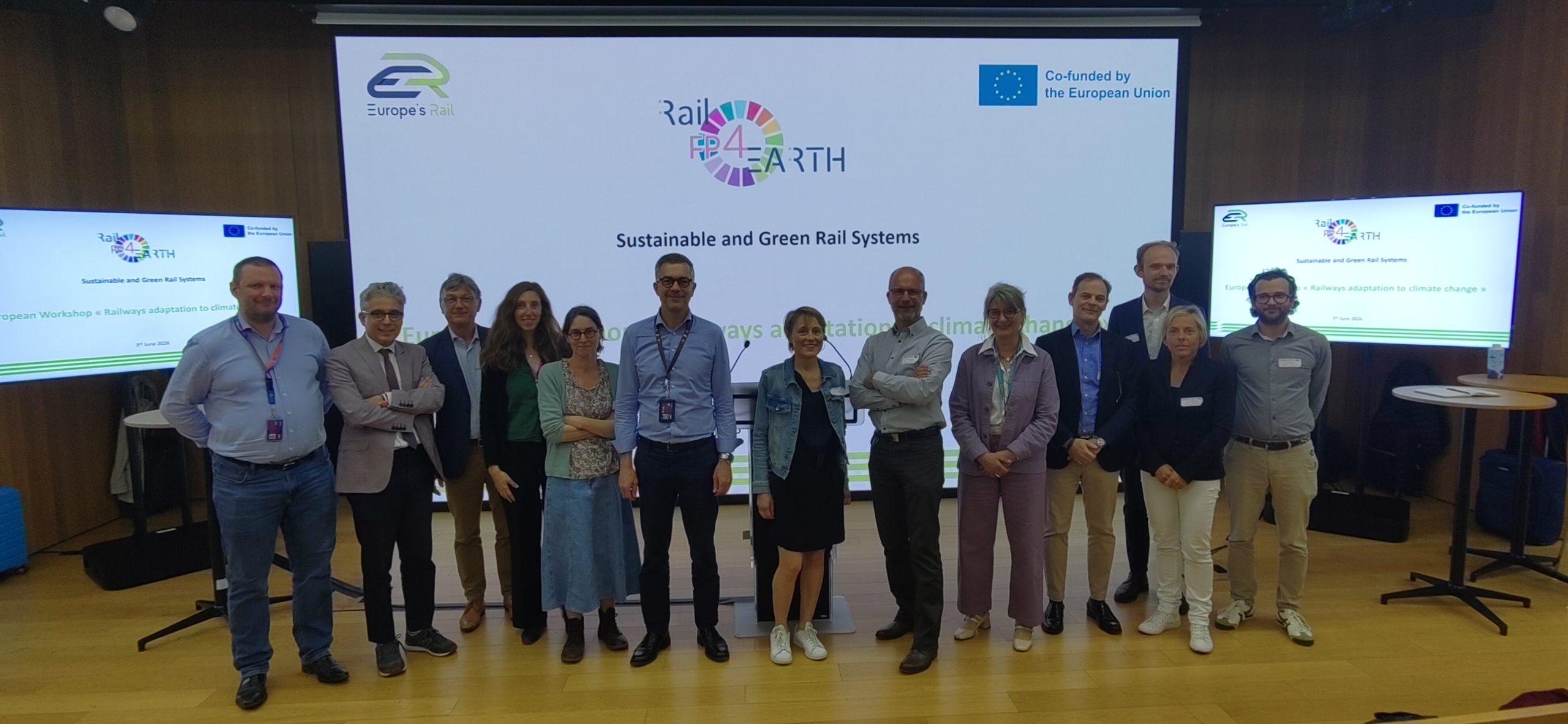
On 3 June, members of EU-Rail FP4-Rail4EARTH project gathered at the SNCF headquarters in Saint-Denis, France, for a dedicated one-day workshop bringing together around 50 European stakeholders involved in Adaptation to Climate Change (ACC).
Following an introduction by Anne Guerrero (SNCF), the workshop featured presentations and exchanges on the current state of climate adaptation in the railway sector.
Hubert Mullard (SNCF Voyageurs) presented the project’s activities and its approach to ACC after three years of progress. Laurent Nicod (Alstom), Rail4EARTH Project Coordinator, complemented this with a proposal for a comprehensive 10-step approach to addressing the challenges, uncertainties and open questions related to climate adaptation.
Operators and infrastructure managers, including Trenitalia, SNCF, SNCF Voyageurs, SNCF Réseau and SNCF Gares & Connexions, shared their perspectives and plans for ACC. The European Union Agency for Railways also presented its report Rail Resilience to Climate Change.
Météo France introduced the French reference trajectory for climate change adaptation (TRACC), explaining its scientific basis and the different projected stages for 2030 (+2°C), 2050 (+2.7°C) and 2100 (+4°C), as well as their differences from global climate projections.
The French Ministry of Transport (DGITM) presented the Third National Adaptation Plan to Climate Change (PNACC3), including measures to strengthen the resilience of transport infrastructure and services, adapt rolling stock to extreme heat and update transport-related technical standards.
The workshop also featured contributions from the European Rail Infrastructure Managers (EIM) and the Community of European Railway and Infrastructure Companies (CER), highlighting the growing need for investment, coordinated action and a European framework to build a climate-resilient railway.
Through its latest work, EU-Rail NEXUS project has validated a suite of simulation models and AI applications designed to support the future of metro operations.
The assessment examines current and future operational scenarios, including GoA4 automation, and evaluates AI applications for passenger demand forecasting, timetable generation and vehicle uncleanliness detection. The work also considers how AI-enabled optimisation could contribute to greater energy efficiency and lower CO₂ emissions, while addressing the cybersecurity challenges associated with deploying AI in metro systems.
Researchers from EU-Rail Pods4Rail project have developed a new hybrid methodology to assess the readiness of emerging multimodal mobility systems under conditions of uncertainty. Combining expert-based TRL assessment with probabilistic SRL estimation and Monte Carlo analysis, the approach provides a more realistic picture of system maturity and highlights gaps between individual subsystems. Applied to Pods4Rail, the study places the system between SRL 1 and SRL 2, with hardware components more mature than planning, logistics and operational management functions. The framework provides a transparent and transferable approach for assessing innovative mobility systems in their early development stages.
Furthermore, the Pods4Rail project has explored modular Transport Unit designs that can adapt to different passenger and cargo needs, operational conditions and route topographies. By combining requirement analysis, technological research and Morphological Analysis, the project developed five main design variants using different materials and configurations. The study highlights how modular, plug-and-play components can support flexible interiors and different use cases, while also considering accessibility, sustainability, manufacturability and operational requirements. The results provide a foundation for further development and validation of adaptable transport solutions for future intermodal mobility.
The EU-Rail InBridge4EU project is entering the final phase of a project that has brought together expertise from across Europe to advance the understanding of railway bridge dynamics and dynamic vehicle–bridge compatibility. In recent months, the project’s results have reached both the international research community and key stakeholders in railway infrastructure, highlighting achievements that range from scientific modelling to contributions towards future engineering standards.
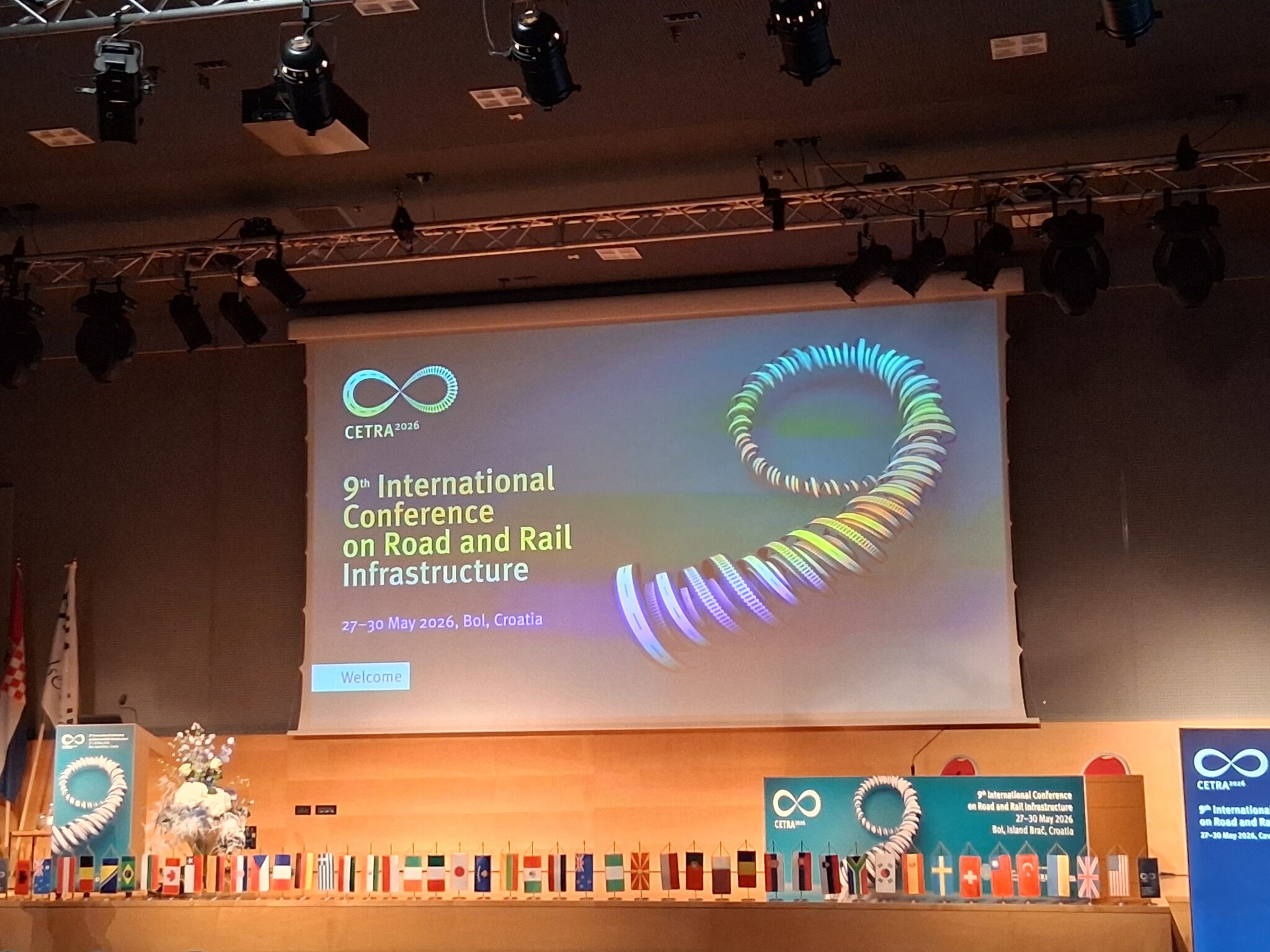
At CETRA 2026 in Bol, Croatia, Ronny Behnke (DB InfraGO) presented the latest results from the project, focusing on permissible train speeds under EN 15528:2021. The work uses updated train and bridge databases and comprehensive parametric studies to reassess speed limits and investigate the dynamic response of bridges to passing trains, particularly resonance effects caused by regular axle loads.
The project also featured prominently at ICATTI 2026 in Hanoi, where José María Goicolea (UPM) delivered a keynote drawing on more than three decades of railway bridge dynamics research and showcasing InBridge4EU findings on bridge damping, Dynamic Train Categories and the assessment of hundreds of European bridges.
Alongside this work, InBridge4EU has also addressed the running safety of heavy-haul freight vehicles. The study “Development of a modelling framework for running safety analysis of a heavy-haul freight vehicle crossing a bridge under different loading conditions” presents a three-dimensional vehicle–structure interaction framework for assessing both structural and train running safety. The research considers different train speeds, loaded and unloaded vehicles and varying rail irregularities, providing further insight into the dynamic behaviour of heavy-haul vehicles and their interaction with railway bridges.
These results came together at the consortium’s final project event at KTH in Stockholm, where partners, Advisory Board members and external experts reviewed the main achievements and discussed their implications for the future of railway bridge dynamics.
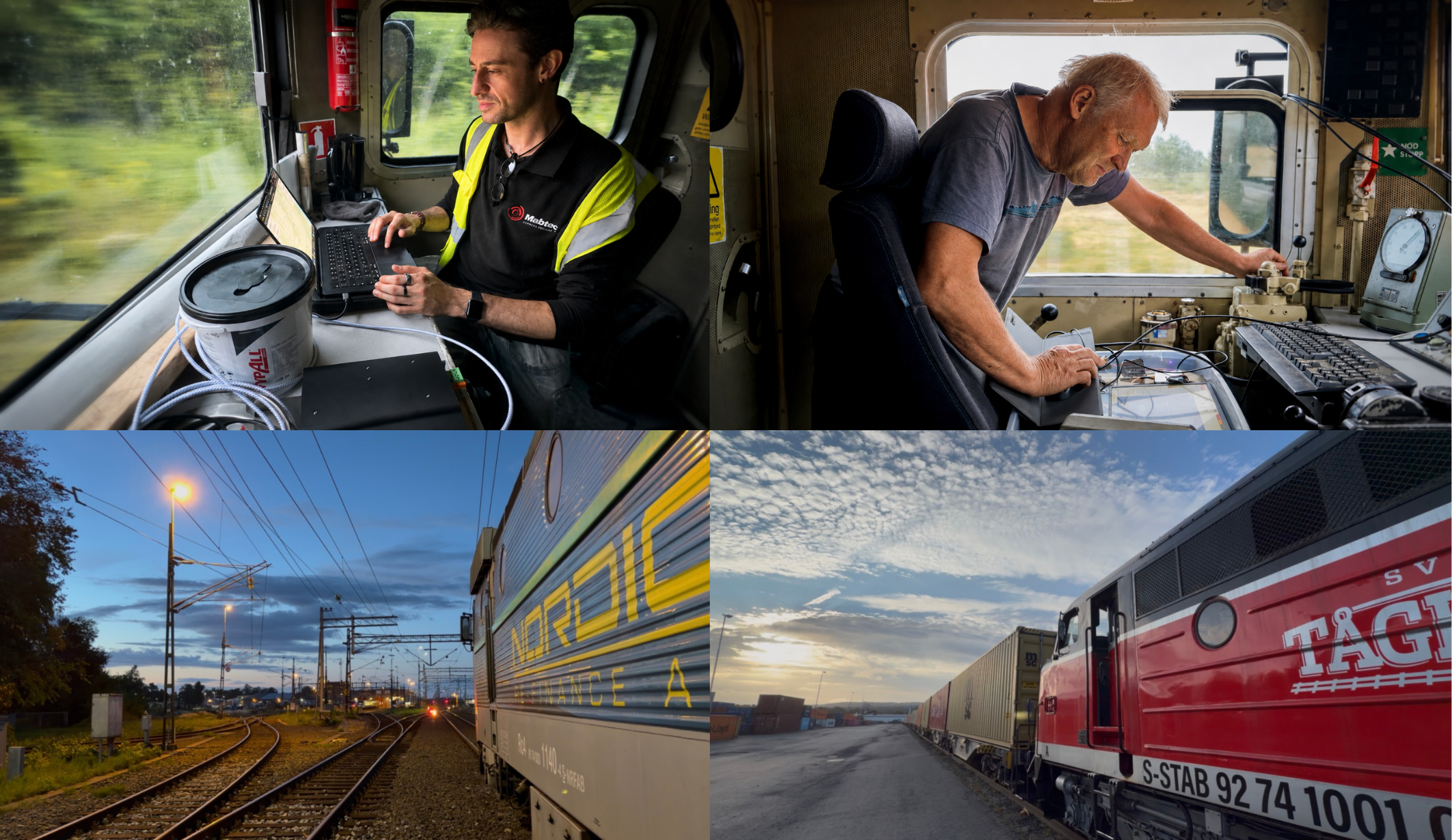
Two recent demonstrations mark important progress in EU-Rail FP6 FutuRe’s development of digital solutions for regional railway lines.
On 29 June, Hitachi Rail STS, with RFI as project partner, demonstrated a multi-bearer communication platform connected to public networks. The workshop presented the system architecture and selected use cases in real time, providing a first-hand view of the solution’s operational behaviour and potential application in regional rail.
In parallel, Wabtec and Trafikverket successfully completed a G2 Lines demonstration campaign on the Swedish Nässjö–Gothenburg corridor. Following system integration and pre-testing, multiple onboard journeys were conducted to validate the planned CCS scenarios under realistic operating conditions. These included cloud-based train-to-cloud communication and data management using the FP1 Motional Federated Data Spaces enabler, alongside cost-effective, fail-safe and highly accurate train positioning. The collected data has been jointly reviewed and validated and will contribute to the final evaluation of the technologies and their potential future deployment.
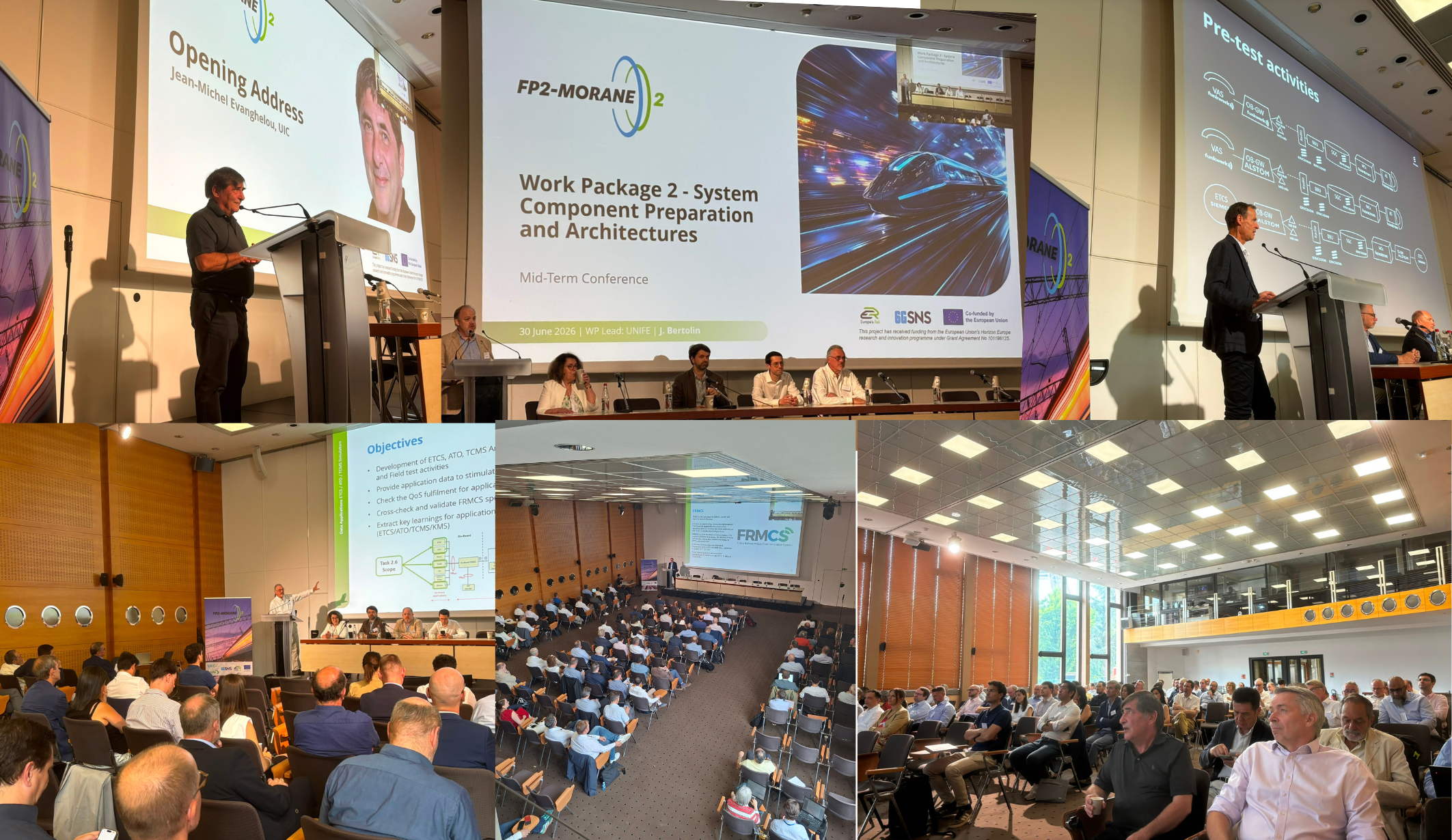
The future of railway communications is taking shape as EU-Rail FP2-Morane-2 moves into its testing phase. At the project’s Mid-Term Conference in June, hosted at UIC Headquarters, partners showcased the progress made towards the transition from GSM-R to FRMCS, a next-generation 5G-based system designed to support safer, more efficient and sustainable railway operations. With the test architecture now established and hardware deployed in laboratories and on test tracks across Europe, the focus is shifting towards integration and validation. The consortium is preparing to test FRMCS against a range of critical railway applications, from ETCS and Railway Emergency Calls to ATO and TCMS, ensuring that the new communication system can meet Europe’s operational and safety needs. Intensive laboratory testing will take place this year, followed by test-track trials from early 2027.
The EU-Rail SYMBIOSIS project continues to advance its work on integrating into sustainable transport infrastructure.
Its latest report, “Analysis report on assessing societal priorities on sustainable transport development,” examines how transport infrastructure can contribute to climate objectives, accessibility, territorial cohesion and economic development, while also addressing its potential impacts on biodiversity, ecosystem services, public health, well-being, social equity and local communities.
The analysis highlights the need to integrate biodiversity, ecosystem services and societal priorities earlier in the infrastructure planning process, alongside stronger consideration of public health, accessibility and social equity. It also calls for improved assessment of cumulative and cross-sectoral impacts and more meaningful stakeholder involvement throughout the planning and development process.
Stakeholder consultations further identified biodiversity protection, social inclusion, monitoring, transparency and clarity of stakeholder roles as areas requiring particular attention.
SYMBIOSIS will also participate in the IENE 2026 International Conference on 22 September, providing an opportunity to exchange with experts and stakeholders and further explore how biodiversity and societal considerations can be effectively integrated into the planning and development of future transport infrastructure.
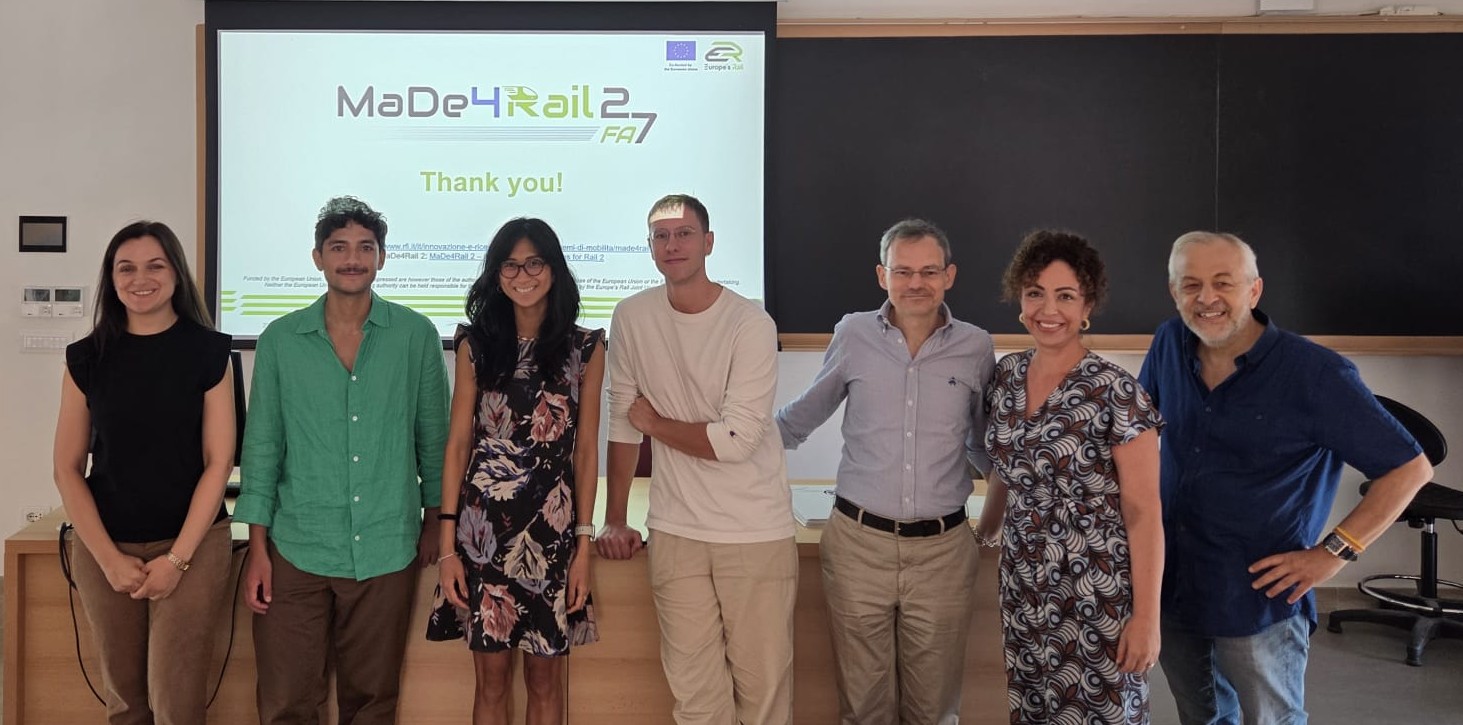
The EU-Rail MaDe4Rail-2 project Consortium took part in the third edition of the Summer International School “The European Railway System”, hosted by Sapienza University of Rome within the SERAS project and the EU-Rail-funded Academics4Rail and PhDs EU-Rail projects.
The event brought together young professionals and researchers from across Europe to explore the technological challenges and innovation opportunities shaping sustainable mobility.
RFI and Ironlev introduced MaDe4Rail 2 – Maglev Derived Systems for Rail 2, part of EU-Rail Flagship Area 7, presenting its research objectives, activities and potential applications.
The contribution highlighted the potential of Maglev-derived solutions to support the development of increasingly innovative, efficient and sustainable rail transport.
The Hyperloop Conference is the first international conference dedicated to high-speed transportation, bringing together key players from the global hyperloop ecosystem, including start-ups, corporates, suppliers and investors. Following four editions in Europe and one in South Korea, the conference will take place at InnoTrans in Berlin on 25 September 2026.
The 2026 edition will provide an opportunity to discuss the latest developments in the hyperloop sector, with contributions from international experts and stakeholders from Europe and beyond. Two presentations from the Hyper4Rail project will be featured in the programme, together with a high-level panel discussion involving EU representatives and experts from the Hyper4Rail consortium.
The Hyper4Rail contributions will focus on two key areas:
The presentations will be part of the session “First Results of Hyper4Rail”, scheduled from 12:40 to 13:10.
The programme will then continue with the high-level panel discussion “From Vision to Roadmap: Delivering a European Hyperloop Network”, bringing together representatives and experts from the European Commission, Hyper4Rail partners and industry. The discussion will address the development of a European hyperloop network and the steps needed to move from a shared vision towards a European roadmap, including the presentation of the HDP Vision.
Furthermore, on 23 September at 13:00, Mr Luca Sandel will present more detailed results of the Hyper4Rail design concept for a Hyperloop system, followed by a discussion and Q&A. The presentation will take place at at Booth 100 in Hall 2.2, where there will also be the opportunity to see a full-scale Hyperloop pod developed by TU Munich.
At InnoTrans 2026, the EU-Rail Deployment Group will be holding interactive presentations on its ongoing activities and latest solutions at the System Pillar and Deployment Group Info Point, located at the EU-Rail stand (Hall 4.2, Stand 260, Messe Berlin).
On 22, 23 and 24 September, visitors will have the opportunity to discover the work of the FRMCS and DAC Deployment Groups and put their questions directly to the teams during dedicated interactive sessions.
FRMCS Deployment Group: Karel Van Gils and Ralf Marxen, Head of the FRMCS Deployment Group, together with representatives of each working group, will present ongoing activities and first results across the three working areas: Deployment Technology, Finance and Legal, and Scenarios and Alignment.
Presentations will take place on:
DAC Deployment Group: Merve Demirkan Aydogan and Karel Van Gils, coordinating the DAC Deployment Group, together with representatives of the PioDAC consortium and EU-Rail DAC programmes FP5/TRANS4M-R and DACfit, will present ongoing activities and the approach to achieving the successful first commercial use of the DAC system in a pioneer phase in 2027.
Presentations will take place on:
The EU-RAIL FRMCS Deployment Group has released the second edition of its FRMCS Deployment Questionnaire, receiving 78 responses from stakeholders across 21 countries. This survey also included Mobile Network Operators (MNOs) and Notified Bodies, providing a broader view of the sector’s readiness and expectations as FRMCS specifications are finalised and testing progresses.
The preliminary findings highlight strong interest from Infrastructure Managers in working with MNOs, while around half of the trainsets expected to be equipped with FRMCS will not have ETCS. Many stakeholders have yet to establish a financial plan for deployment, and type homologation and software update management are identified as key challenges. While providers do not currently foresee major production capacity issues, the expected concentration of deployments in the early 2030s could put pressure on engineering resources.
A report with the full findings and recommendations will be published in September. The results will also be presented during a webinar on 7 October.
The EU-Rail NEXUS project is working towards a future where metro systems are technologically advanced, environmentally sustainable, socially responsible, and operationally efficient.
Over the past two years, NEXUS has developed and validated innovative solutions through its use cases in Genoa (Italy) and Sofia (Bulgaria). At its final event, the consortium will present the project’s key results, including:
The NEXUS Final Event will bring together transport stakeholders, metro operators, researchers, policymakers, and industry representatives to discuss the future of urban rail transport.
Further information regarding the venue, agenda, speakers, and registration will be announced soon.
When: 28 September
Where: Brussels
Our EU-Rail FP3-IAM4Rail project will host its Final Event in Madrid, bringing together key actors from the European rail sector to present the main results, impacts and future perspectives of the project.
The event will showcase innovative solutions for Intelligent Asset Management, including project outcomes, live demonstrations of developed tools and platforms, and discussions on how digital technologies can transform rail infrastructure management across Europe.
It will also offer a unique opportunity to exchange with policymakers, infrastructure managers, industry leaders, researchers and the European railway innovation community.
When: 27 October | 9:00-18:30
Where: CEDEX Building, Atocha – Madrid, Spain
Following the success of our EU-Rail FP6-FutuRe Mid-Term event held in September 2025, preparations are now ongoing for the project’s Final Event.
The Final Event will mark a key milestone for FP6-FutuRe, showcasing the project’s results and the innovative solutions developed to support the revitalisation of regional rail lines across Europe.
The event will combine the presentation of FP6 outcomes, continuity with the discussions initiated during the Mid-Term round tables, and the demonstration of selected solutions developed within the project.
Further details on the agenda, venue, and registration will follow shortly.
EU-Rail and project’s partners look forward to collaborating with you to ensure strong visibility and impact for this important milestone.
When: 4-5 November 2026
Where: Brussels
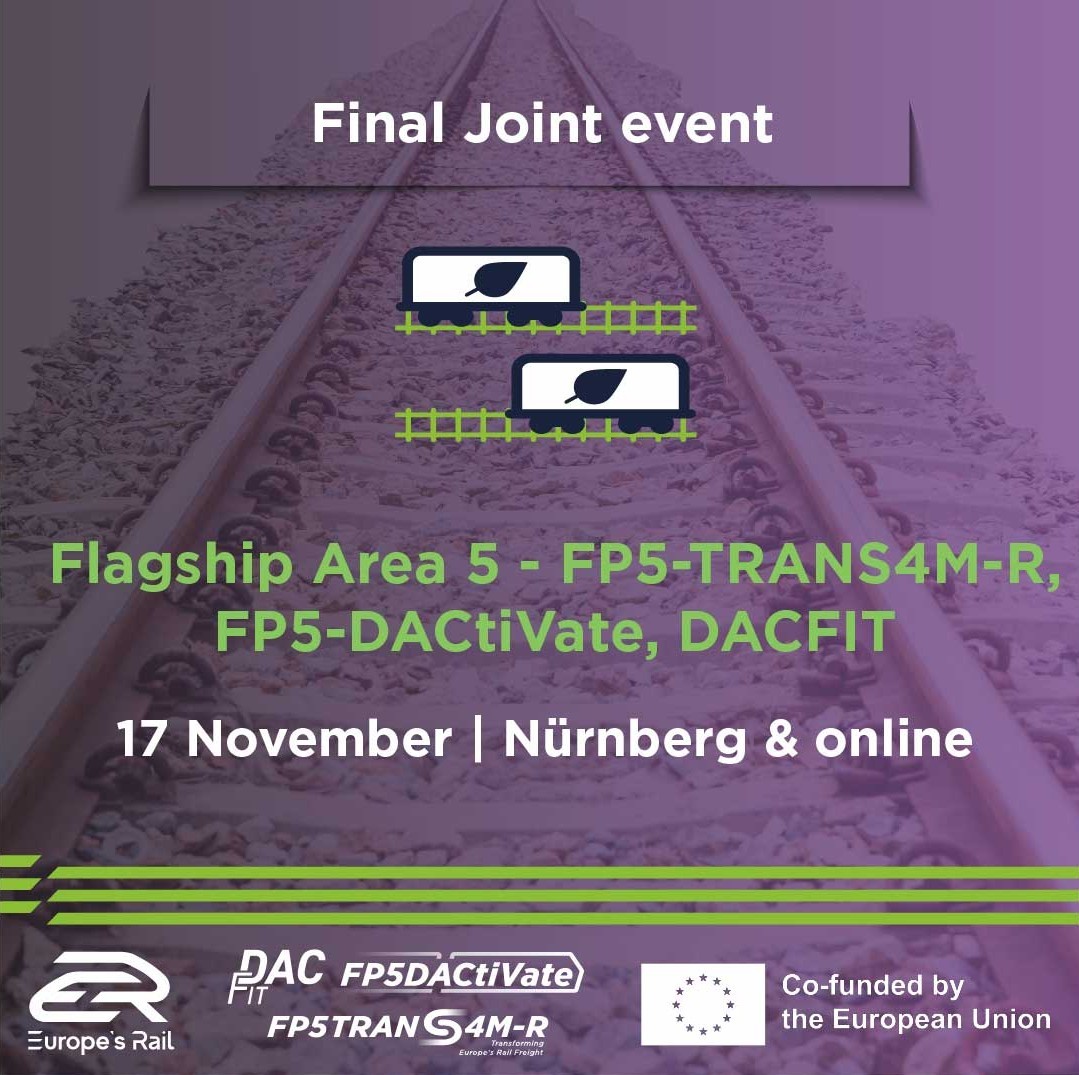
The projects FP5-TRANS4M-R, FP5-DACtiVate, and DACFIT will jointly organise a final event to present their achievements and provide an outlook on future developments.
When: 17 November
Where: Nürnberg, Germany
More information will come soon.