28 September 2026 - The vision of a harmonised European Rail Traffic Management System took shape today at the side...
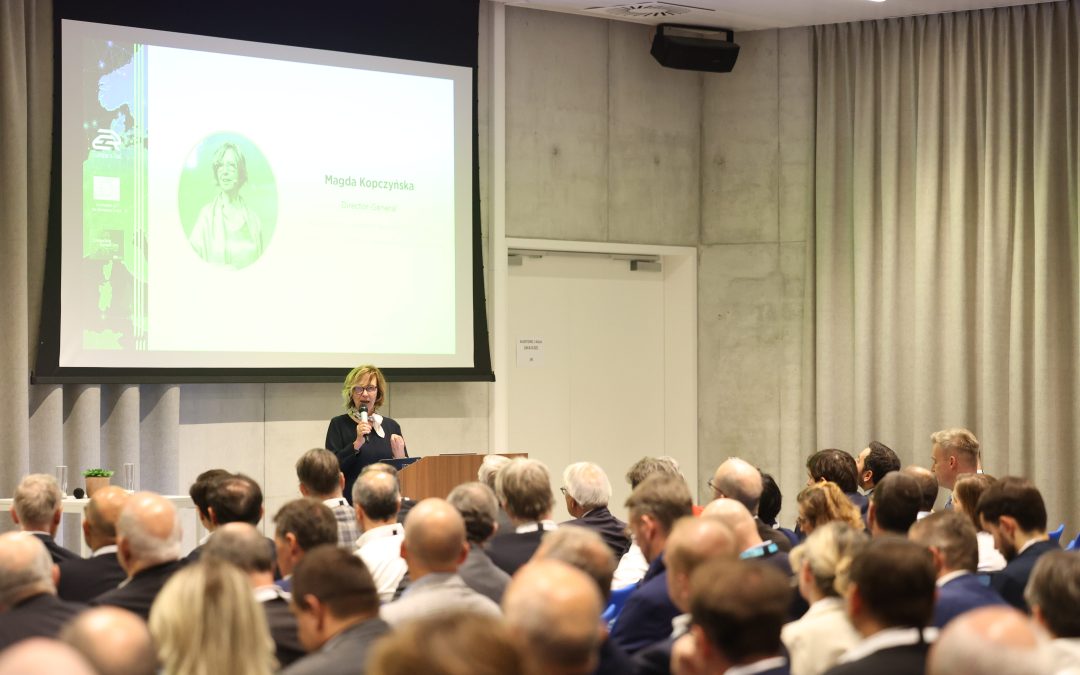
“ERTMS Deal” Side Event at Connecting Europe Days 2026: Kick-starting ERTMS Deployment in Europe
read more
A body of the
European Union

Access the list of all EU-Rail Calls for Proposals.

On 21 June 2024, the Governing Board of Europe’s Rail Joint Undertaking (EU-Rail) adopted a Call for Expression of Interest (CEI) with a view to selecting associated members with the potential to contribute to the achievement of its objectives. The Governing Board decision can be accessed here.
Discover detailed information about procurment rules and information.
Access detailed information about past tenders.

Europe's Rail regularly published Calls for Tenders. To find out about open Calls, follow link below.

Article 15 (Principle of transparency) of the EU-Rail financial rules states that the JU shall make available on its internet site no later than 30 June of the following financial year information on the recipients of funds deriving from its budget.

EU-Rail’s Innovation Pillar (IP) is tasked to deliver operational and technological solutions that contribute to a more efficient, flexible, and demand-led, yet safe and environmentally sustainable European railway system.

The System Pillar provides governance, resource, and outputs to support a coherent and coordinated approach to the evolution of the rail system and the development of the system view.

The Deployment Group advises the EU-Rail Governing Board on the market uptake of rail innovation developments and support their deployment.
For a successful and effective implementation of the Digital Automatic Coupler for European rail freight (DAC), it is of crucial importance to have open, close and efficient cooperation between rail stakeholders. The European DAC Delivery Programme enabled by Europe’s Rail, offers a unique European platform for such cooperation and collaboration.
Discover how Europe’s Rail Joint Undertaking is calling for a bold, coordinated investment strategy to simplify and modernise rail systems across the EU. This public-private partnership model – outlined in our High-Level Paper – proposes an €18 billion investment from 2028 to 2034 to strengthen European competitiveness, deliver greener transport, and drive technological sovereignty.

The Shift2Rail Joint Undertaking is the predecessor programme of the Europe's Rail Joint Undertaking (EU-Rail), established by Council Regulation (EU) 2021/2085 of 19 November 2021.

Discover detailed information on Europe's rail innovation initiatives, showcasing flagship and other projects aimed at enhancing rail systems across Europe. It highlights collaborative efforts funded by the European Union to develop sustainable, efficient, and competitive rail transport solutions.

Europe’s Rail Catalogue of Solutions illustrates successful R&I results in the form of possible products and solutions, while highlighting the benefits for final users, operators, infrastructure managers and/or suppliers. This publication also outlines the advantages of integrating demonstrators into market solutions so that they can deliver the rail innovation Capabilities of the future.
Europe’s Rail Joint Undertaking (EU-Rail) is the European partnership on rail research and innovation established under the Horizon Europe programme (2020-2027) and the universal successor of the Shift2Rail Joint Undertaking.

Find out the full list of Europe's Rail Members.

Discover the full structure and governance of Europe's Rail, including the decisions of the Governing Board.

Get access to Europe's Rail main reference documents, including Annual Work Plans, Annual Activity Reports, Annual Accounts and other important information.
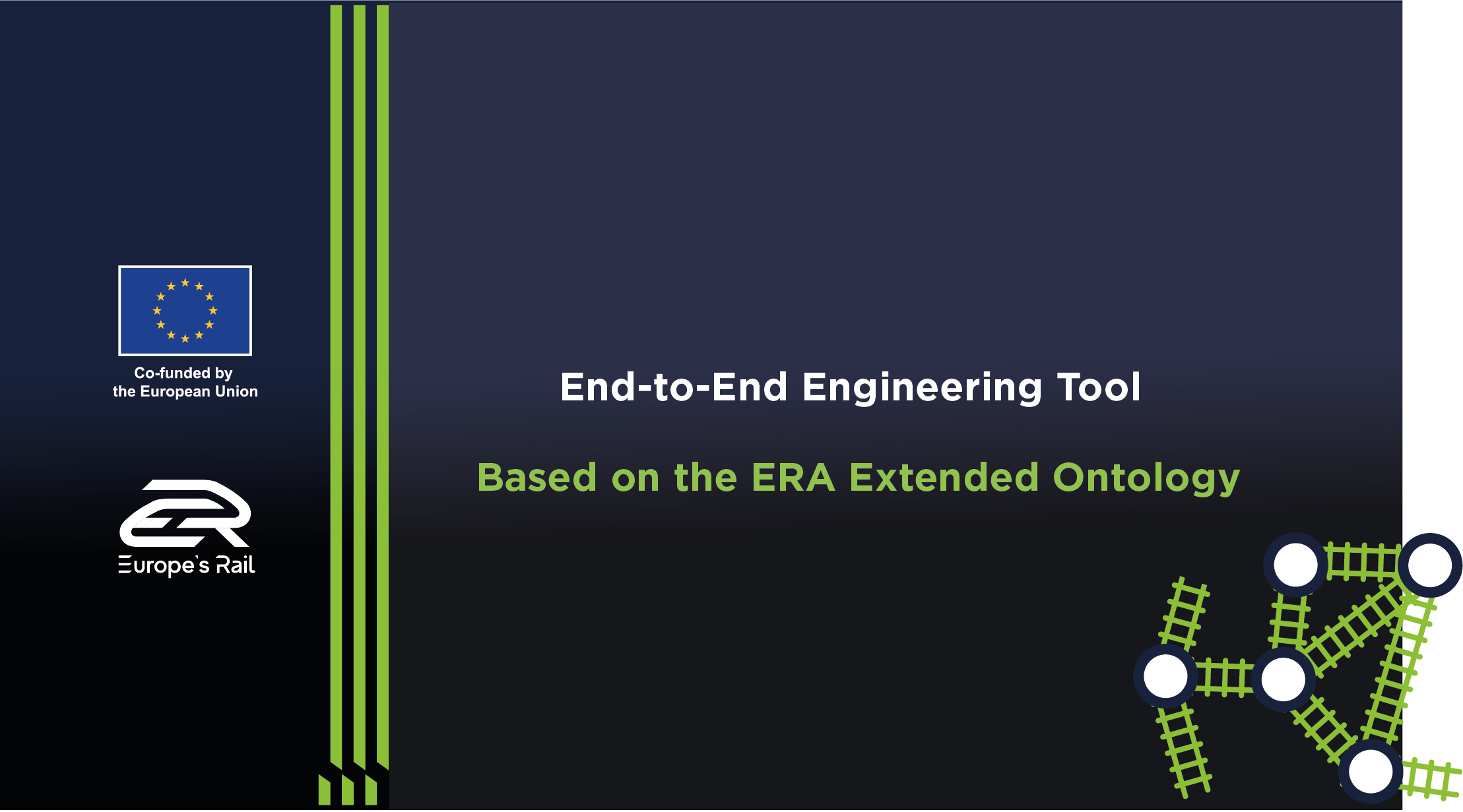
The End-to-End Engineering Tool supports an end-to-end, automated engineering and planning process based on the ERA Extended Ontology. By processing data in RDF format, it enables the automated generation and export of ontology-compliant data, providing a common and structured basis that can be used by different stakeholders and tailored to a range of engineering and operational use cases within the System Pillar.
This approach contributes to greater interoperability, consistency and reuse of engineering data, supporting the System Pillar’s objective of developing a more integrated and digitally enabled railway system.
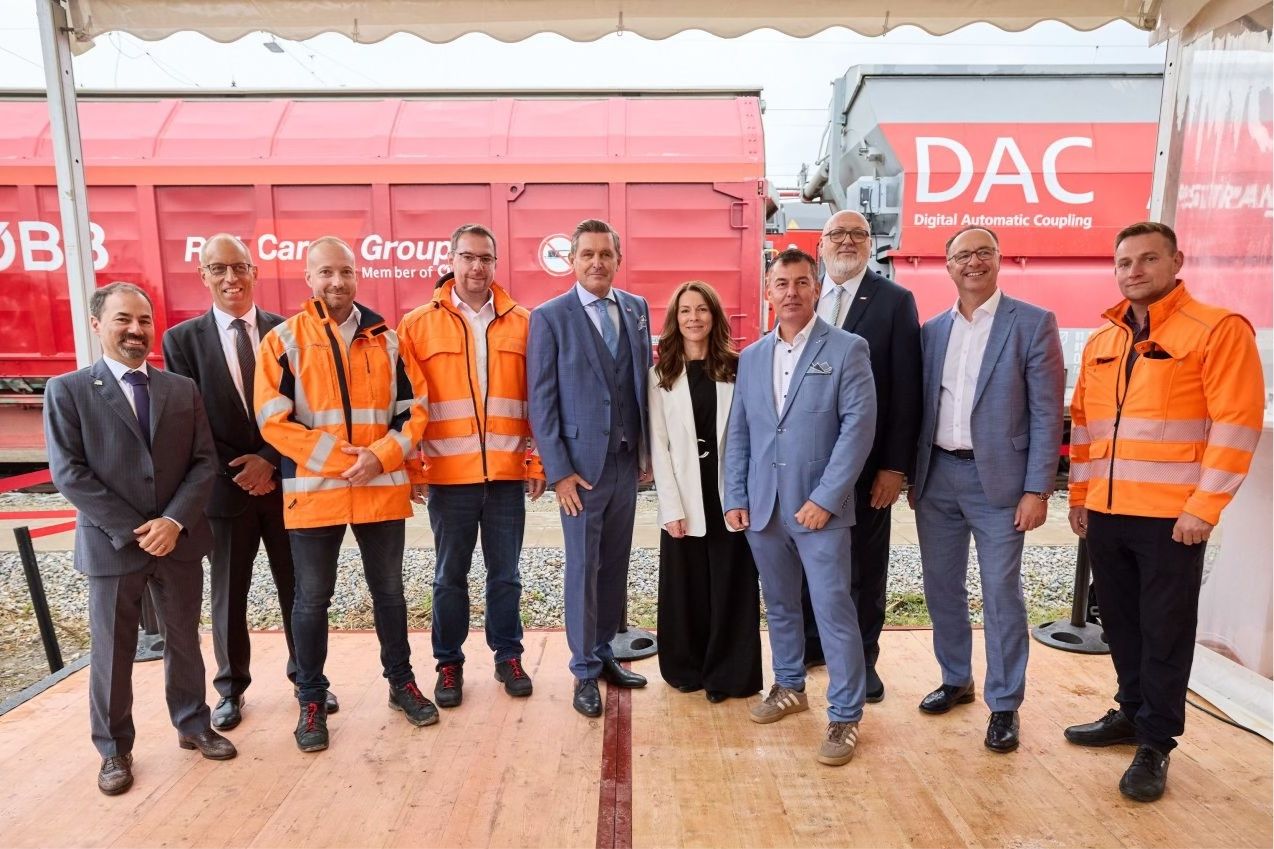
On 11 September, EU-Rail Executive Director Giorgio Travaini joined Federal Minister Peter Hanke, ÖBB CEO Andreas Matthä and industry leaders in Vienna, Austria, for a live demonstration of the Digital Automatic Coupler (DAC) at the Floridsdorf Freight Yard.
The demonstration offered a tangible comparison between conventional screw coupling and DAC, highlighting the technology’s potential to make freight operations safer, more efficient and better suited to the future of European rail.
As part of EU-Rail’s FP5-TRANS4M-R project, a specially equipped ÖBB demonstrator train is currently undergoing real-world testing in Austria, including winter trials. For the first time, DAC technology is being tested not only on freight wagons but also on locomotives, with two new Vectron locomotives joining the demonstrator.
With testing already delivering valuable operational insights, the project is helping pave the way for the further development and future Europe-wide deployment of DAC.
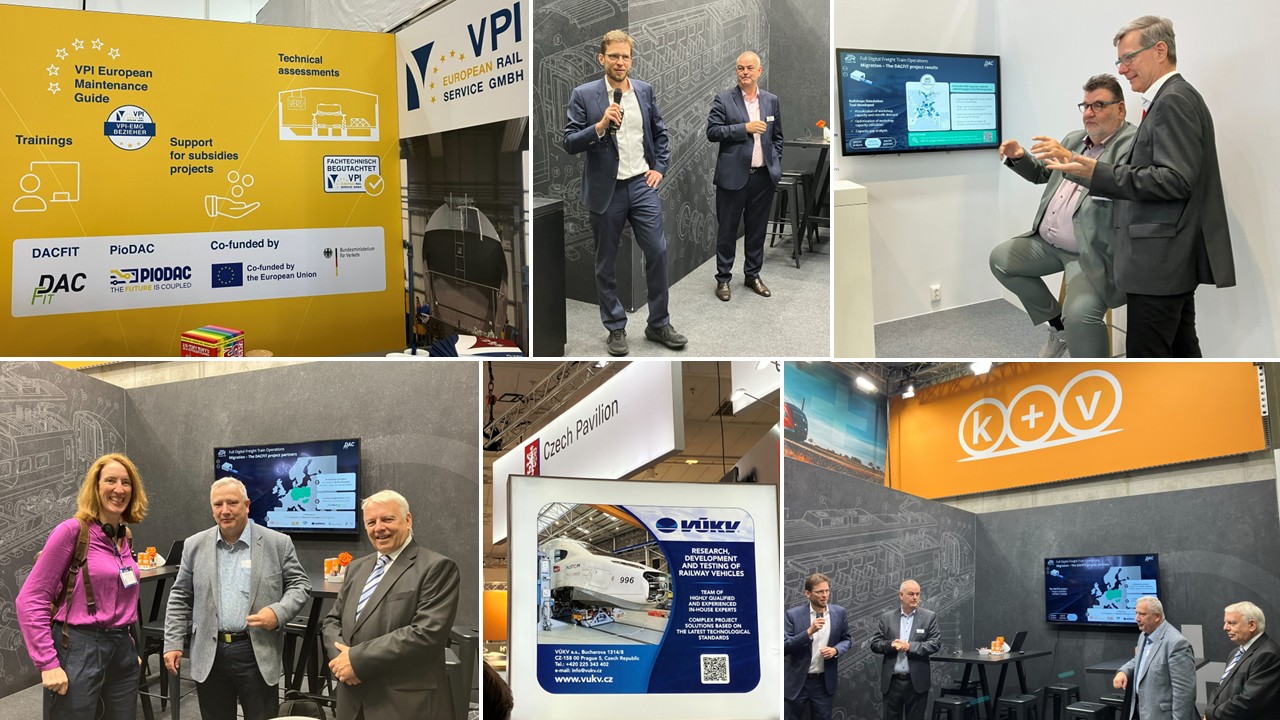
The DACFIT project was part of Europe’s Rail activities at InnoTrans 2026, showcasing rail freight innovations and presenting the latest achievements supporting the rollout of Digital Automatic Coupling (DAC) in Europe.
DACFIT was one of the projects featured during the Rail Innovation Tours, presenting its methodology, activities and key results. The presentation took place at the booth of project partner k + v Ingenieurgesellschaft and was given by Thorsten Djuren, Managing Director of k + v Ingenieurgesellschaft, and Helge Stuhr, Technical Coordinator of the DACFIT project.
Visitors could also explore the DACFIT project at the EU-Rail booth through a virtual project presentation. The presentation provided insights into DACFIT’s approach and activities in the areas of fleet analysis, workshop analysis and mounting processes, as well as key project achievements, including the development of the RailShops simulation tool for visualising and analysing workshop demand and capacity.
Several project partners had their own booths at the fair, includingk + v Ingenieurgesellschaft, VÚKV and VPI European Rail Service GmbH (VERS).
Representatives of other DACFIT partners were also present at InnoTrans, including Instytut Kolejnictwa, BME ITS and Fraunhofer IML, providing further opportunities to exchange views and discuss topics related to the European DAC initiative.
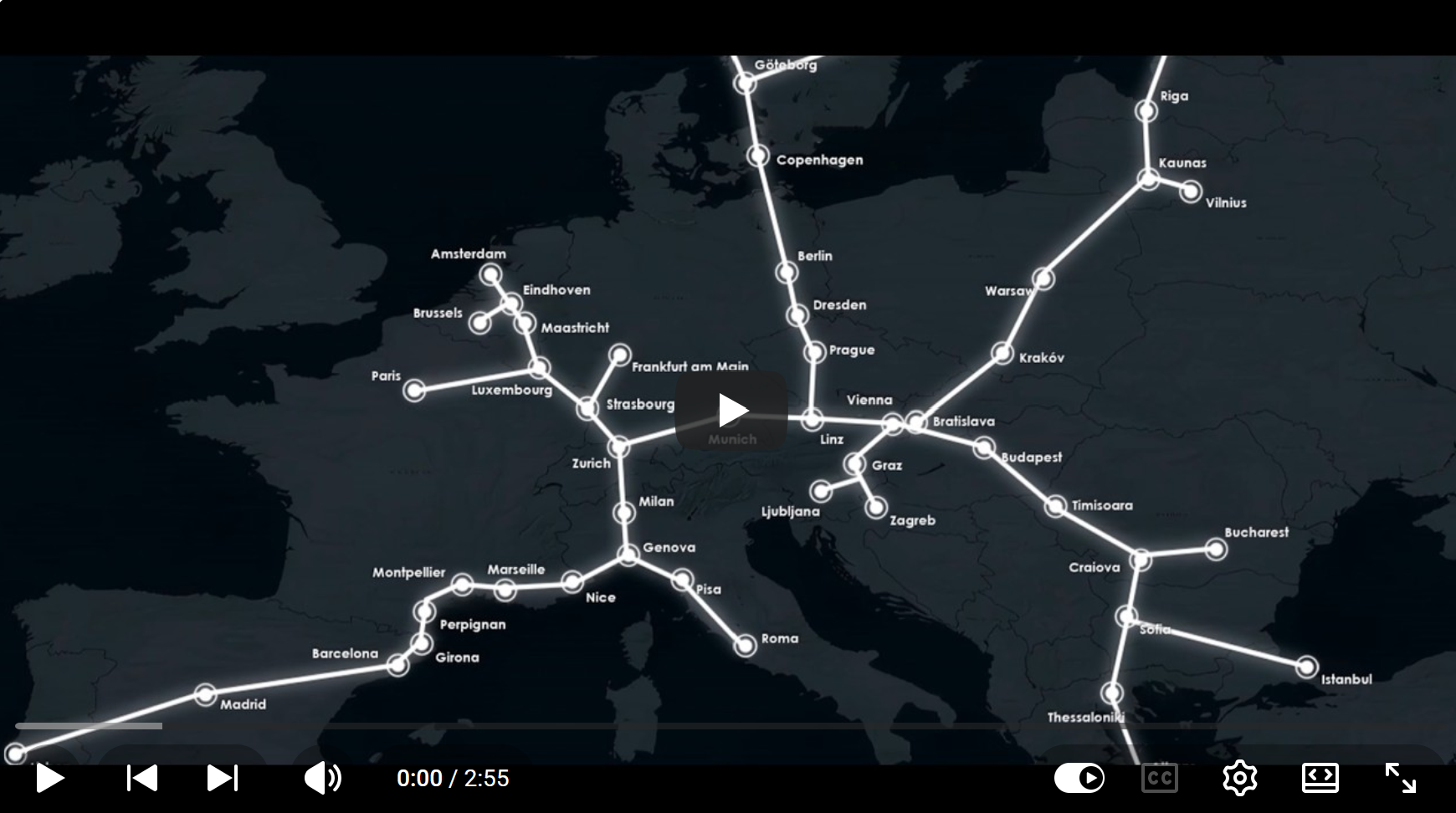
The Hyper4Rail project presented its first project results to an international transport audience at InnoTrans 2026 in Berlin.
Two dedicated Hyper4Rail presentations took place at the joint Hyperloop Development Program and TUM Hyperloop stand. Luca Sandel (EuroTube Foundation) presented “Converging on Europe’s Hyperloop: The Harmonised Technical Concept”, explaining how the project is assessing the trade-offs between different technical concepts and how a harmonised design concept could look across the hyperloop vehicle, infrastructure and different operating conditions.
Dr Chrysostomos Mylonas (CERTH) presented “A European Hyperloop Network: The Financial and Socio-Economic Case”, sharing first results from Hyper4Rail’s network and business case analysis. The study explores how hyperloop could complement high-speed rail by providing an ultra-high-speed layer for longer-distance travel, where aviation currently plays a dominant role. Based on a European reference network of around 11,200 km, the analysis points to the potential for substantial modal shift from intra-European short haul aviation while strengthening connectivity between major European hubs. It also indicates a positive financial and socio-economic case, with the reference scenario showing a Financial Net Present Value of around €18 billion and an Economic Net Present Value of around €197 billion.
Both topics were presented again on Friday as part of the Hyperloop Conference 2026, which brought together representatives from research, industry and European institutions to discuss the next steps towards a European hyperloop roadmap.
The conference also featured a high-level panel with EU-Rail Executive Director Giorgio Travaini and Íñigo Cruz-Martinez from the European Commission’s DG MOVE, alongside representatives from the hyperloop ecosystem and industry.
The SYMBIOSIS project was strongly present at the IENE 2026 International Conference, held in Bristol from 21 to 25 September 2026, with an interactive workshop and five further contributions showcasing the project’s work on integrating biodiversity into transport infrastructure.
On 22 September, SYMBIOSIS partners ICSI, Minuartia, UKCEH and CERTH led an interactive workshop, “Integrating Biodiversity into Climate-Resilient Infrastructure: Insights from the SYMBIOSIS Project”, at UWE Bristol. Following the infrastructure lifecycle, the session combined short presentations and practical group exercises around identifying priority areas for nature-based solutions, biodiversity monitoring and data integration, and governance and decision-making.
The project was also represented through five further contributions: “Economic evaluation of ecosystem services across the lifecycle of sustainable railway infrastructures” (FS Engineering); “Cumulative Impact Assessment in Pairing Transport Infrastructure”; “Operationalising biodiversity monitoring on railway networks through passive acoustics, earth observation, and integrated data workflows” (Reto Schmucki); “From Grey to Blue and Green Infrastructure: Upscaling Nature-based Solutions (NbS) in Railway Networks“; and “Towards Defining Key Performance Indicators for Mainstreaming Biodiversity in Corporate Sustainability Reporting”.
InBridge4EU Project research was featured at the Seventh International Conference on Railway Technology (RAILWAYS 2026), held in Budapest, Hungary, from 23 to 26 August 2026.
Two project-related papers were included in the conference proceedings. Pedro Galvín presented Machine Learning-Based Prediction of Railway Bridge Vertical Accelerations, proposing a machine-learning model for the rapid and accurate prediction of railway bridge accelerations. The paper High-Speed Passenger Train Load Model PT60, by Pedro Museros and C. Riascos, introduces a representative set of 60 passenger trains for assessing the dynamic response of railway bridges.
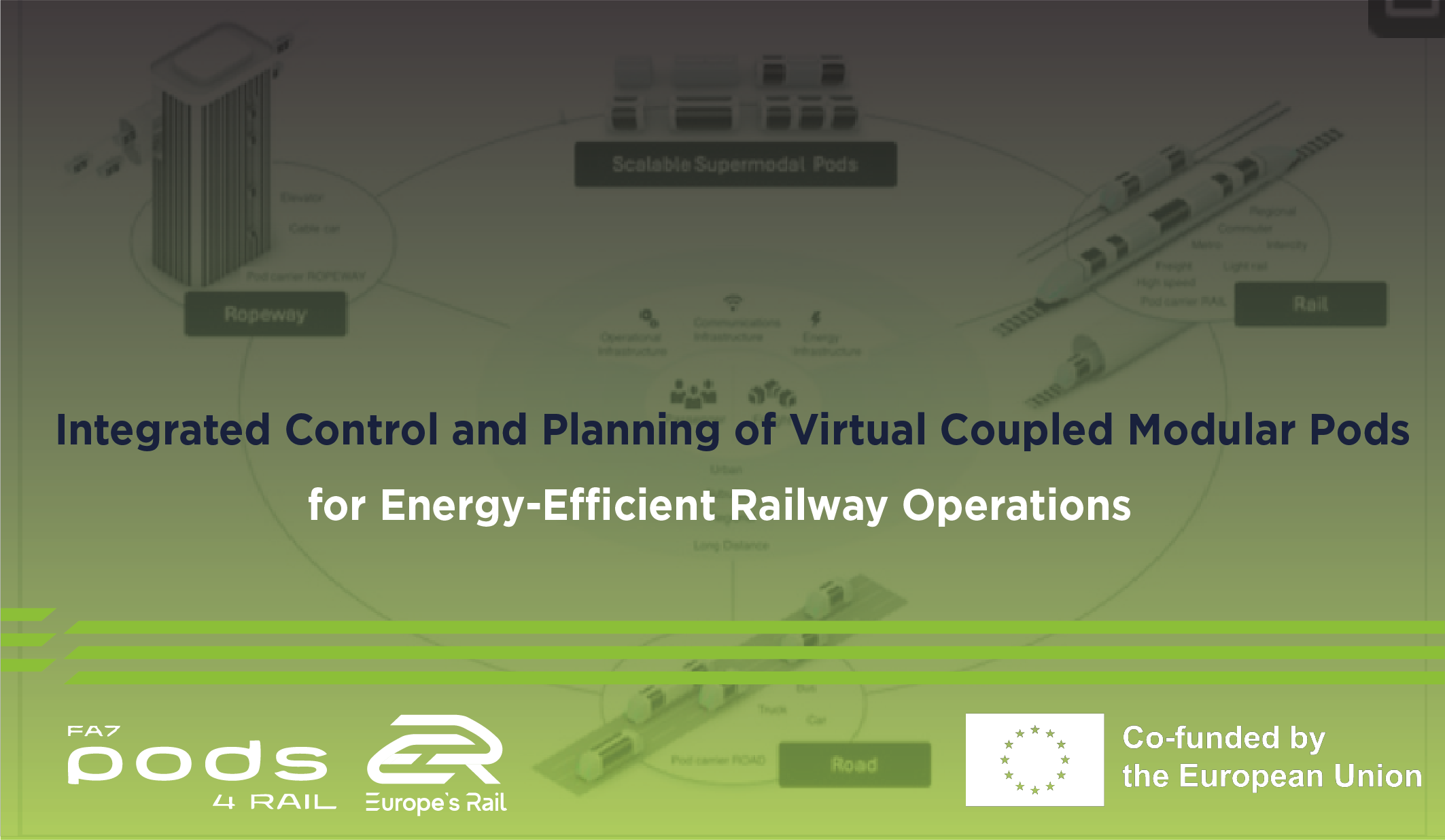
Adapting railway capacity to passenger demand could make rail services more flexible and energy-efficient. This EU-Rail Pods4Rail study explores a modular, pod-based railway concept using virtual coupling, combining safe, dynamically feasible train control with a planning model that adjusts convoy size and service allocation according to demand.
Tested across different demand scenarios and a full day of 20 services, the approach was compared with conventional fixed-composition Diesel–Electric Multiple Unit (DEMU) operation. Although energy use was higher during peak hours, the pod-based configuration delivered 57% savings in off-peak operation and a 20% reduction in total daily energy consumption, from 3,864 kWh to 3,075 kWh.
The findings demonstrate how flexible train composition could help match capacity to demand while supporting safer and more energy-efficient railway operations.
The EU-RAIL FRMCS Deployment Group has released the second edition of its FRMCS Deployment Questionnaire, receiving 78 responses from stakeholders across 21 countries. This survey also included Mobile Network Operators (MNOs) and Notified Bodies, providing a broader view of the sector’s readiness and expectations as FRMCS specifications are finalised and testing progresses.
The preliminary findings highlight strong interest from Infrastructure Managers in working with MNOs, while around half of the trainsets expected to be equipped with FRMCS will not have ETCS. Many stakeholders have yet to establish a financial plan for deployment, and type homologation and software update management are identified as key challenges. While providers do not currently foresee major production capacity issues, the expected concentration of deployments in the early 2030s could put pressure on engineering resources.
A report with the full findings and recommendations will be published in September. The results will also be presented during a webinar on 7 October.
On 15 September, the twelfth plenary meeting of the FRMCS Deployment Group was held, focusing on the progress of the group’s ongoing activities. The status of the FRMCS working groups was reviewed, including technical, cost-modelling and migration-related workstreams.
The FRMCS Cost Model was introduced, including the methodology, assumptions and initial findings, highlighting the importance of obtaining further input from stakeholders to improve the robustness of the model and support future deployment decisions.
The group was also updated on progress in the FRMCS Risk Assessment activity and the discussions held within the Stakeholder Alignment Meeting (SAM). A first version of the Deployment Risk Register, identifying 27 risks across strategic, regulatory, financial and technical domains, was presented, together with proposed mitigation measures.
Updates were also provided on the deployment survey, programme dashboard and other cross-cutting activities supporting the preparation of FRMCS deployment.
After the DACcord project ended on 31 March 2026, EU-Rail and sector representatives agreed on a new set-up for the European DAC Delivery Programme (EDDP), previously managed by DACcord. This new setup brings EDDP activities under the umbrella of EU-Rail’s High-Level Deployment Group (HL-DpG). The new structure is designed to strengthen coordination and support the delivery of EU-Rail’s deployment objectives.
Under the new governance arrangements, the tasks previously carried out by the EDDP Supervisory Board have been integrated into the High-Level Deployment Group. The former EDDP Programme Board has become the new DAC Deployment Group.
Following the publication of the programme management profile for the new DAC Deployment Group and the subsequent appointment process, EU-Rail and sector representatives agreed on how this group will be managed. From September 2026 to Q1 2027, Jens Engelmann, Mark Topal-Goekceli and Tibo Noël will serve as independent PM(O), co-funded by EU-Rail and ÖBB through the upcoming FP5-Future4Freight project. From Q1 2027 to March 2029, Molley Williams will take over as independent Programme Manager, co-funded by EU-Rail and DB through the same project. EU-Rail will continue to support the programme management throughout the project.
The DAC Deployment Programme Manager and team will coordinate the activities needed to fulfil the remit of the DAC Deployment Group. This includes managing the group and coordinating its different work streams, as well as serving as the main point of contact for the sector, the High-Level Deployment Group and relevant experts at various levels. The team will also monitor and manage risks across the work streams and DAC contributor projects, escalating issues where necessary and enabling decision-making on recommendations.
The new setup provides a more integrated governance framework for DAC deployment by linking the work of the DAC Deployment Group directly to EU-Rail’s broader deployment structure and activities under the High-Level Deployment Group. Marking an important step forward, the DAC Deployment Group held its first formal meeting on 16 September 2026.