The European rail community gathered on board the European Train heading to InnoTrans 2026 The European rail...
Press Release – European Train: Europe on the way to InnoTrans 2026
read more


A body of the
European Union

Access the list of all EU-Rail Calls for Proposals.

On 21 June 2024, the Governing Board of Europe’s Rail Joint Undertaking (EU-Rail) adopted a Call for Expression of Interest (CEI) with a view to selecting associated members with the potential to contribute to the achievement of its objectives. The Governing Board decision can be accessed here.
Discover detailed information about procurment rules and information.
Access detailed information about past tenders.

Europe's Rail regularly published Calls for Tenders. To find out about open Calls, follow link below.

Article 15 (Principle of transparency) of the EU-Rail financial rules states that the JU shall make available on its internet site no later than 30 June of the following financial year information on the recipients of funds deriving from its budget.

EU-Rail’s Innovation Pillar (IP) is tasked to deliver operational and technological solutions that contribute to a more efficient, flexible, and demand-led, yet safe and environmentally sustainable European railway system.

The System Pillar provides governance, resource, and outputs to support a coherent and coordinated approach to the evolution of the rail system and the development of the system view.

The Deployment Group advises the EU-Rail Governing Board on the market uptake of rail innovation developments and support their deployment.
For a successful and effective implementation of the Digital Automatic Coupler for European rail freight (DAC), it is of crucial importance to have open, close and efficient cooperation between rail stakeholders. The European DAC Delivery Programme enabled by Europe’s Rail, offers a unique European platform for such cooperation and collaboration.
Discover how Europe’s Rail Joint Undertaking is calling for a bold, coordinated investment strategy to simplify and modernise rail systems across the EU. This public-private partnership model – outlined in our High-Level Paper – proposes an €18 billion investment from 2028 to 2034 to strengthen European competitiveness, deliver greener transport, and drive technological sovereignty.

The Shift2Rail Joint Undertaking is the predecessor programme of the Europe's Rail Joint Undertaking (EU-Rail), established by Council Regulation (EU) 2021/2085 of 19 November 2021.

Discover detailed information on Europe's rail innovation initiatives, showcasing flagship and other projects aimed at enhancing rail systems across Europe. It highlights collaborative efforts funded by the European Union to develop sustainable, efficient, and competitive rail transport solutions.

Europe’s Rail Catalogue of Solutions illustrates successful R&I results in the form of possible products and solutions, while highlighting the benefits for final users, operators, infrastructure managers and/or suppliers. This publication also outlines the advantages of integrating demonstrators into market solutions so that they can deliver the rail innovation Capabilities of the future.
Europe’s Rail Joint Undertaking (EU-Rail) is the European partnership on rail research and innovation established under the Horizon Europe programme (2020-2027) and the universal successor of the Shift2Rail Joint Undertaking.

Find out the full list of Europe's Rail Members.

Discover the full structure and governance of Europe's Rail, including the decisions of the Governing Board.

Get access to Europe's Rail main reference documents, including Annual Work Plans, Annual Activity Reports, Annual Accounts and other important information.
From technical milestones to partnership highlights, the Flagship and Exploratory Projects continue to drive forward innovation in the European rail sector. Below, you will find the latest updates from February, showcasing progress, collaboration and the steps being taken toward a more integrated, sustainable and efficient rail system across Europe.
The Versatile Inspection, Diagnostic and Autonomous Repair (VIDAR) is an autonomous on-rail robot developed for Trafikverket by Chalmers University of Technology, in cooperation with SNCF under the FP3-IAM4RAIL project. Designed for regular, unsupervised railway inspections — and eventually minor repairs — VIDAR represents a major step toward automated infrastructure maintenance in Europe.
Demonstrations conducted in 2025 at Trafikverket’s Tortuna Test Center in Västerås showed the robot autonomously navigating to inspection zones, detecting and documenting simulated rail defects, and returning safely to base using RTK-GNSS positioning and geo-fencing. The successful, repeatable tests confirmed TRL 6 for autonomous inspection functionality, marking significant progress toward fully autonomous railway maintenance under EU-Rail innovation framework.
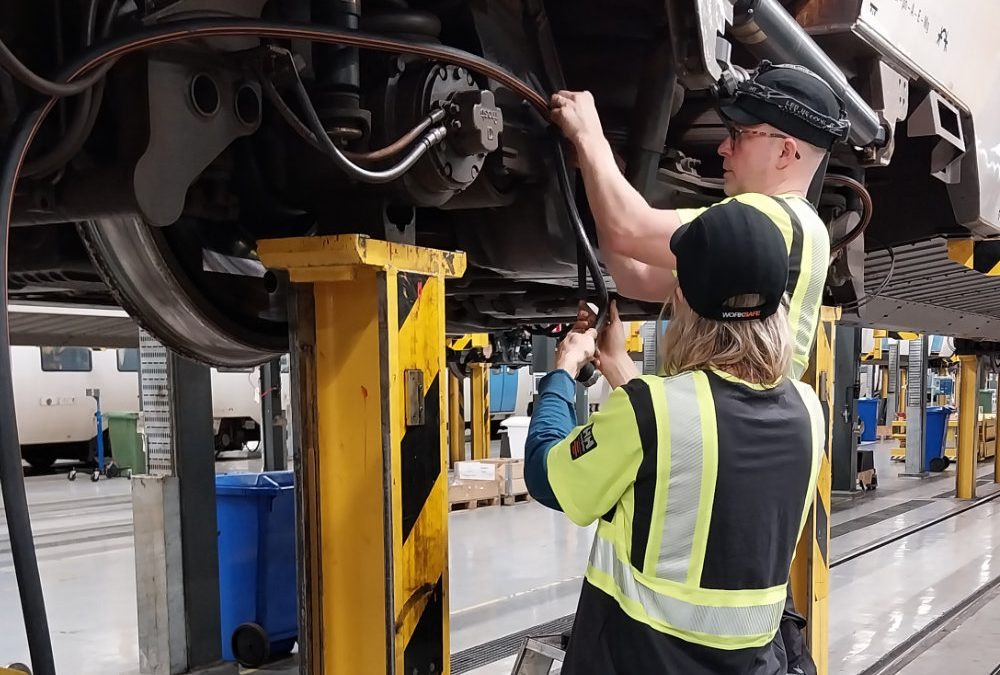
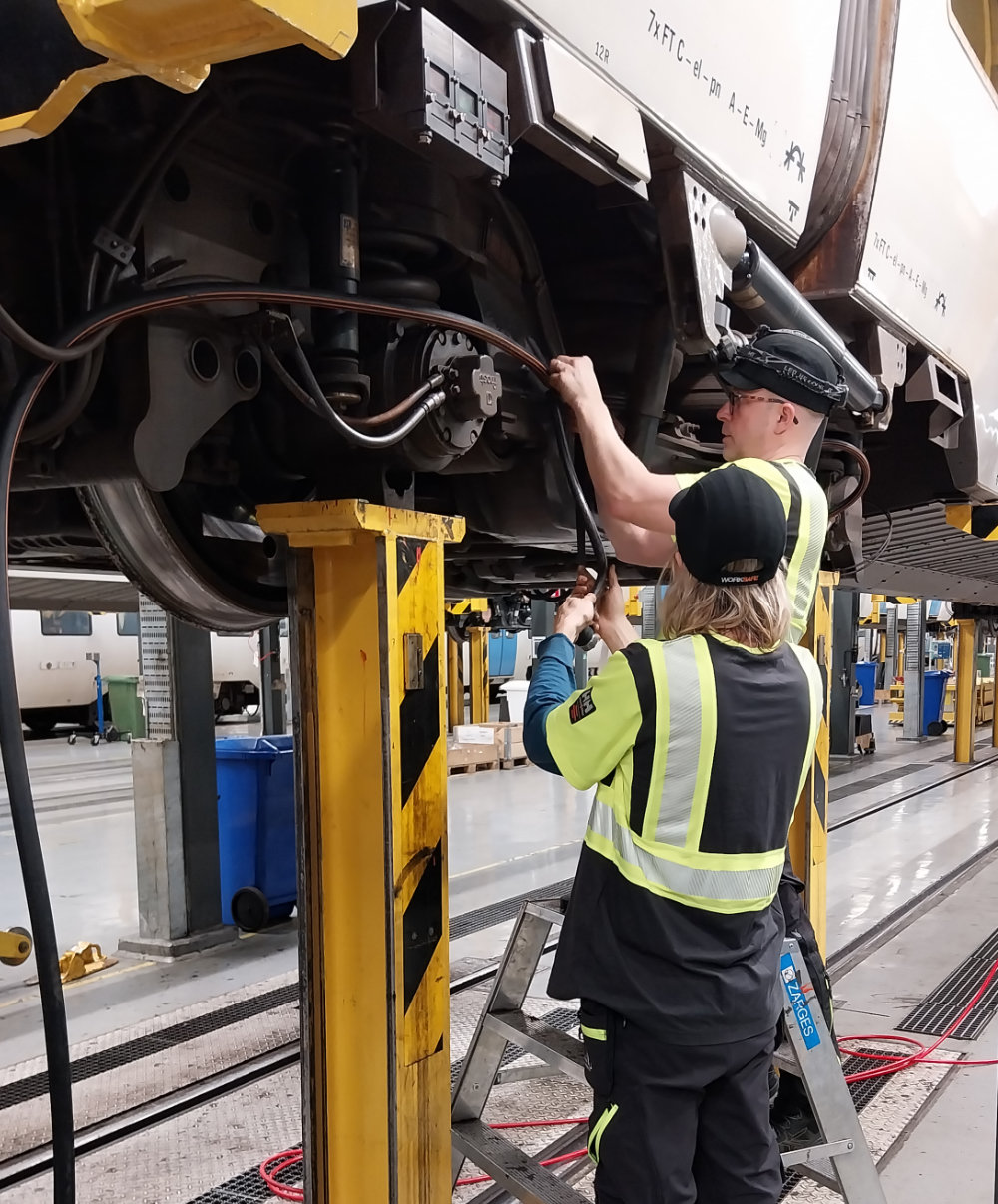
To strengthen knowledge of how infrastructure and vehicles interact, the Trafikverket, together with SL, Luleå University of Technology and SJ AB, has equipped a Stockholm commuter train with advanced sensors within the project FP3-IAM4RAIL.
Over a minimum two-year period, the train will operate across the entire Stockholm commuter network, collecting data in all seasons to build a comprehensive dataset. The results are expected to support the development of a future technical specification for vehicle instrumentation.
By analysing sensor data from the running vehicle, infrastructure conditions can be monitored more precisely, enabling optimized threshold values, improved maintenance planning and earlier identification of root causes.
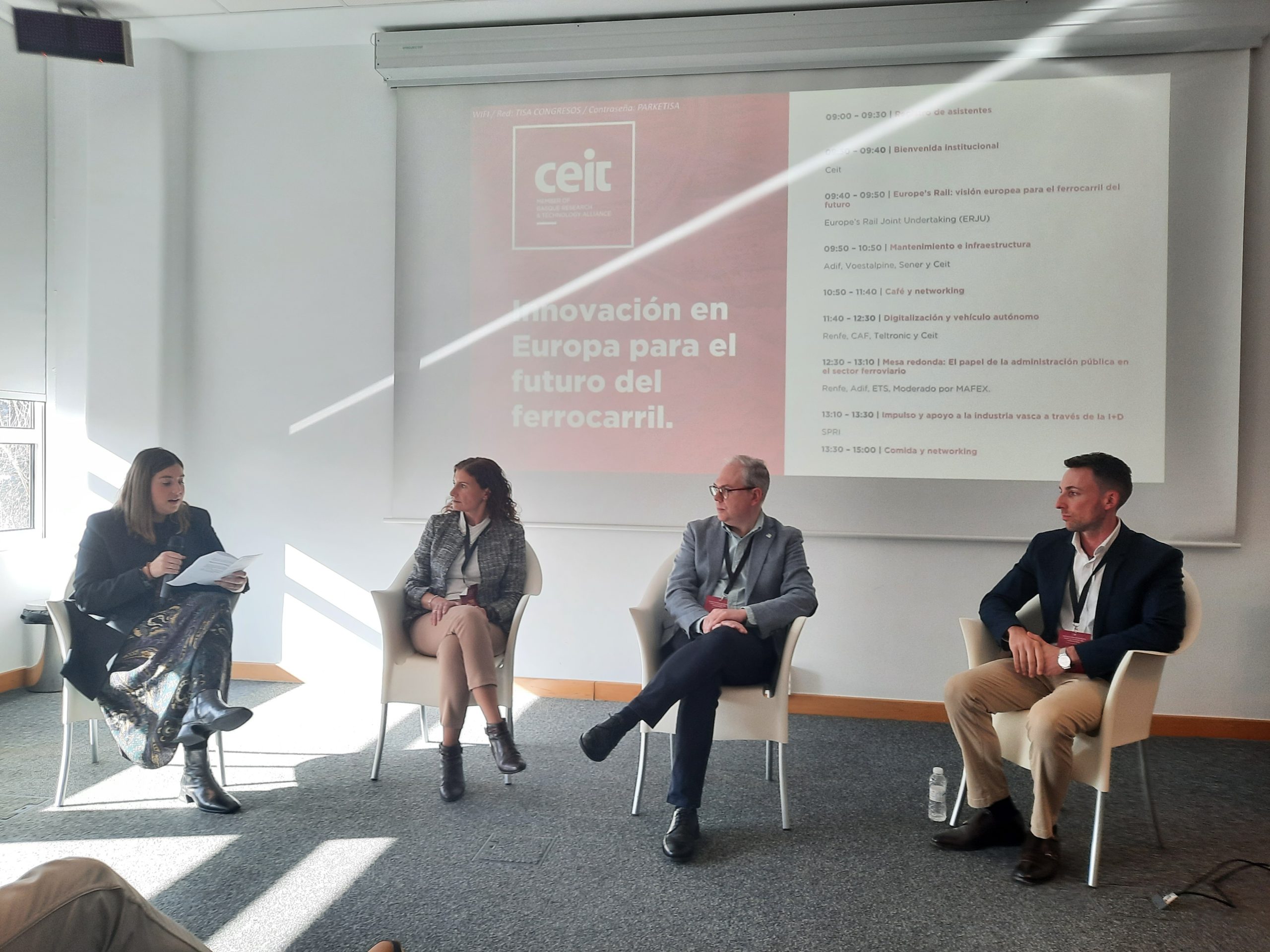
In January, the CEIT conference “Innovation in Europe for the Future of Railways” was held in Donostia-San Sebastián, Spain, bringing together industry leaders, operators, public authorities, and the European R&D community to discuss the challenges and opportunities facing the railway sector.
The event featured contributions from EU-Rail and FP3-IAM4RAIL experts. Jaizki Mendizabal (CEIT) opened the conference, followed by Ricardo Campo (EU-Rail), who presented the European vision for the railway of the future and its key role in sustainable mobility. Technical sessions addressed maintenance and infrastructure, with contributions from David Villalmanzo, FP3-IAM4Rail project, as well as digitalisation and autonomous vehicles. Pannels were attended by representatives from ADIF, Renfe, CAF, Sener, voestalpine, Teltronic, and CEIT.
A key highlight was the round table on the role of public administration in rail which brought together Renfe, ADIF and Euskal Trenbide Sarea – Basque Railway Network. The day concluded with remarks from Amaia Martínez Muro (SPRI Group), emphasizing support for Basque industry through R&D. The conference underscored the importance of collaboration and innovation to build a more resilient and sustainable European rail system.
To better understand and reduce curve squeal Luleå University of Technology (LTU), in collaboration with Trafikverket, has developed and installed a measuring station in Södertälje as a part of the FP4-Rail4EARTH Project. Over a one-year period, the station automatically records sound and rail vibrations from all train passages, building a comprehensive dataset across seasons and weather conditions.
By combining acoustic and vibration data with weather information, researchers can analyse when and why curve squeal occurs. The study shows distinct patterns for inner and outer rails, influenced by wheel–rail contact conditions, humidity, temperature and season. The results demonstrate strong potential to predict curve squeal based on weather data, enabling more targeted and demand-driven mitigation measures, such as optimized application of friction modifiers.
To support the EU’s climate ambitions and increase rail freight capacity, project FP5-TRANS4M-R is advancing digital interoperability and harmonised processes across Europe. By addressing today’s fragmented and manual workflows, the programme promotes a seamless corridor concept and the deployment of the Digital Automatic Coupler (DAC) to enable fully integrated, data-driven freight operations.
Within the Seamless sub-project, partners including Trafikverket and Lindholmen Science Park have demonstrated tangible results along the Scandinavian–Mediterranean corridor, reducing lead times by 10–20% and cutting border downtimes by up to 50%. Standardised checkpoints and dynamic planning tools form the basis for the next phase of digital rail development.
Through standardised data exchange combined with DAC-enabled train data, the project enhances decision support, operational transparency and intelligent train functions.
To ensure safe, reliable and cost-effective rail freight, RAMS (Reliability, Availability, Maintainability and Safety) framework is being systematically applied by FP5-TRANS4M-R to the introduction of Digital Automatic Couplers (DAC) and Full Digital Freight Train Operation (FDFTO).
The deployment of DAC and FDFTO introduces new subsystems and performance requirements, making structured RAMS specification essential for smooth approval and long-term operational reliability. In collaboration with the Trafikverket, FP5-TRANS4M-R has developed a methodology to evaluate RAMS performance of the DAC-FDFT system, based on established standards and existing maintenance data.
The approach defines measurable targets such as Mean Time Between Failures (MTBF) and annual downtime per unit and wagon. These performance benchmarks provide a foundation for component development, procurement, system approval and maintenance planning ensuring that digital freight operations achieve the desired levels of safety, robustness and efficiency across the European rail network.
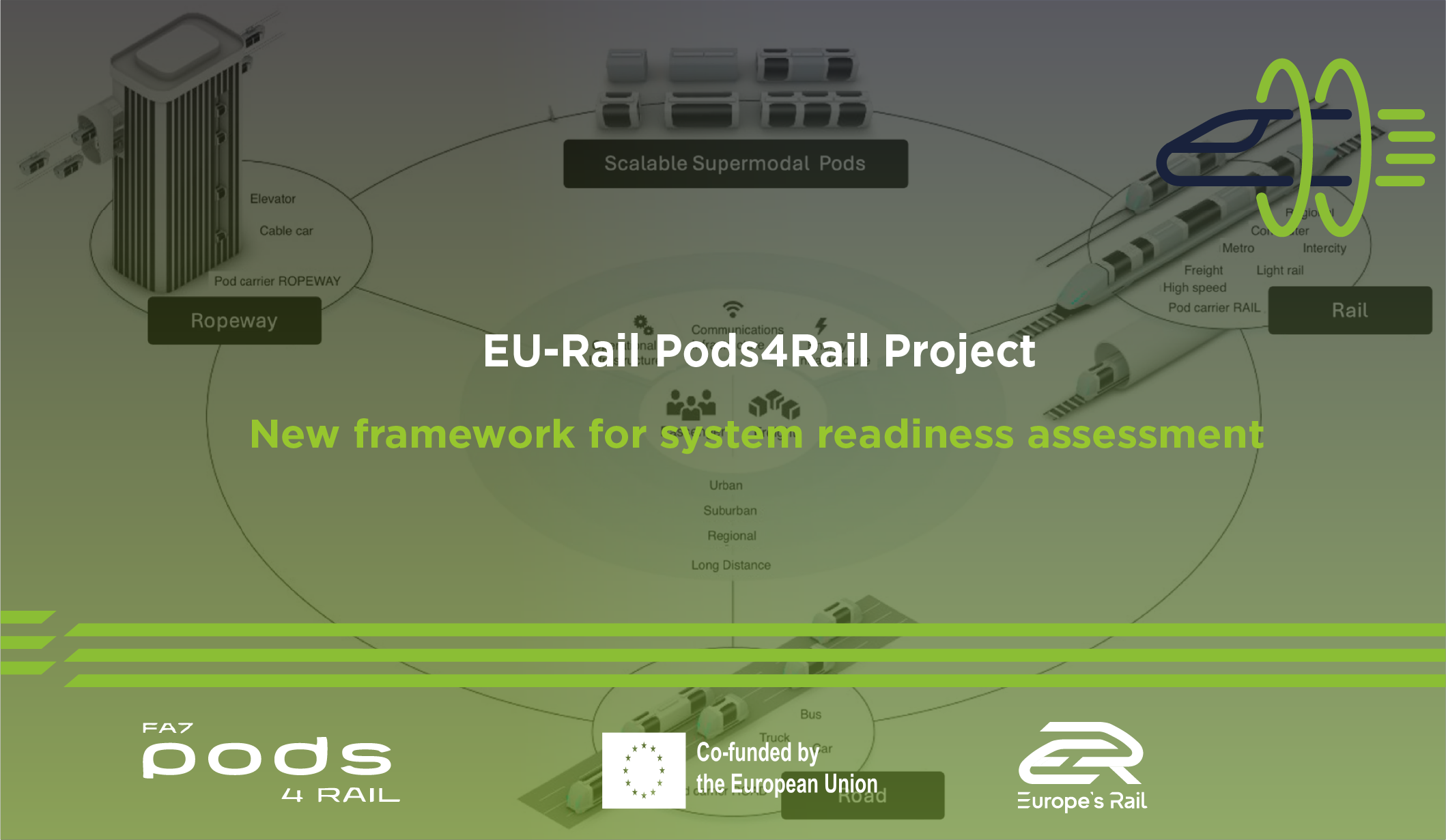
New Pods4Rail study presents a hybrid qualitative–quantitative framework to evaluate the technical feasibility and overall system readiness of emerging multimodal mobility solutions. Published in the Special Issue “Emerging Solutions and Technologies for Smart Mobility and Vehicle Safety in Transportation”, the study provides a transparent and transferable method for early-stage readiness assessment of complex, data-scarce mobility innovations.
The approach integrates expert-based Technology Readiness Level (TRL) assessments with a probabilistic System Readiness Level (SRL) model that incorporates uncertainties in both TRLs and Integration Readiness Levels (IRLs).
Results indicate that the Pods4Rail concept currently lies between SRL 1 and SRL 2, reflecting early concept refinement and technology development stages.
Integrating biodiversity into transport infrastructure planning has become a key condition for long-term sustainability and resilience. As transport networks expand and adapt to climate change, they increasingly interact with ecosystems, landscapes, and natural habitats, making biodiversity integration a growing priority for infrastructure managers and public authorities.
In the 23rd edition of the FEHRL FIRM Magazine (January 2026), the article “Mainstreaming Biodiversity in Transport Infrastructure” highlights how research and collaboration can help bridge the gap between ambitious biodiversity policies and practical implementation.
Through the SYMBIOSIS project, project partners are developing practical tools, harmonised data approaches, and decision-support frameworks to make biodiversity considerations measurable, comparable, and actionable across the infrastructure life cycle.
On 5 February, the mid-term event of the XCROSS project was held at the International Union of Railways (UIC) headquarters in Paris, gathering around 40 participants onsite and online.
Event was opened by Valeri Markine (TU Delft) and David Connolly (University of Leeds), who provided a comprehensive overview highlighted key innovations and addressed challenges of the first 18 months. This was followed by Sébastien Denis (EU-Rail), who highlighted strong synergies between XCROSS and FP3-IAM4RAIL, noting the project’s relevance for the broader innovation ecosystem.
The core of the meeting focused on technical updates and live demonstrations presented by project partners, covering system requirement, AR tool for maintanance support, £D-printed tools and much more.
On February 10 European Rail Research Network (EURNEX) hosted a webinar showcasing progress from 16 PhD researchers funded under the Academics4Rail and PhDs EU-Rail projects, The presentations highlighted remarkable diversity across technical, operational, social, and environmental dimensions of railway research, demonstrating strong industry collaboration and tangible pathways to implementation.
As an output report which synthesizes key advances from each researcher and captures transversal insights from EURNEX Secretary General Armando Carrillo is now available.
The special edition of journal Promet – Traffic & Transportation, Vol. 38 No. 1 (2026), Rethinking the European Railway System, has published 4 articles from Academics4Rail and PhDs EU-Rail.
Inside this edition you can find articles:
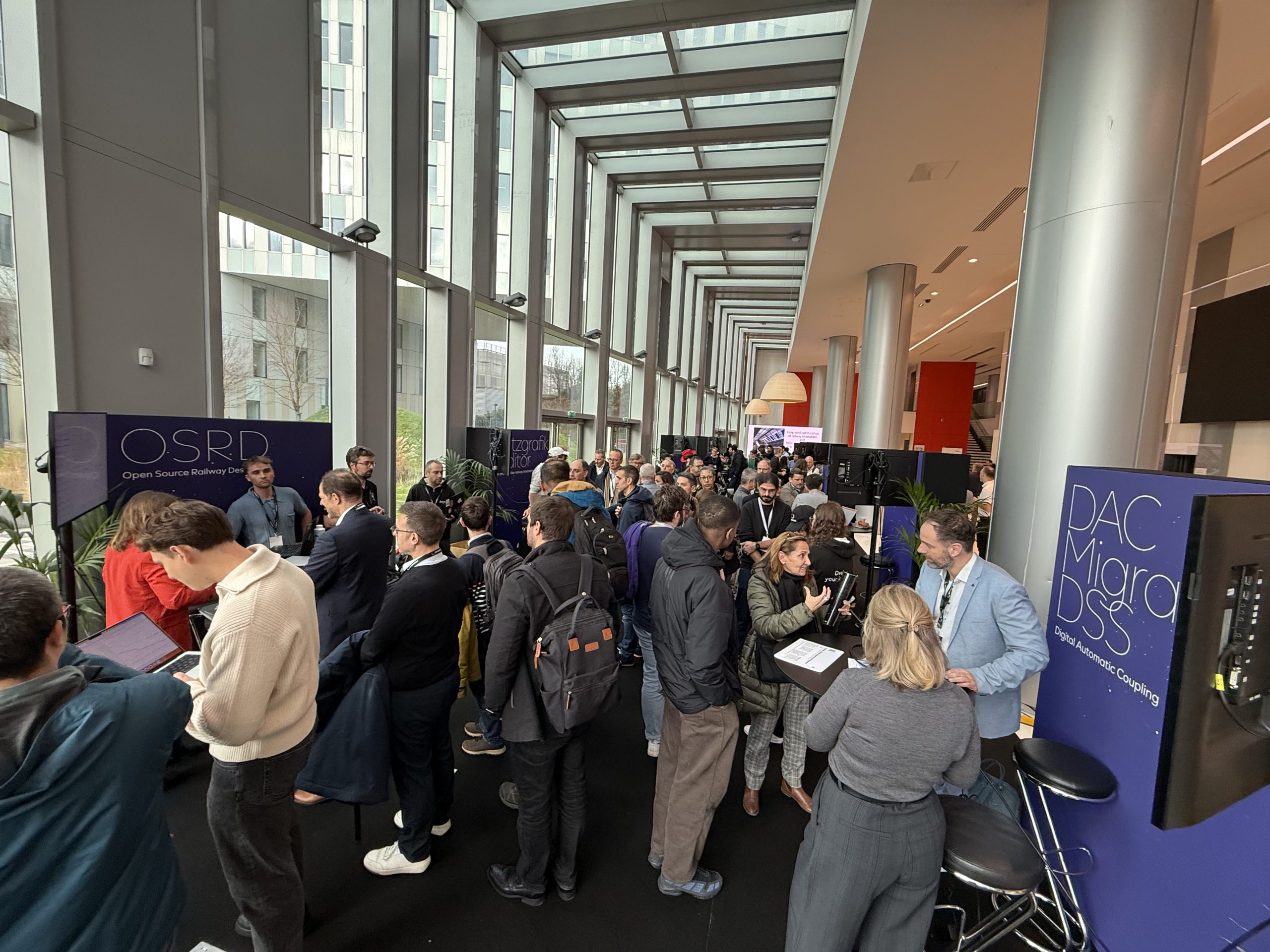
On December 17, 2025, the DACFIT project attended the first edition of OpenRail Day @Paris. This event was the ideal opportunity to present the decision support system helping the rollout of the Digital Automatic Coupling, the DAC Migration DSS, as well as the recent achievements of the DACFIT project in this scope.
In the morning, the participants could discover the topic of DAC Migration DSS in the Expo & Demo Zone. The currently most advanced part of the DAC Migration DSS is PopUpSim, developed by DB Systel. At the end, a short presentation, and a live demo of the DAC Migration DSS and the PopUpSim took place, showing how DAC migration can already be simulated in practice.
Later that day the DACFIT workshop on the Retrofit Capacity Plan took place.
The day was rounded off with presentations of the projects and roundtable discussions in the plenary. For the DAC Migration DSS it was highlighted why DAC migration is one of the most essential strategic tasks in European rail freight, how it can be planned responsibly, and why decisions at this scale need reliable data. Altogether over 500 attendees got in touch with the activities around the DAC, the DAC Migration DSS and the DACFIT during the day. The topics were represented by Frederik Schäfer, Senior Referent DAC Migration from the DB Cargo.
Join FP1-MOTIONAL for a fully digital European broadcast, streaming live from partner sites across several countries, as project celebrates four years of innovation and cooperation. This final event marks the grand finale of Dissemination Events Series, offering a journey through the many achievements delivered.
During the event, project members will showcase the results and breakthroughs developed over the past four years, demonstrating how FP1 MOTIONAL is making rail travel smoother, greener, and more reliable by improving traffic planning and management, strengthening multimodal connections, and introducing digital tools that support an efficient rail ecosystem. Join us to discover how these achievements will benefit passengers, freight customers, and society.
The results also prove that collaboration is of utmost importance as authorities, industry and academia have worked together to expand knowledge and develop new demand-driven solutions for a transport system that is digital, sustainable and reliable for customers, suppliers and infrastructure managers.

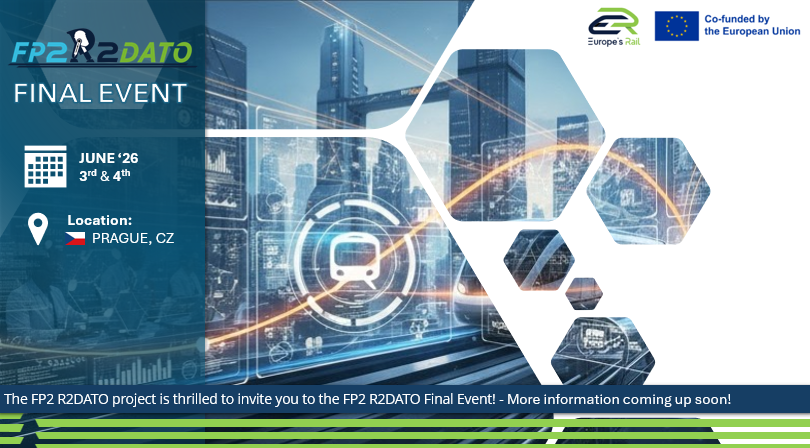
The FP2-R2DATO Final Event will take place on 3–4 June 2026 in Prague, Czech Republic. The event will gather experts and stakeholders to explore the progress made towards advanced digital and automated train control systems. The programme will provide a comprehensive overview of Automatic Train Operation (ATO), new functionalities of the European Train Control System (ETCS), and advanced connectivity solutions, highlighting the central role of FP2-R2DATO in enabling the next generation of rail automation.
Participants will have the opportunity to attend live presentations of operational demonstrators, showcasing the solutions delivered and the maturity of the integrated technologies. The event will also present the project’s impact and added value for the European rail sector, concluding with a celebration of the achievements of FP2-R2DATO Wave 1.
Sessions will be hosted in Prague as well as along the FP2-R2DATO regional demonstrator line between Dolní Bousov and Kopidlno.
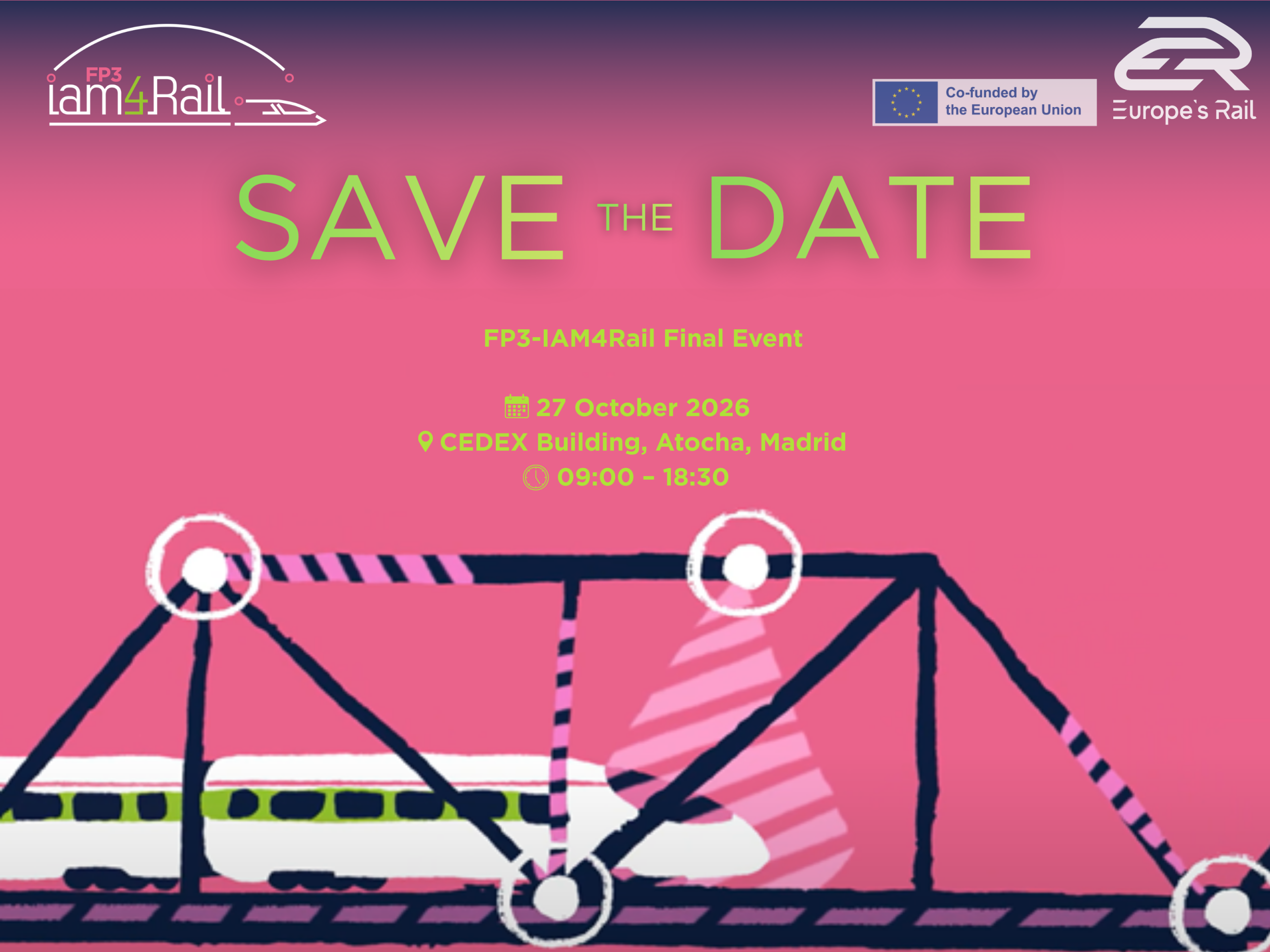
The FP3-IAM4Rail Final Event will take place on the 27 October 2026 in Madrid, Spain, and will serve as a high-level forum to present the main results, impacts and future perspectives of the project to the European rail community.
The event will bring together representatives from European and national institutions, rail infrastructure managers, industry, research organisations and other key stakeholders to discuss the role of Intelligent Asset Management in supporting the digital transformation, resilience and sustainability of rail infrastructure in Europe. The programme will include the presentation of project outcomes, demonstrations of developed tools and platforms, as well as a strategic roundtable on future perspectives under Europe’s Rail.
Fill out the “Women workers and users in the railway sector” survey by University of Malaga & PhDs EU-Rail project to help assess the situation of women in the railway sector, both as workers and as users.
Take part in Hyper4Rail “Hyperloop User Survey” and contribute to a comprehensive understanding of customer preferences, which will help experts refine the user journey and align the system design with user expectation.