Europe’s Rail Newsletter – September Edition The September edition of the Europe’s Rail newsletter is out! 🚆 This...
EU-Rail September 2026 Newsletter
read more
A body of the
European Union

Access the list of all EU-Rail Calls for Proposals.

On 21 June 2024, the Governing Board of Europe’s Rail Joint Undertaking (EU-Rail) adopted a Call for Expression of Interest (CEI) with a view to selecting associated members with the potential to contribute to the achievement of its objectives. The Governing Board decision can be accessed here.
Discover detailed information about procurment rules and information.
Access detailed information about past tenders.

Europe's Rail regularly published Calls for Tenders. To find out about open Calls, follow link below.

Article 15 (Principle of transparency) of the EU-Rail financial rules states that the JU shall make available on its internet site no later than 30 June of the following financial year information on the recipients of funds deriving from its budget.

EU-Rail’s Innovation Pillar (IP) is tasked to deliver operational and technological solutions that contribute to a more efficient, flexible, and demand-led, yet safe and environmentally sustainable European railway system.

The System Pillar provides governance, resource, and outputs to support a coherent and coordinated approach to the evolution of the rail system and the development of the system view.
The Deployment Group advises the EU-Rail Governing Board on the market uptake of rail innovation developments and support their deployment.
For a successful and effective implementation of the Digital Automatic Coupler for European rail freight (DAC), it is of crucial importance to have open, close and efficient cooperation between rail stakeholders. The European DAC Delivery Programme enabled by Europe’s Rail, offers a unique European platform for such cooperation and collaboration.
Discover how Europe’s Rail Joint Undertaking is calling for a bold, coordinated investment strategy to simplify and modernise rail systems across the EU. This public-private partnership model – outlined in our High-Level Paper – proposes an €18 billion investment from 2028 to 2034 to strengthen European competitiveness, deliver greener transport, and drive technological sovereignty.

The Shift2Rail Joint Undertaking is the predecessor programme of the Europe's Rail Joint Undertaking (EU-Rail), established by Council Regulation (EU) 2021/2085 of 19 November 2021.

Discover detailed information on Europe's rail innovation initiatives, showcasing flagship and other projects aimed at enhancing rail systems across Europe. It highlights collaborative efforts funded by the European Union to develop sustainable, efficient, and competitive rail transport solutions.

Europe’s Rail Catalogue of Solutions illustrates successful R&I results in the form of possible products and solutions, while highlighting the benefits for final users, operators, infrastructure managers and/or suppliers. This publication also outlines the advantages of integrating demonstrators into market solutions so that they can deliver the rail innovation Capabilities of the future.
Europe’s Rail Joint Undertaking (EU-Rail) is the European partnership on rail research and innovation established under the Horizon Europe programme (2020-2027) and the universal successor of the Shift2Rail Joint Undertaking.

Find out the full list of Europe's Rail Members.

Discover the full structure and governance of Europe's Rail, including the decisions of the Governing Board.

Get access to Europe's Rail main reference documents, including Annual Work Plans, Annual Activity Reports, Annual Accounts and other important information.
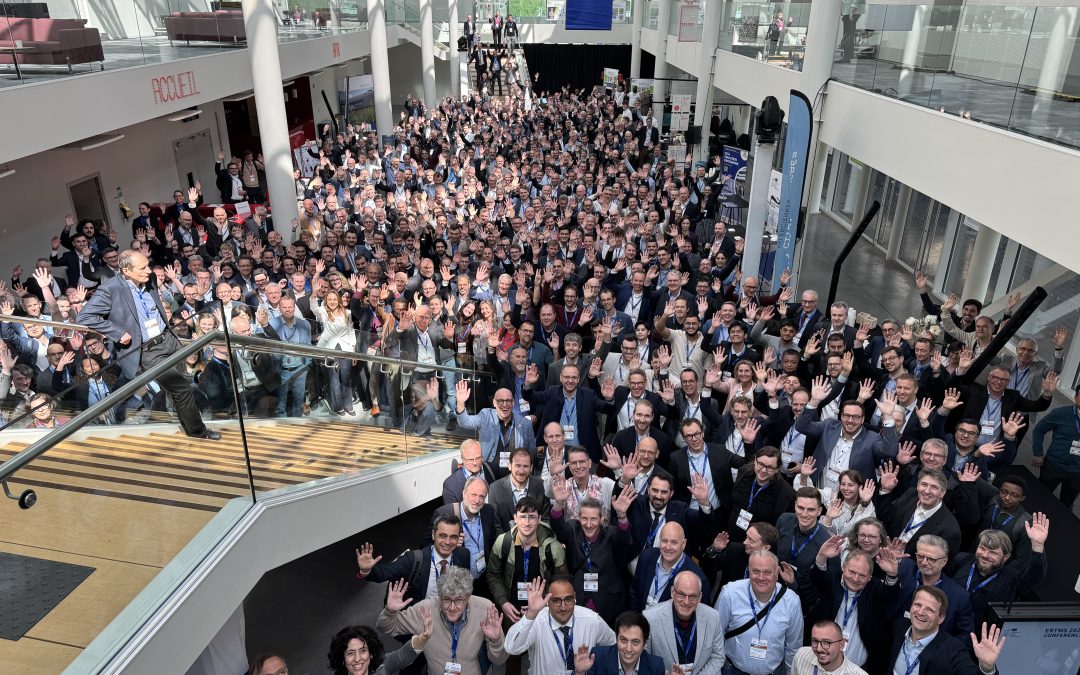
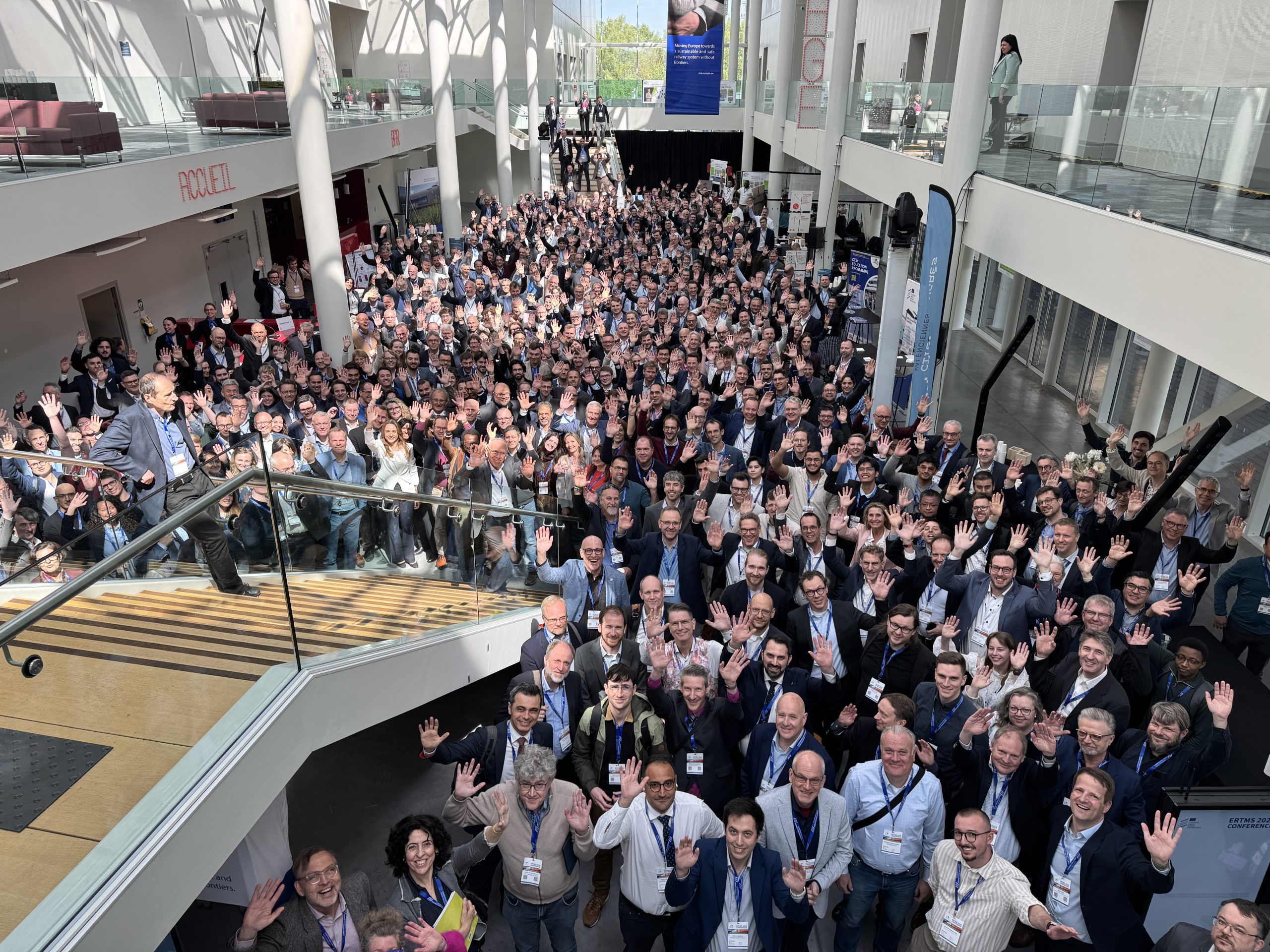
EU-Rail was at the ERTMS 2026 Conference in Valenciennes, France, from 21 to 23 April 2026. Organised by the European Union Agency for Railways (ERA), the 3-day Conference provided an in-depth exploration of ongoing projects and successful deployment cases of ERTMS across Europe and worldwide. The event brought together over 600 participants in person and 200 joining remotely.
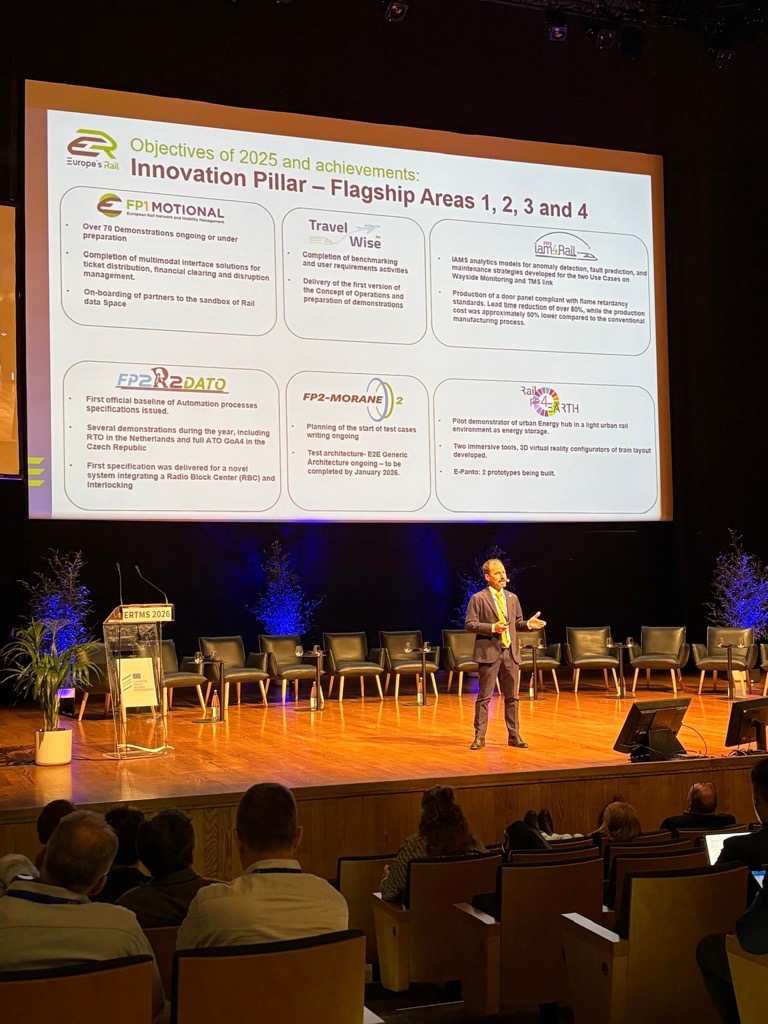
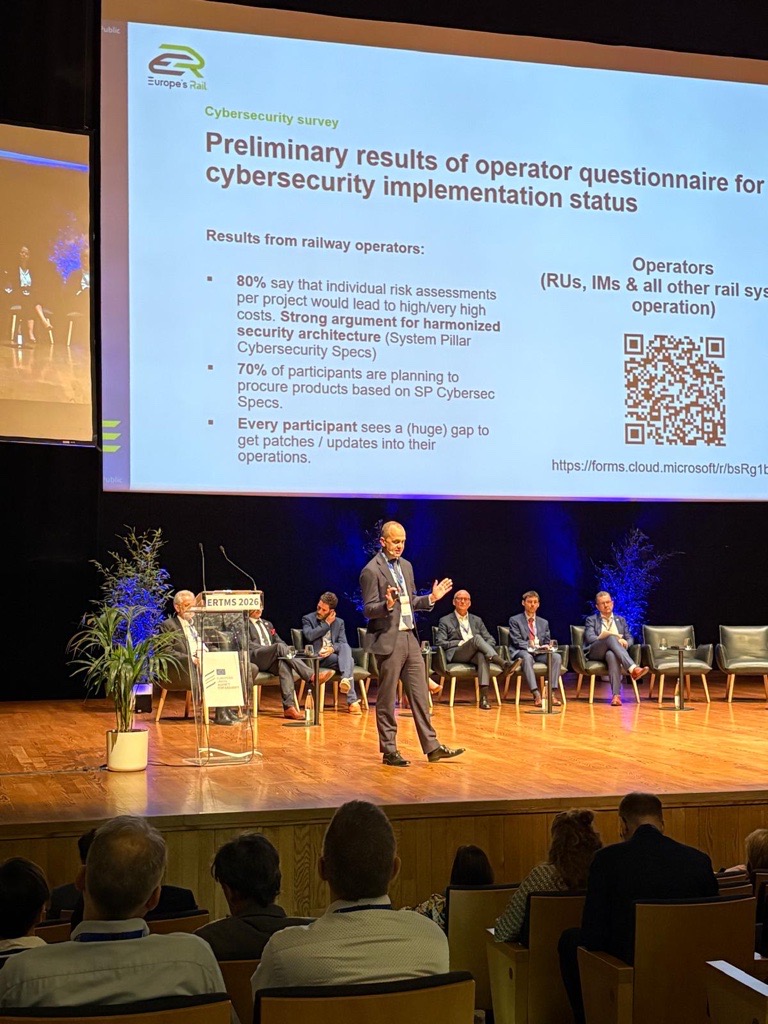
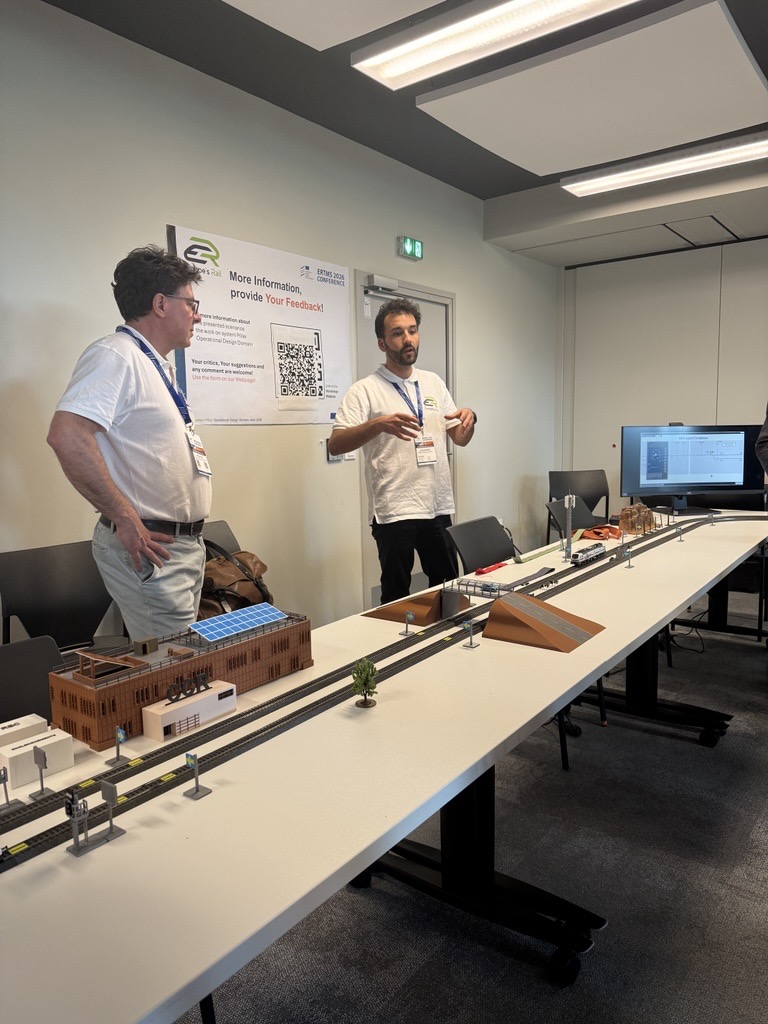
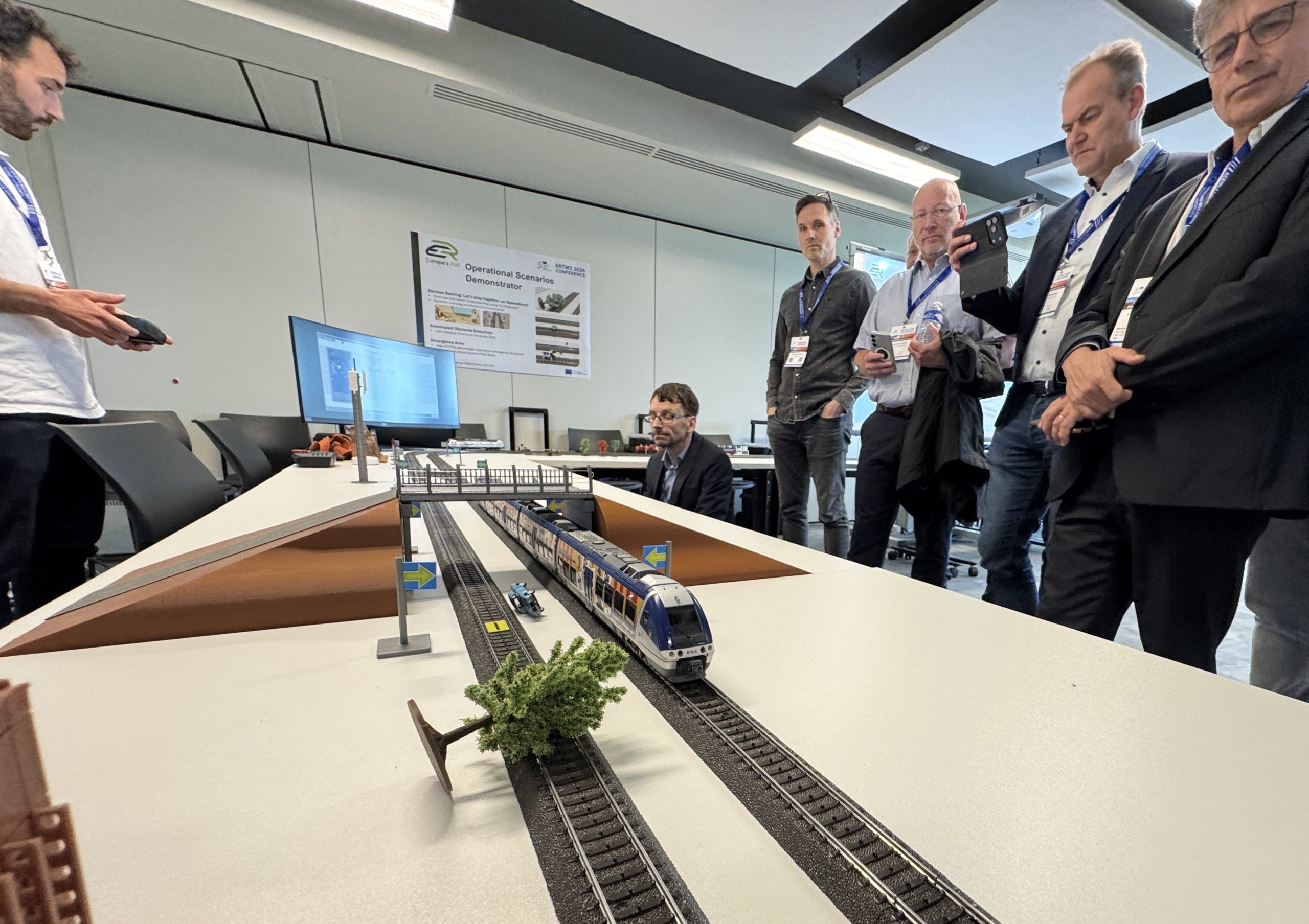
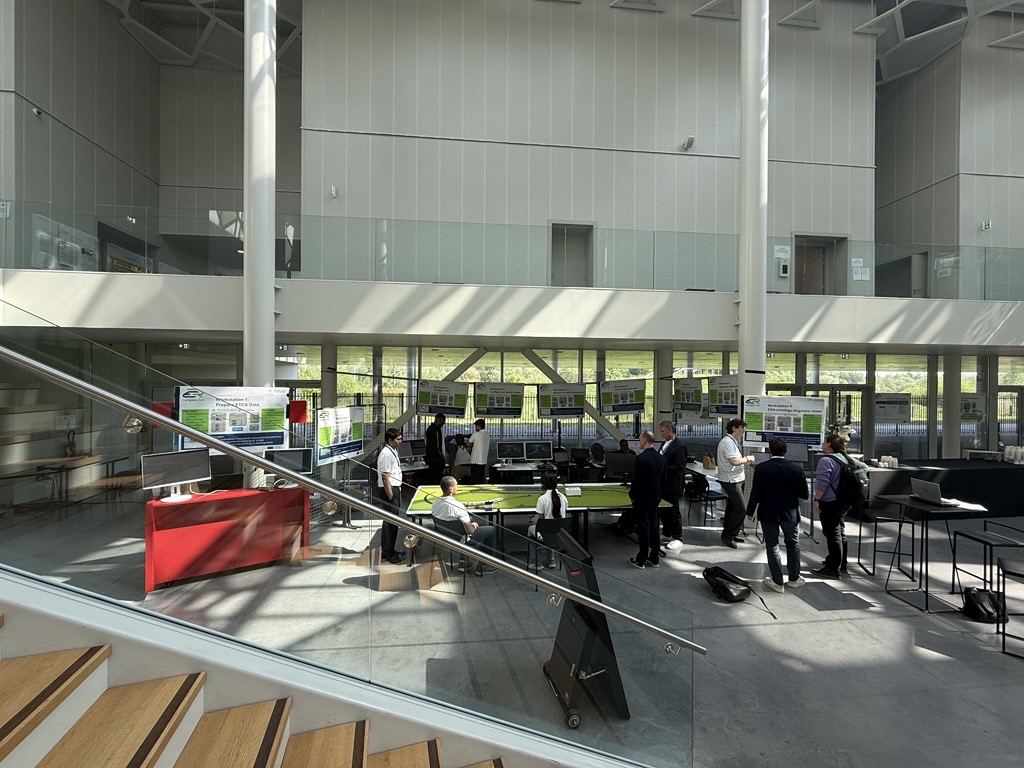
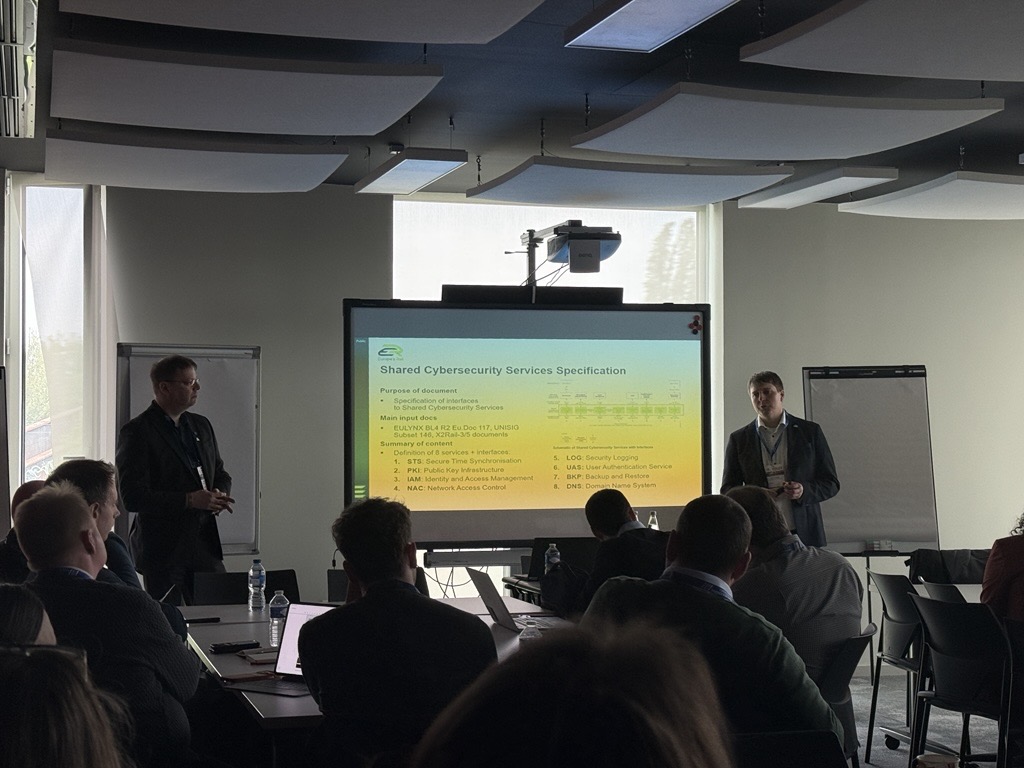
EU-Rail activities were highlighted throughout the conference including workshops on FRMCS, Operational Harmonisation, technical solutions contributing to the Single European Rail Area, Cybersecurity, and Modular Safety Case, as well as demonstrations linking ERA ontology to real-time trackside diagnostics. Let’s explore in depth how EU-Rail contributed to the discussions throughout the whole event.
Workshop 4 – Practical solutions to overcome FRMCS-related deployment challenges
EU-Rail moderated Workshop 4 on practical solutions to overcome FRMCS-related deployment challenges. Over 250 attendees joined the workshop, where deployment group members present and explore the challenges and possible solutions that will allow FRMCS deployment in the coming years: an aligned and long-term vision for FRMCS deployment across Europe, the use of public Mobile Network Operators (MNOs), and real deployment scenarios and operational applications.
Participants were involved working in small groups, comparing operational needs, technical constraints and opportunities for innovation. The lively discussion showed a high interest in the upcoming sector transition to FRMCS. It also became clear that creating awareness and cooperating between all stakeholders is important for better knowledge and preparation for the migration ahead.
EU-Rail is actively working on this topic, and the Deployment Group will soon release webinars and communications for the railway sector.
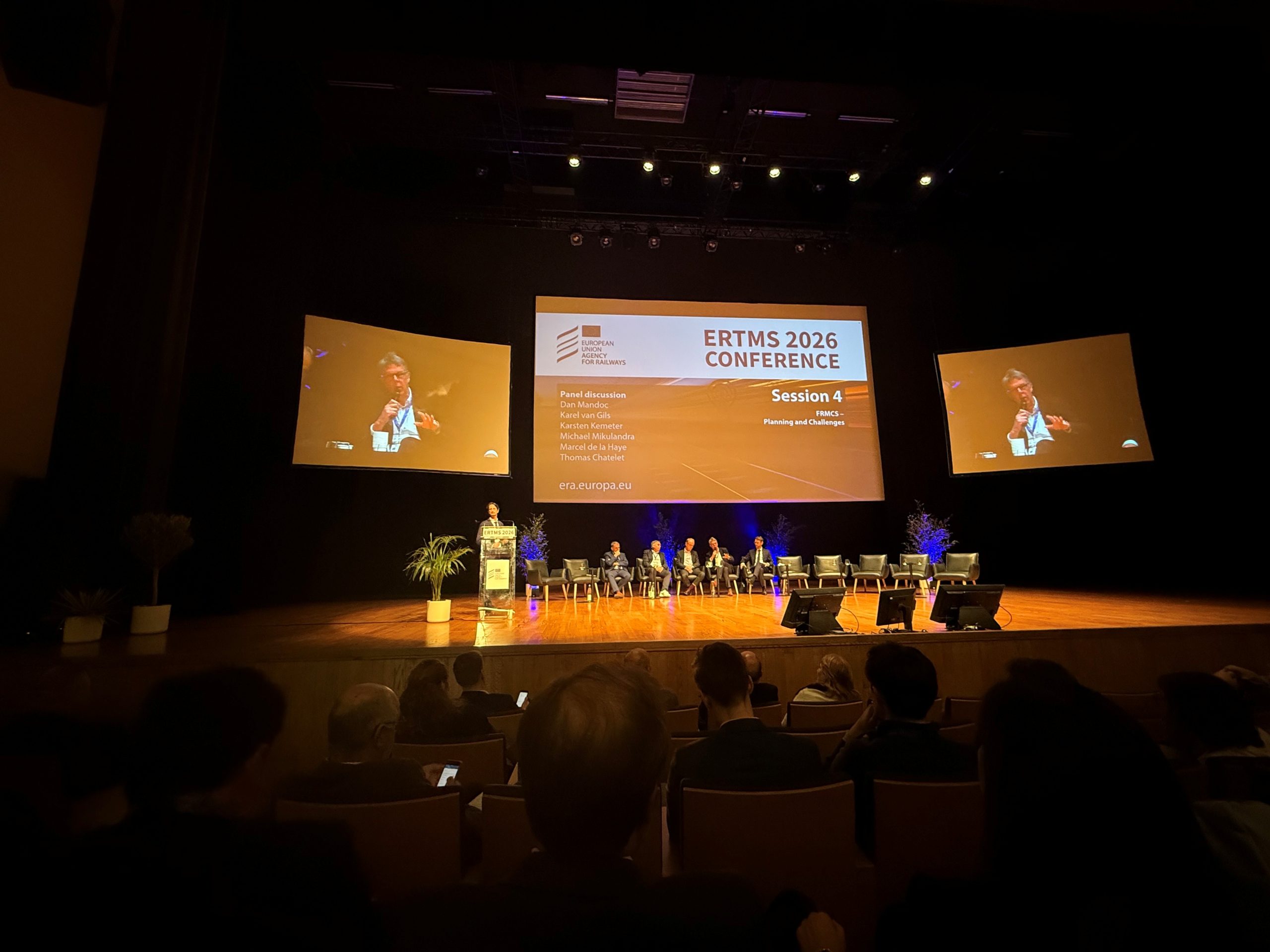
Session 4 – Preparing the future with FRMCS
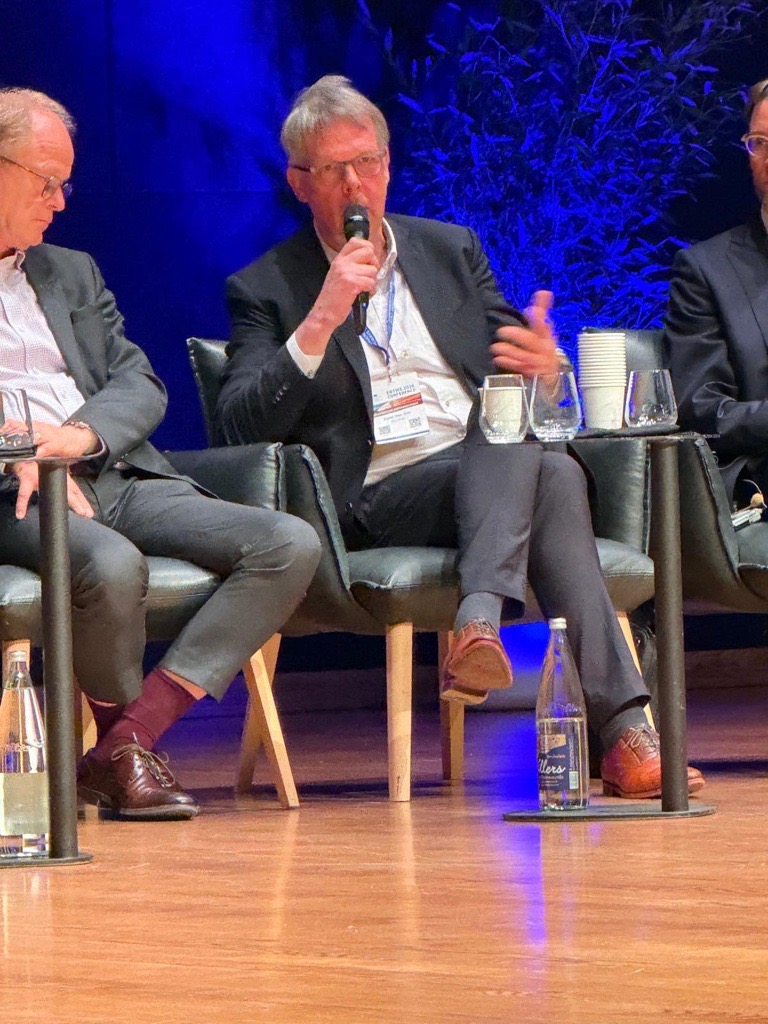
Senior Programme Manager/Seconded National Expert Karel van Gils contributed to the panel on FRMCS. He addressed the collaborative work of the EU-Rail Deployment Group to prepare the transition by analysing cost drivers, delivering concrete input to ERA to simplify the authorisation process, as well as the work that lead to the already published practical deployment guidelines and the report on different deployment scenarios.
Session 6 – Future of European Rail Systems
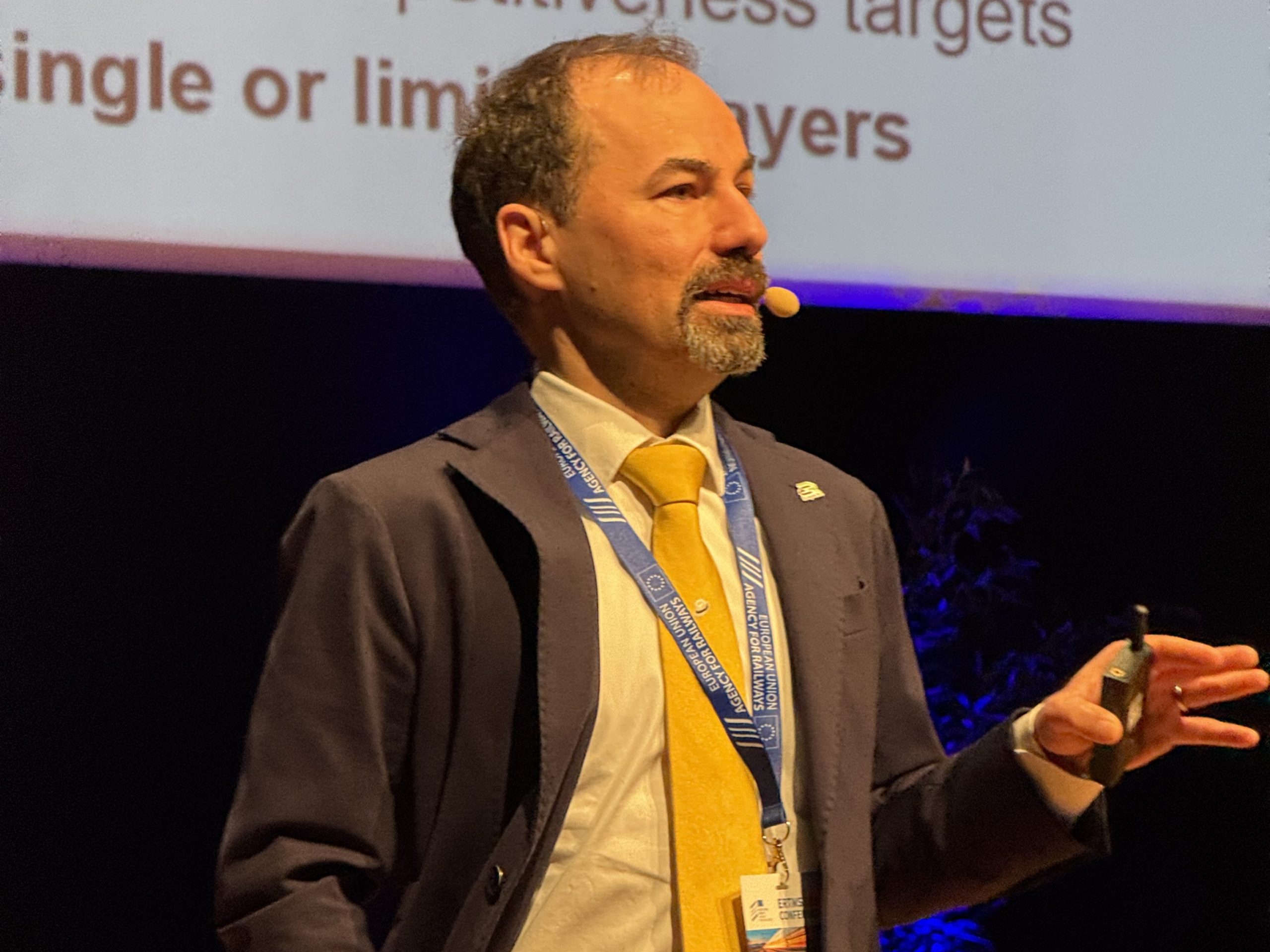
The final sessions of the conference brought forward key reflections on the future of ERTMS and the wider European rail system. Giorgio Travaini, Executive Director at EU-Rail, together with Ian Conlon, Head of System Pillar, Communication and Outreach, moderated the Session “Outlook – Future”, highlighting how EU-Rail is addressing many of the challenges raised in the conference including cybersecurity, operational harmonisation, and functional improvements such as automation.
Discussions underlined the need for a system-level transformation, with digitalisation and automation (including ATO, digital automatic coupling, and data-driven systems) set to improve efficiency and capacity. Moving from fragmented solutions to a truly integrated European rail system is essential to achieve the sector goals, and standardisation is a key enabler, with a harmonised CCS ecosystem seen as crucial to reduce variability and accelerate deployment. Looking ahead, autonomous operations, 5G integration, and modular systems will play a major role, alongside stronger coordination across stakeholders.
Closing Session
Giorgio Travaini also joined Oana Gherghinescu – Executive Director of ERA, and Kristian Schmidt – Director Land Transport at DG MOVE, in the closing session, reflecting on both the progress made and the road ahead for ERTMS. The discussion highlighted the urgency to move forward with concrete solutions and stronger alignment, with key common priorities: simplification, harmonisation and industrialisation, stronger governance and collaboration between stakeholders.
To further ERTMS deployment across Europe, next challenges include reducing unnecessary change requests, tackling national specificities, and moving from multiple systems towards a truly unified ERTMS to enable scale, competition, and cost reduction. Looking ahead, several strategic initiatives are already underway, all aimed at reducing costs, increasing efficiency, and supporting large-scale deployment.
A clear message resonated throughout the conference: ERTMS is no longer a technical experiment, it is a reality, already deployed by pioneers and increasingly shaping the European rail system. At the same time, its rollout comes with significant costs, complexity, and pressure at different levels – legal, financial, operational, and political.