Europe’s Rail Newsletter – September Edition The September edition of the Europe’s Rail newsletter is out! 🚆 This...
EU-Rail September 2026 Newsletter
read more

A body of the
European Union

Access the list of all EU-Rail Calls for Proposals.

On 21 June 2024, the Governing Board of Europe’s Rail Joint Undertaking (EU-Rail) adopted a Call for Expression of Interest (CEI) with a view to selecting associated members with the potential to contribute to the achievement of its objectives. The Governing Board decision can be accessed here.
Discover detailed information about procurment rules and information.
Access detailed information about past tenders.

Europe's Rail regularly published Calls for Tenders. To find out about open Calls, follow link below.

Article 15 (Principle of transparency) of the EU-Rail financial rules states that the JU shall make available on its internet site no later than 30 June of the following financial year information on the recipients of funds deriving from its budget.

EU-Rail’s Innovation Pillar (IP) is tasked to deliver operational and technological solutions that contribute to a more efficient, flexible, and demand-led, yet safe and environmentally sustainable European railway system.

The System Pillar provides governance, resource, and outputs to support a coherent and coordinated approach to the evolution of the rail system and the development of the system view.
The Deployment Group advises the EU-Rail Governing Board on the market uptake of rail innovation developments and support their deployment.
For a successful and effective implementation of the Digital Automatic Coupler for European rail freight (DAC), it is of crucial importance to have open, close and efficient cooperation between rail stakeholders. The European DAC Delivery Programme enabled by Europe’s Rail, offers a unique European platform for such cooperation and collaboration.
Discover how Europe’s Rail Joint Undertaking is calling for a bold, coordinated investment strategy to simplify and modernise rail systems across the EU. This public-private partnership model – outlined in our High-Level Paper – proposes an €18 billion investment from 2028 to 2034 to strengthen European competitiveness, deliver greener transport, and drive technological sovereignty.

The Shift2Rail Joint Undertaking is the predecessor programme of the Europe's Rail Joint Undertaking (EU-Rail), established by Council Regulation (EU) 2021/2085 of 19 November 2021.

Discover detailed information on Europe's rail innovation initiatives, showcasing flagship and other projects aimed at enhancing rail systems across Europe. It highlights collaborative efforts funded by the European Union to develop sustainable, efficient, and competitive rail transport solutions.

Europe’s Rail Catalogue of Solutions illustrates successful R&I results in the form of possible products and solutions, while highlighting the benefits for final users, operators, infrastructure managers and/or suppliers. This publication also outlines the advantages of integrating demonstrators into market solutions so that they can deliver the rail innovation Capabilities of the future.
Europe’s Rail Joint Undertaking (EU-Rail) is the European partnership on rail research and innovation established under the Horizon Europe programme (2020-2027) and the universal successor of the Shift2Rail Joint Undertaking.

Find out the full list of Europe's Rail Members.

Discover the full structure and governance of Europe's Rail, including the decisions of the Governing Board.

Get access to Europe's Rail main reference documents, including Annual Work Plans, Annual Activity Reports, Annual Accounts and other important information.
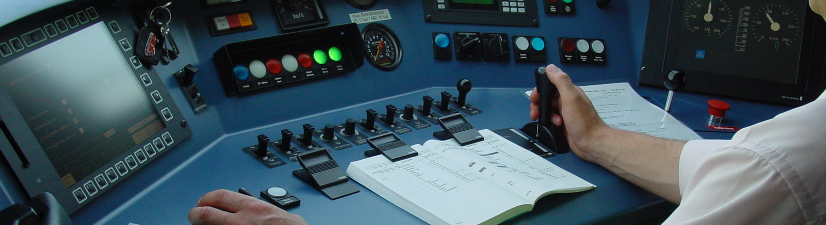
Control, command and communication systems should go beyond merely being a contributor to the control and safe separation of trains, and become a flexible, real-time, intelligent traffic management and decision support system.
Although the European Rail Traffic Management System (ERTMS) has become a worldwide dominant solution for railway signalling and control systems, it has the potential to offer increased functionalities and become even more competitive. Current systems do not sufficiently take advantage of new technologies and practices, including use of satellite positioning technologies, high-speed, high-capacity data and voice communications systems (Wi-Fi, 4G/LTE) and automation, as well as innovative real-time data collection, processing and communication systems. These have the potential to considerably enhance traffic management (including predictive and adaptive operational control of train movements), thereby delivering improved capacity, decreased traction energy consumption and carbon emissions, reduced operational costs, enhanced safety and security, and better customer information.
Furthermore, ERTMS specifications do not cover all interfaces or engineering/operational rules to the extent needed; different railways and suppliers continue to design their own solutions, thereby hampering interoperability and increasing costs.
Therefore, Shift2Rail activities should support the rapid and broad deployment of advanced traffic management and control systems, by offering improved functionalities and standardised interfaces based on common operational concepts, facilitating migration from legacy systems, cutting overall costs, and adapting them to the needs of the different rail segments as well as to the needs of a multimodal smart mobility system.
One of Shift2Rail’s chief goals is to raise the competitiveness of European solutions globally, and to achieve its aims across different modes of railways.
A key challenge for Shift2Rail IP2 is to enhance the advanced traffic management and control systems without impacting the ERTMS core, and where appropriate and necessary, to provide backwards compatibility to protect investments both in mainline and urban railways. In Shift2Rail, the involvement of the European Union Agency for Railways (ERA) as the system authority for the ERTMS is therefore essential. ERA will ensure the involvement and contribution of Sector Organisations active in the relevant ERTMS Working Groups, monitoring the IP2 system roadmap section related to the ERTMS and ensuring that a proper configuration management is followed, in order to preserve both the short-term stabilisation of the specifications and the long-term evolution of the ERTMS.
Work will be organised around the following Technical Demonstrators (TDs), covering all the R&I areas indicated in the Shift2Rail Master Plan: Smart, fail-safe communications and positioning systems; Traffic Management Evolution; Automation; Moving block and train integrity; Smart procurement and testing; Virtual coupling and Cyber security.
Figure 1 shows the expected links and interactions between the TDs of IP2, as well as with other IPs.
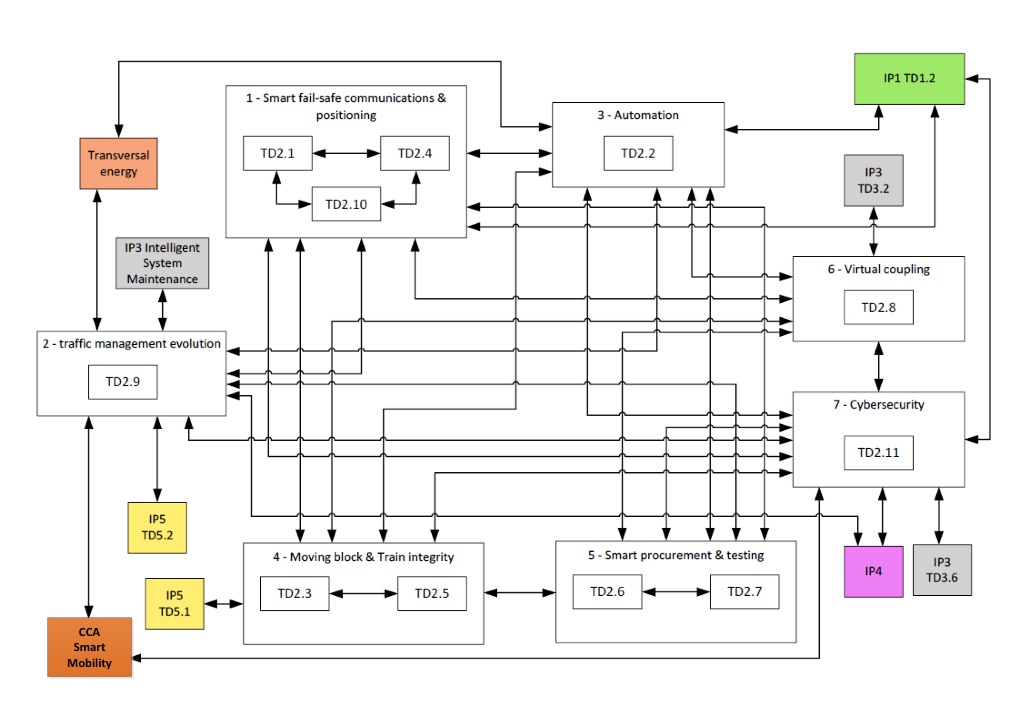
Figure 1: IP2 Research and Innovation relationships
The ‘Indicative list of priority research and innovation activities’ in the draft Shift2Rail strategic Multi-Annual Action Plan is available in the Reference Documents > Shift2Rail JU Documents section.