FP4-Rail4EARTH D20.2: Improved aerodynamic, development & demonstration intermediate report n°2 The FP4-Rail4EARTH...
Deliverables: Results Published in March 2026
read more
A body of the
European Union

Access the list of all EU-Rail Calls for Proposals.

On 21 June 2024, the Governing Board of Europe’s Rail Joint Undertaking (EU-Rail) adopted a Call for Expression of Interest (CEI) with a view to selecting associated members with the potential to contribute to the achievement of its objectives. The Governing Board decision can be accessed here.
Discover detailed information about procurment rules and information.
Access detailed information about past tenders.

Europe's Rail regularly published Calls for Tenders. To find out about open Calls, follow link below.

Article 15 (Principle of transparency) of the EU-Rail financial rules states that the JU shall make available on its internet site no later than 30 June of the following financial year information on the recipients of funds deriving from its budget.

EU-Rail’s Innovation Pillar (IP) is tasked to deliver operational and technological solutions that contribute to a more efficient, flexible, and demand-led, yet safe and environmentally sustainable European railway system.

The System Pillar provides governance, resource, and outputs to support a coherent and coordinated approach to the evolution of the rail system and the development of the system view.

The Deployment Group advises the EU-Rail Governing Board on the market uptake of rail innovation developments and support their deployment.
For a successful and effective implementation of the Digital Automatic Coupler for European rail freight (DAC), it is of crucial importance to have open, close and efficient cooperation between rail stakeholders. The European DAC Delivery Programme enabled by Europe’s Rail, offers a unique European platform for such cooperation and collaboration.
Discover how Europe’s Rail Joint Undertaking is calling for a bold, coordinated investment strategy to simplify and modernise rail systems across the EU. This public-private partnership model – outlined in our High-Level Paper – proposes an €18 billion investment from 2028 to 2034 to strengthen European competitiveness, deliver greener transport, and drive technological sovereignty.

The Shift2Rail Joint Undertaking is the predecessor programme of the Europe's Rail Joint Undertaking (EU-Rail), established by Council Regulation (EU) 2021/2085 of 19 November 2021.

Discover detailed information on Europe's rail innovation initiatives, showcasing flagship and other projects aimed at enhancing rail systems across Europe. It highlights collaborative efforts funded by the European Union to develop sustainable, efficient, and competitive rail transport solutions.

Europe’s Rail Catalogue of Solutions illustrates successful R&I results in the form of possible products and solutions, while highlighting the benefits for final users, operators, infrastructure managers and/or suppliers. This publication also outlines the advantages of integrating demonstrators into market solutions so that they can deliver the rail innovation Capabilities of the future.
Europe’s Rail Joint Undertaking (EU-Rail) is the European partnership on rail research and innovation established under the Horizon Europe programme (2020-2027) and the universal successor of the Shift2Rail Joint Undertaking.

Find out the full list of Europe's Rail Members.

Discover the full structure and governance of Europe's Rail, including the decisions of the Governing Board.

Get access to Europe's Rail main reference documents, including Annual Work Plans, Annual Activity Reports, Annual Accounts and other important information.
Your monthly update on innovation and deployment for Europe’s railway system of the future.
Together, these achievements represent a significant step toward a more connected, accessible and sustainable European mobility network, supporting travellers from the first mile to the last.
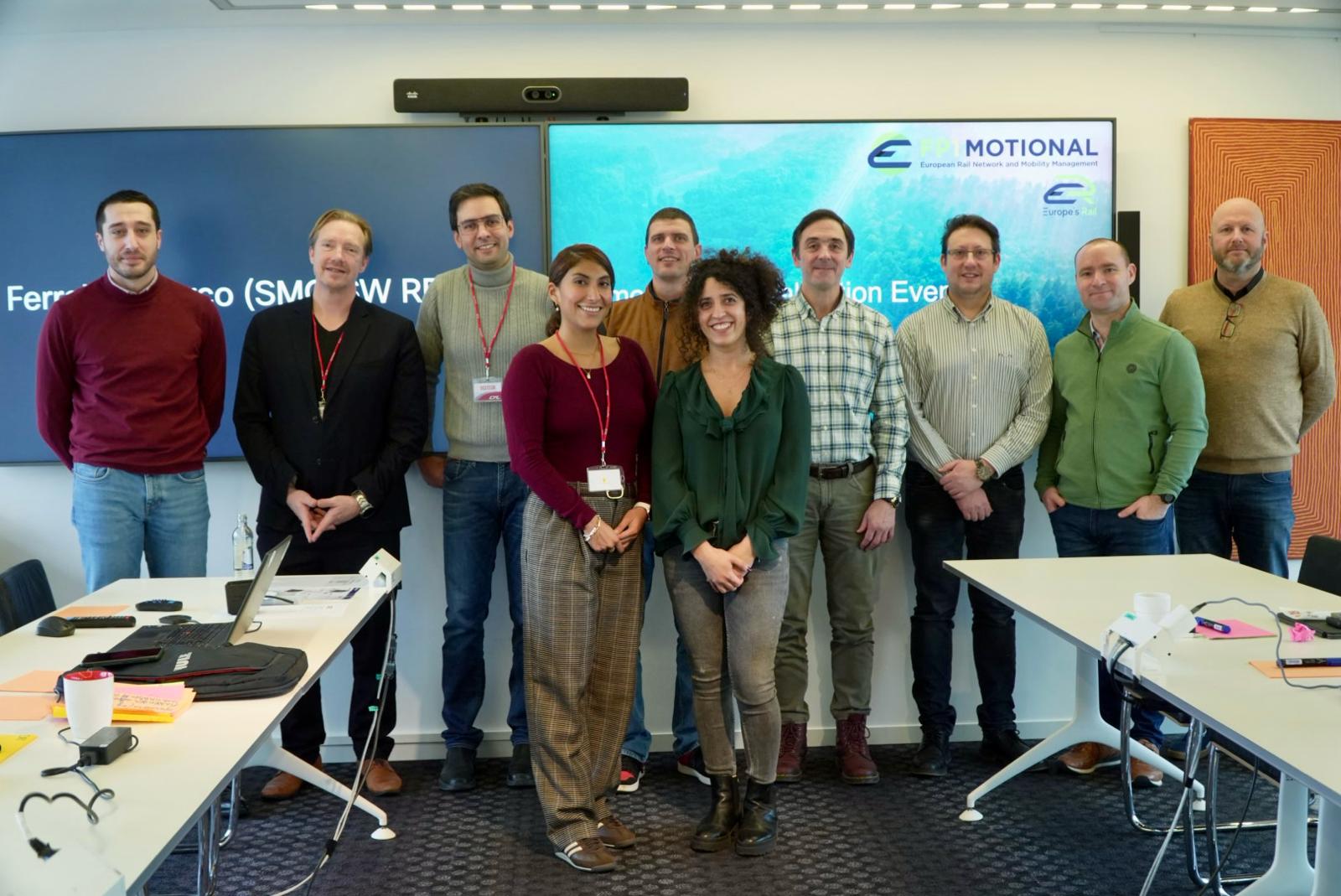
An important achievement in the EU-Rail XCROSS project was reached on 5 February with its mid-term event, held at the International Union of Railways headquarters in Paris and attended by around 40 participants both in person and online. The event was opened by Valeri Markine (Project Coordinator, TU Delft) and David Connolly (Technical Coordinator, University of Leeds), who presented a comprehensive overview of the project’s objectives, concept, and technical architecture, highlighting key innovations and challenges addressed during the first 18 months. Sébastien Denis, Europe’s Rail Senior Programme Manager, then highlighted synergies with Flagship Project 3 IAM4RAIL, noting the project’s relevance and positive progress. Technical sessions formed the core of the event, with partners presenting updates and live demonstrations on:
The project, running until March 2027, focuses on developing innovative technologies for the monitoring, inspection, and maintenance of railway crossing surface profiles.
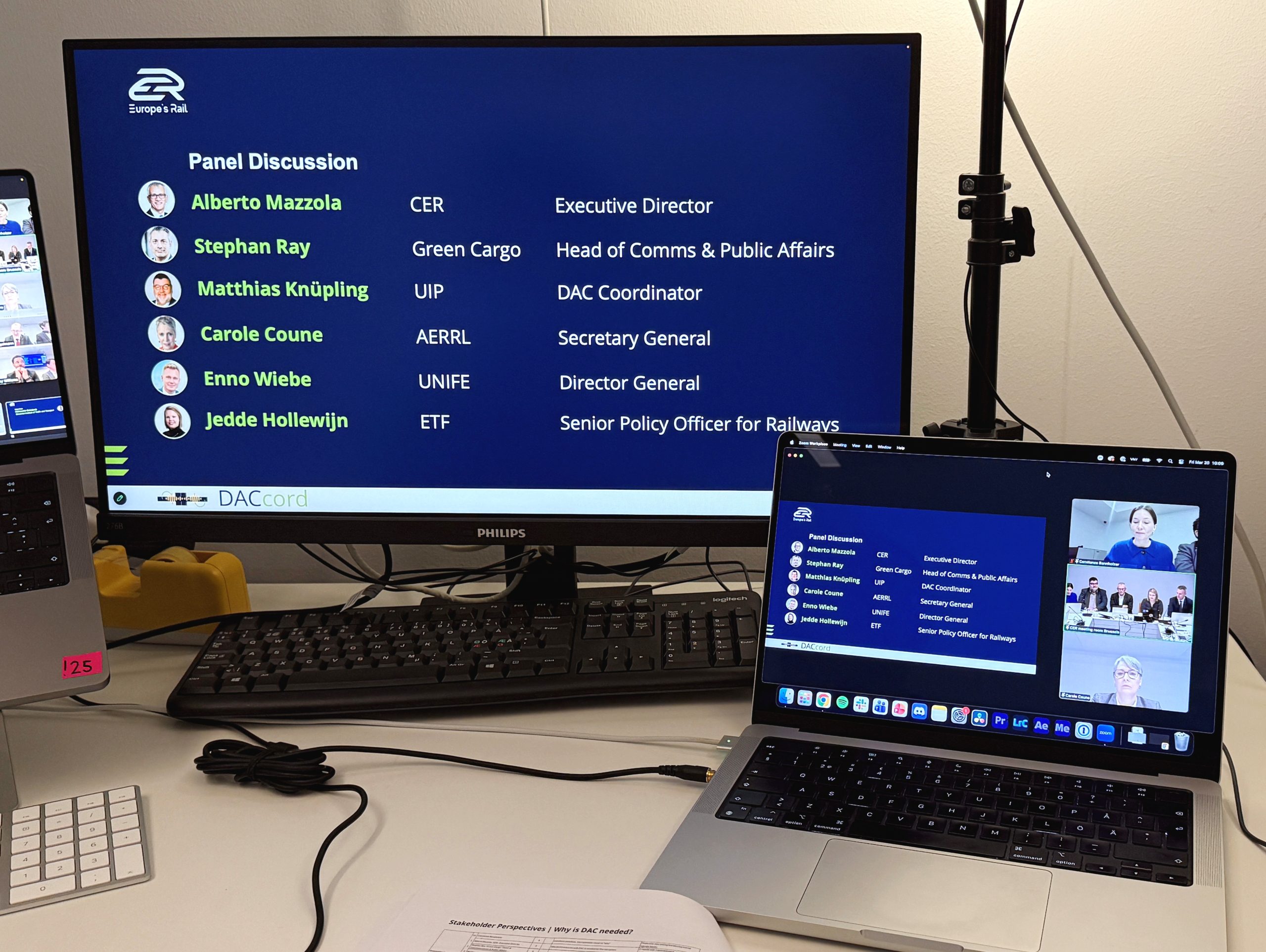
On 20 March, the online event “Moving towards real DAC operations – from talking to doing” organised by our EU-Rail DACcord project has successfully brought together key stakeholders to assess the current state and future of the Digital Automatic Coupler (DAC) in Europe. The session gathered experts from across the rail ecosystem to reflect on where Europe stands in the DAC journey and what lies ahead. A high-level panel debate addressed the value of DAC for the sector, combining perspectives from market actors, policymakers, industry representatives and the workforce. The event highlighted the central role of the European DAC Delivery Programme (EDDP) and presented updates from the DACcord project on programme coordination, stakeholder alignment, and implementation challenges. The event concluded with a forward-looking overview of ongoing development and pre-deployment activities, outlining the next steps towards implementation. Photo: Rail Sweden
How systematically do European railways monitor biodiversity? Our EU-Rail SYMBIOSIS project presents the first structured assessment across Europe, revealing that roughly half of railway organisations conduct monitoring, mostly driven by regulatory requirements and implemented on an ad hoc basis. Key barriers include limited expertise and financial constraints. At the same time, a majority of respondents report growing interest in integrating biodiversity into planning and reporting. Advances in satellite observation, automated sensors, and AI now offer scalable, cost-effective solutions, and SYMBIOSIS will develop a harmonised framework to embed biodiversity systematically across European rail networks.
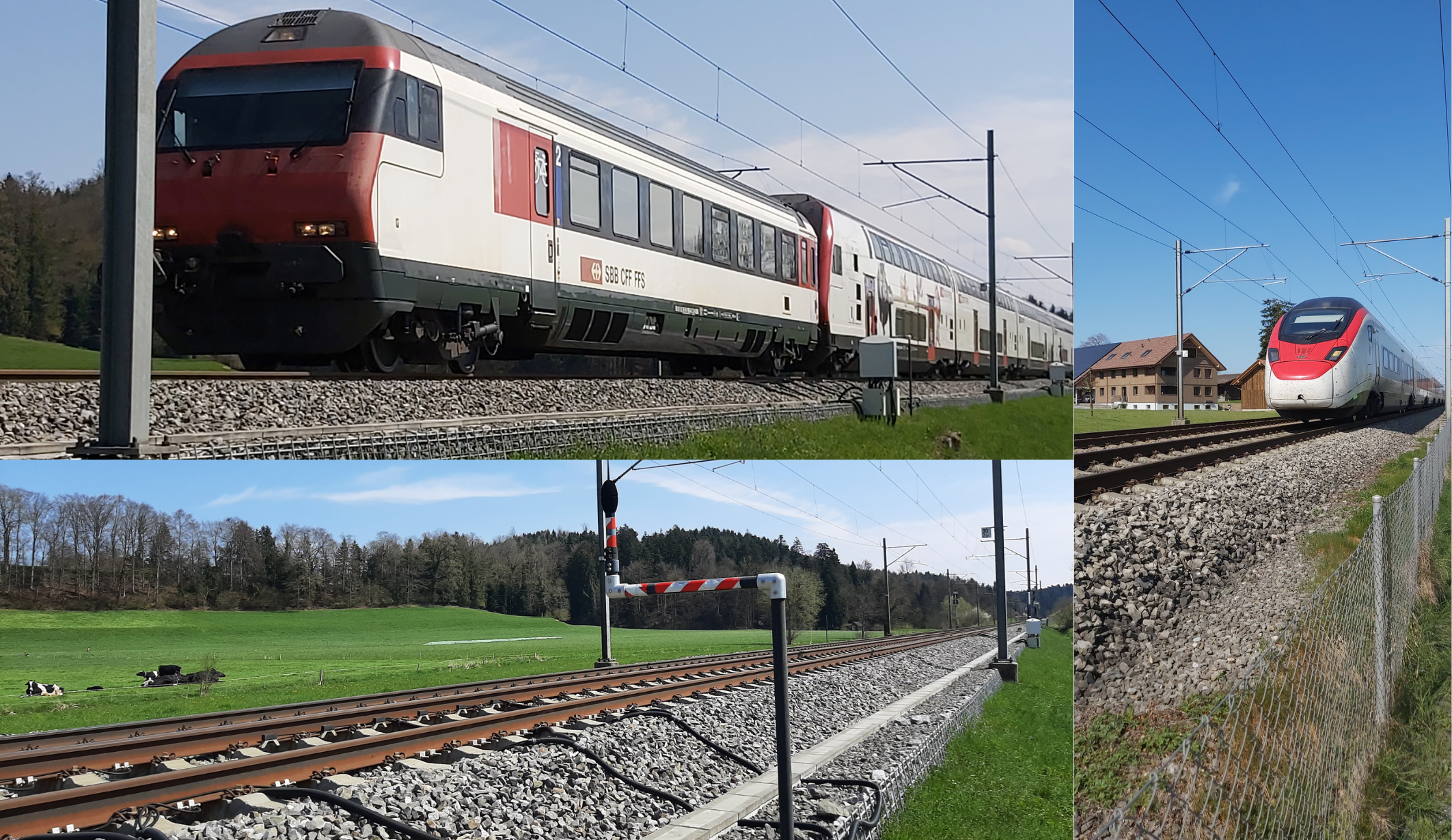
Our EU-Rail QuieterRail project is preparing a comprehensive noise and vibration measurement campaign on a mainline in Switzerland, specifically in Sempach and Nottwil, in close collaboration with SBB. Scheduled for May, the tests will bring together key project partners — KU Leuven, ICR, TNO, and Vibratec — to jointly carry out measurement activities. The objective is to collect high-quality experimental data to support:
The results will contribute to improving the prediction, assessment and mitigation of railway noise and vibration across Europe.
Within the EU-RAIL programme, the FP2 R2DATO project is driving forward the development of next-generation railway braking systems to meet the demands of future autonomous train operations (ATO). A central objective is to better manage varying adhesion between wheel and rail, enabling shorter braking distances and increased track capacity, while addressing the potential trade-off of increased wear and damage. To support this, the Swedish Transport Administration and Chalmers have developed a dedicated braking rig, generating experimental data that feeds advanced simulation models. These models provide critical insights into phenomena such as wheel tread cracking, uneven temperature distribution, and thermomechanical stress, key contributors to maintenance costs. The results are helping shape improved design, materials, and operational strategies, enhancing both reliability and efficiency across the railway system.
Our EU-Rail FP3-IAM4RAIL project participated in the DigiTrack Discovery Market on 26 March in Amersfoort, Netherlands, a major event showcasing digital innovation in the Dutch rail sector. Organised by ProRail, DigiTrack aims to accelerate the transition to a fully digital railway by 2040 through collaborative solutions. The event featured finalist team pitches, an exhibition of around 20 digital applications, and welcomed approximately 400 attendees. FP3-IAM4RAIL presented advanced railway monitoring technologies, including AI-based systems and Laser Doppler Vibrometer (LDV) sensing. This technology enables high-resolution, contactless monitoring of infrastructure using ultrahigh-frequency vibration data. The Netherlands is already a leader in vibration-based monitoring, and the project aims to further enhance diagnostic capabilities. The event fostered collaboration and highlighted innovations shaping the future of rail infrastructure.
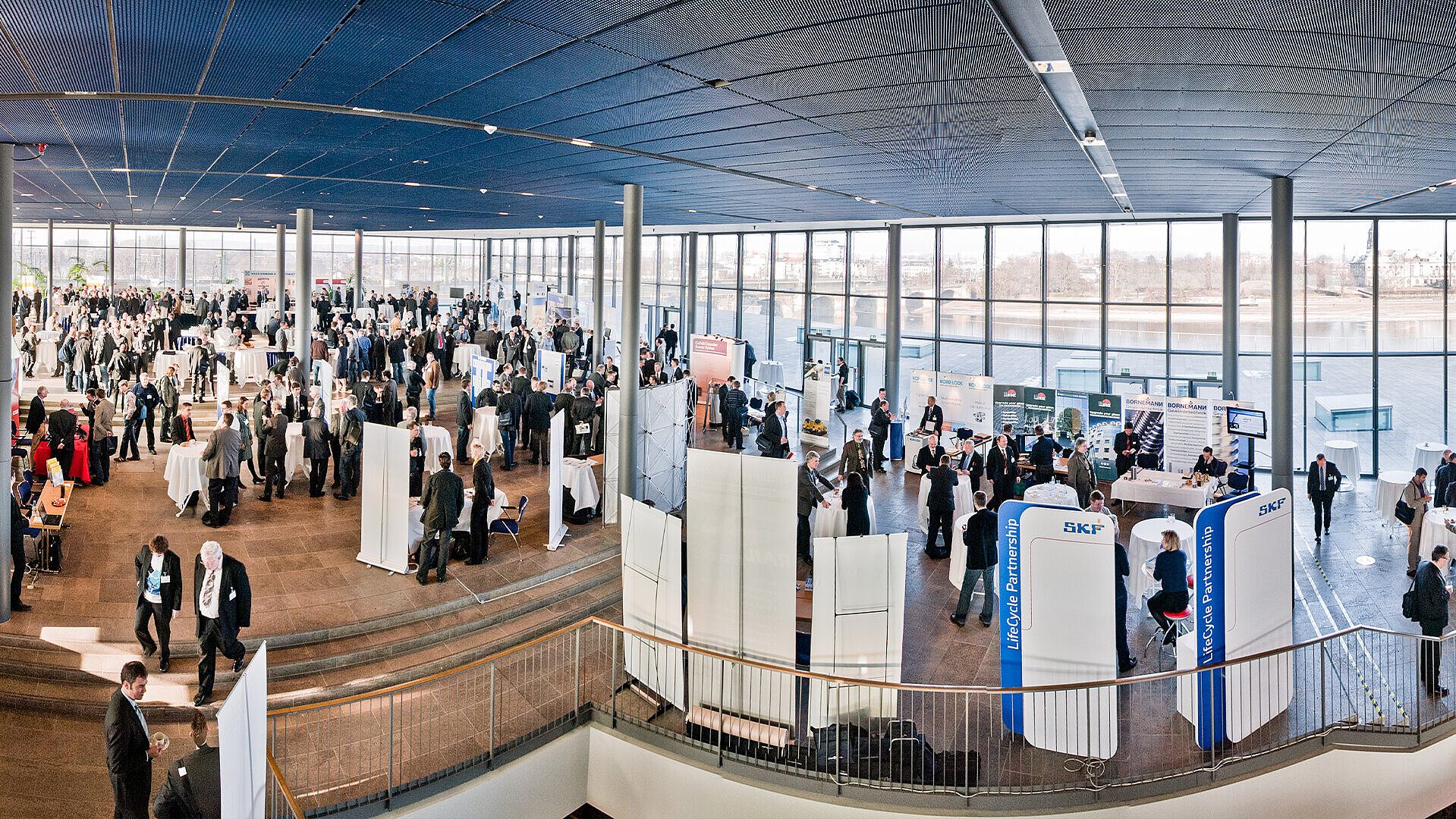
On 4 March, the 21st International Railway Vehicle Conference took place in Dresden. The conference is one of the most prestigious railway events in the German-speaking world. A total of 580 participants were welcomed to the event. We were pleased to have our EU-Rail NEXUS project represented with a presentation. Michael Schmeja from VIRTUAL VEHICLE spoke on “AI-Supported Dirt Detection in Public Transport”. The talk presented an AI-based solution for automated dirt detection using neural networks. By utilising pre-trained models, we optimise a system tailored to metro environments that identifies various types of contamination, such as dirt, trash, and stains, under different lighting and spatial conditions. The approach achieves high detection accuracy in real-world metro scenarios and supports timely, data-driven cleaning measures. Integration into the existing surveillance infrastructure enables real-time alerts and reduces reliance on manual inspections. The results demonstrate the practical application of AI in optimising future metro operations. The proposed solution is scalable and offers public transport operators a powerful tool for improving service quality and passenger satisfaction.
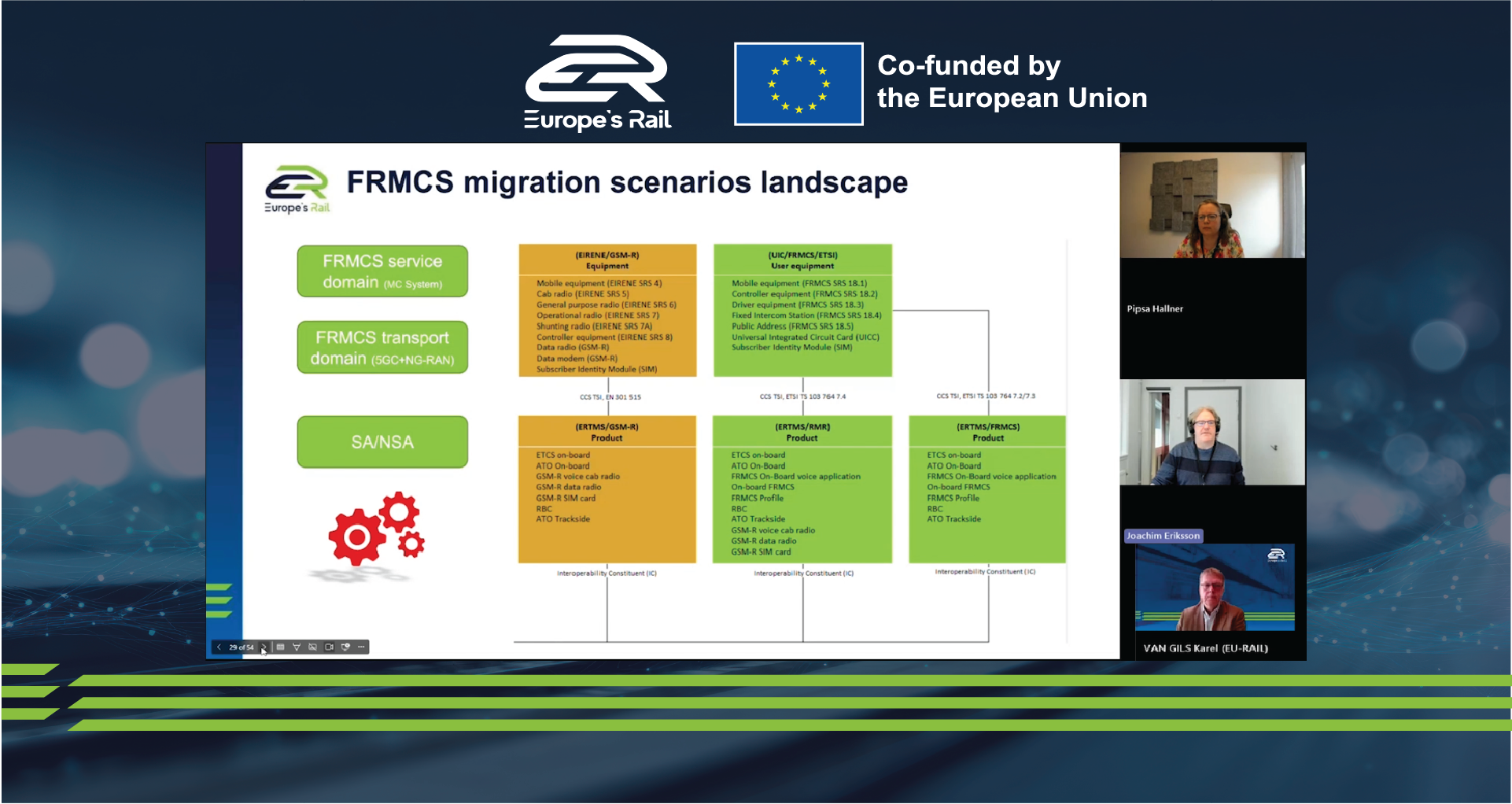
EU-Rail four-part 2026 FRMCS European Deployment series kicked off on 18 March, with a successful webinar attended by more than 180 people. Karel Van Gils, Senior Programme Manager at EU-Rail, introduced the work of the FRMCS Deployment Group, which focuses on closing the gap between research and innovation and implementation to enable a fast, cost-efficient rollout of railway innovations and migration solutions. Pipsa Hallner, Chair of FRMCS Programme at Trafikverket, and Leader of FRMCS Deployment Working Group 3, joined by Joachim Eriksson, Enterprise Architect at Trafikverket, presented the current status of FRMCS migration scenarios, covering methodology, deployment challenges, and key conditions. The work was supported by stakeholder 2025 questionnaire results outlining different challenges and implementation pathways across Europe. They also introduced the upcoming 2026 FRMCS questionnaire, which will also include targeted questions for NoBo’s and Mobile Network Operators (MNOs). Key next steps are planned ahead, including the development of an FRMCS deployment toolbox, updates to the migration scenarios report throughout 2026, and the start of alignment efforts with other major railway programmes. The recording of the webinar and the slides are available in the EU-Rail FRMCS European Deployment Group webpage under the ‘News’ section.
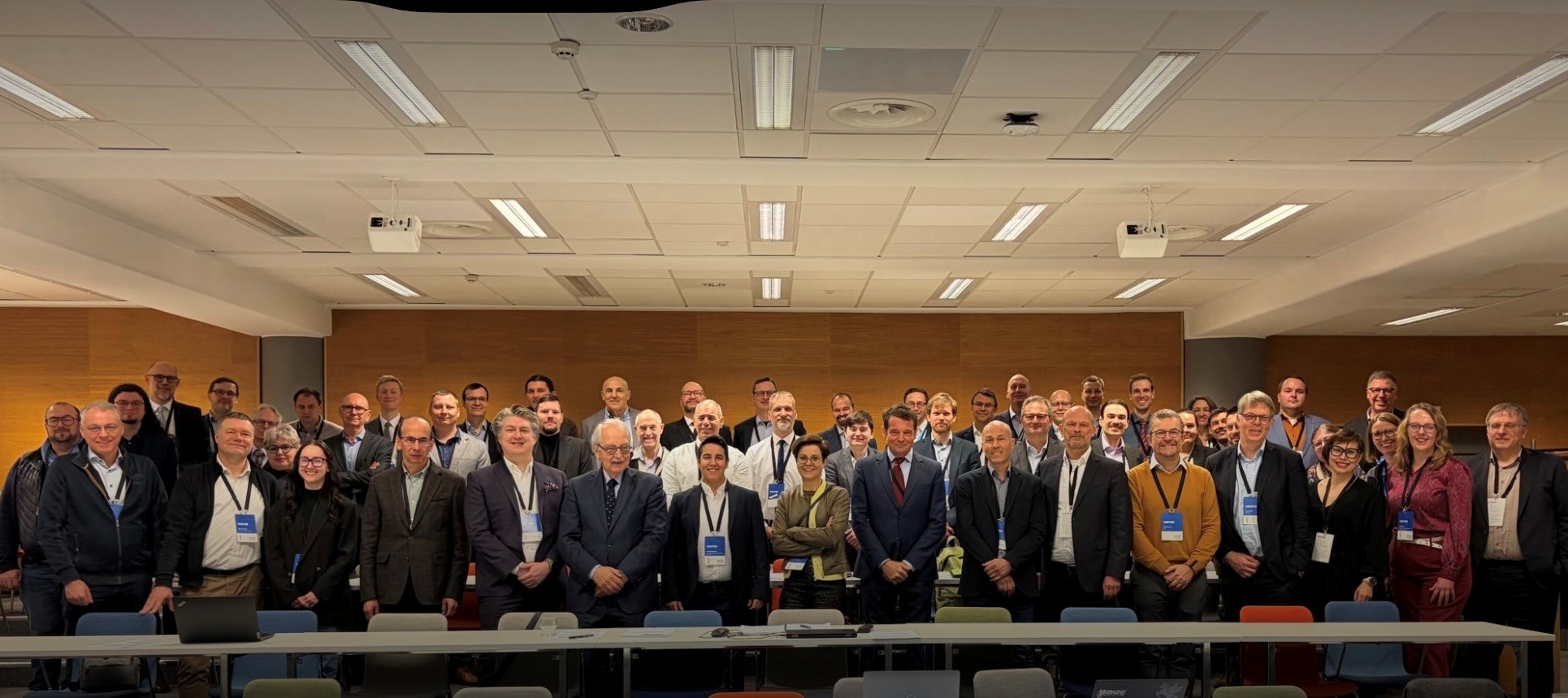
A central highlight of the forum was the presentation by Finnish representatives on the Digirail Project, which sets out the country’s roadmap for ERTMS deployment. Finland has already established its first 190 km test track and plans to progressively equip its entire rail network with ERTMS over the next two decades. A particularly noteworthy feature of the Finnish approach is its innovative radio communication solution. Finland aims to leverage public mobile network operators and introduce a pre-FRMCS system capable of operating on existing 4G and 5G networks, potentially accelerating deployment and reducing costs. The forum concluded with a site visit to Finland’s traffic control center, where participants were given a demonstration of two ETCS-equipped test locomotives. These showcased advanced telecommunications capabilities, including connectivity through three mobile network operators.
Your expertise would be valuable to the success of both activities and to advancing railway digitalisation. If you are interested in joining and contributing to these work items, please reach out to .
FRMCS (Future Railway Mobile Communication System) marks a new era for railway communications, evolving beyond the bandwidth, latency, and lifecycle limits of GSM-R. Led by UIC, with ERA and ETSI providing the regulatory backbone, FRMCS defines the standards and migration path for Europe’s next-generation rail network. The new spectrum allocation — 874.4–880 MHz, 919.4–925 MHz, and 1900–1910 MHz (TDD) opens the door to advanced beamforming and high-efficiency RAN solutions on band n101.
Built on 3GPP MCX services and tailored for railway safety and automation, FRMCS ensures native support for mission-critical operations while progressively integrating with Mobile Network Operators (MNOs).
From a functional perspective, FRMCS integrates and standardises 3GPP MCX services, enriched with specific extensions for the railway domain, ensuring that safety and automation applications have native access to mission-critical primitives. Finally, on the radio network side, integration with Mobile Network Operators (MNOs) is steadily advancing, although it is considered a complementary approach rather than the core deployment strategy.
This article, initiated by the FRMCS sub-group of the EU-RAIL European Deployment Group, presents elements for the development of FRMCS, gathered through a series of bilateral meetings with leading companies in the railway telecommunications sector. The article gives an overview of FRMCS suppliers insights and perspectives.
For this article EU-Rail approached industry players for interviews. The article gives an overview of concepts exchanged with the companies that participated in the interviews and that agreed to be part of this -meant not to be comprehensive- publication.
Participants will explore the five digital views:
Why Attend: Explore live digital twin demonstrations, secure data-sharing frameworks, and scalable solutions across national borders while connecting with industry leaders.
When: 29 April
Where: Online
During the event, attendees will explore the FP1-MOTIONAL results and demonstrators, showcasing how forecasting, guidance, validation and disruption-management tools can work together to deliver a smoother, more connected passenger experience across Europe.
Programme highlights:
Where: Madrid & online
When: 7 May | 10:00–15:30 (CET)
Registration deadline: 30 April
Programme highlights:
Where: Paris
The event will be mainly in-person, with the possibility to follow plenary sessions online.
When: 12 May | 8:30 AM -16:30 PM (CET)
Registration deadline: 30 April

Programme highlights:
Where: Paris
The event will be mainly in-person, with the possibility to follow plenary sessions online.
When: 12 May | 8:30 AM -16:30 PM (CET)
Registration deadline: 30 April

Despite their ability to reduce short-haul aviation, night trains remain underutilised due to fragmented governance and responsibilities across authorities, infrastructure managers, and operators. The session will present a new organisational paradigm, enabled by coherent EU policy, regulatory alignment, and funding, to scale fast, reliable cross-border services. Participants will explore emission calculators, game-theoretic stakeholder coordination and multi-criteria analysis to balance availability, affordability, accessibility, and reliability, delivering concrete strategies to accelerate sustainable night train deployment across Europe.
By the end, attendees will gain concrete pathways to accelerate the sustainable deployment of night trains across Europe.
When: 19 May | from 14:00 PM (CET)
Where: TRA 2026, Budapest

Across two days, the event will present the project’s vision for automated rail systems, demonstrate the maturity of DATO technologies through operational demonstrators and highlight the tangible impact and key project exploitable results. The programme will also look at the broader added value for the European rail sector and conclude with a celebration of the achievements of FP2-R2DATO Wave 1.
Where: Prague, Czech Republic & online
When: 3–4 June
From improving traffic planning to strengthening multimodal connections and introducing cutting-edge digital tools, FP1-MOTIONAL has transformed the rail experience for passengers, freight operators, and infrastructure managers alike. Join us to see how teamwork between authorities, industry, and academia drives solutions for a digital, sustainable, and reliable rail system across Europe.
Programme highlights:
…and more, including our keynote presentations and insights on the future European Rail Traffic Management System.
Where: Online
When: 30 June
Participants will gain valuable insights into technical progress, ongoing activities, and the role of demonstrations across the programme. The event will also look ahead to future priorities, particularly the verification of FRMCS specifications in preparation for the next update of the Technical Specifications for Interoperability (TSI).
Where: UIC Headquarters, Paris
When: 30 June
The conference schedule will be announced closer to the event date.

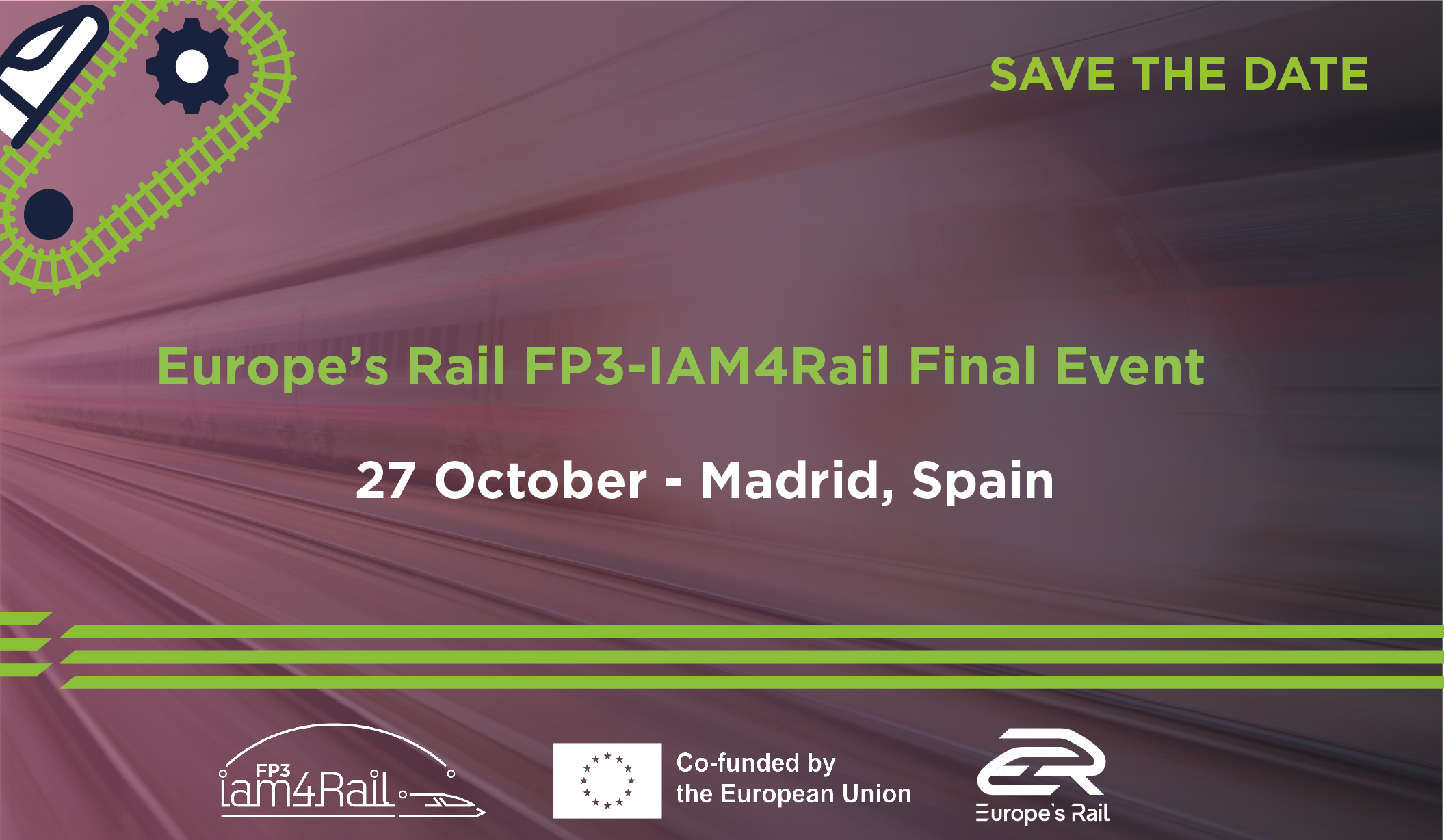
The event will showcase innovative solutions for Intelligent Asset Management, including project outcomes, live demonstrations of the tools and platforms developed within the project, and discussions on how digital technologies can transform rail infrastructure management across Europe.
This high-level gathering will bring together policymakers, infrastructure managers, industry leaders, researchers and the European railway innovation community.
Where: Madrid, Spain
When: 27 October 2026
Registrations will open soon.