Europe’s Rail Newsletter – March Edition The March Newsletter is filled with the latest updates, key insights, and...
EU-Rail March 2026 Newsletter
read more

A body of the
European Union

Access the list of all EU-Rail Calls for Proposals.

On 21 June 2024, the Governing Board of Europe’s Rail Joint Undertaking (EU-Rail) adopted a Call for Expression of Interest (CEI) with a view to selecting associated members with the potential to contribute to the achievement of its objectives. The Governing Board decision can be accessed here.
Discover detailed information about procurment rules and information.
Access detailed information about past tenders.

Europe's Rail regularly published Calls for Tenders. To find out about open Calls, follow link below.

Article 15 (Principle of transparency) of the EU-Rail financial rules states that the JU shall make available on its internet site no later than 30 June of the following financial year information on the recipients of funds deriving from its budget.

EU-Rail’s Innovation Pillar (IP) is tasked to deliver operational and technological solutions that contribute to a more efficient, flexible, and demand-led, yet safe and environmentally sustainable European railway system.

The System Pillar provides governance, resource, and outputs to support a coherent and coordinated approach to the evolution of the rail system and the development of the system view.

The Deployment Group advises the EU-Rail Governing Board on the market uptake of rail innovation developments and support their deployment.
For a successful and effective implementation of the Digital Automatic Coupler for European rail freight (DAC), it is of crucial importance to have open, close and efficient cooperation between rail stakeholders. The European DAC Delivery Programme enabled by Europe’s Rail, offers a unique European platform for such cooperation and collaboration.
Discover how Europe’s Rail Joint Undertaking is calling for a bold, coordinated investment strategy to simplify and modernise rail systems across the EU. This public-private partnership model – outlined in our High-Level Paper – proposes an €18 billion investment from 2028 to 2034 to strengthen European competitiveness, deliver greener transport, and drive technological sovereignty.

The Shift2Rail Joint Undertaking is the predecessor programme of the Europe's Rail Joint Undertaking (EU-Rail), established by Council Regulation (EU) 2021/2085 of 19 November 2021.

Discover detailed information on Europe's rail innovation initiatives, showcasing flagship and other projects aimed at enhancing rail systems across Europe. It highlights collaborative efforts funded by the European Union to develop sustainable, efficient, and competitive rail transport solutions.

Europe’s Rail Catalogue of Solutions illustrates successful R&I results in the form of possible products and solutions, while highlighting the benefits for final users, operators, infrastructure managers and/or suppliers. This publication also outlines the advantages of integrating demonstrators into market solutions so that they can deliver the rail innovation Capabilities of the future.
Europe’s Rail Joint Undertaking (EU-Rail) is the European partnership on rail research and innovation established under the Horizon Europe programme (2020-2027) and the universal successor of the Shift2Rail Joint Undertaking.

Find out the full list of Europe's Rail Members.

Discover the full structure and governance of Europe's Rail, including the decisions of the Governing Board.

Get access to Europe's Rail main reference documents, including Annual Work Plans, Annual Activity Reports, Annual Accounts and other important information.
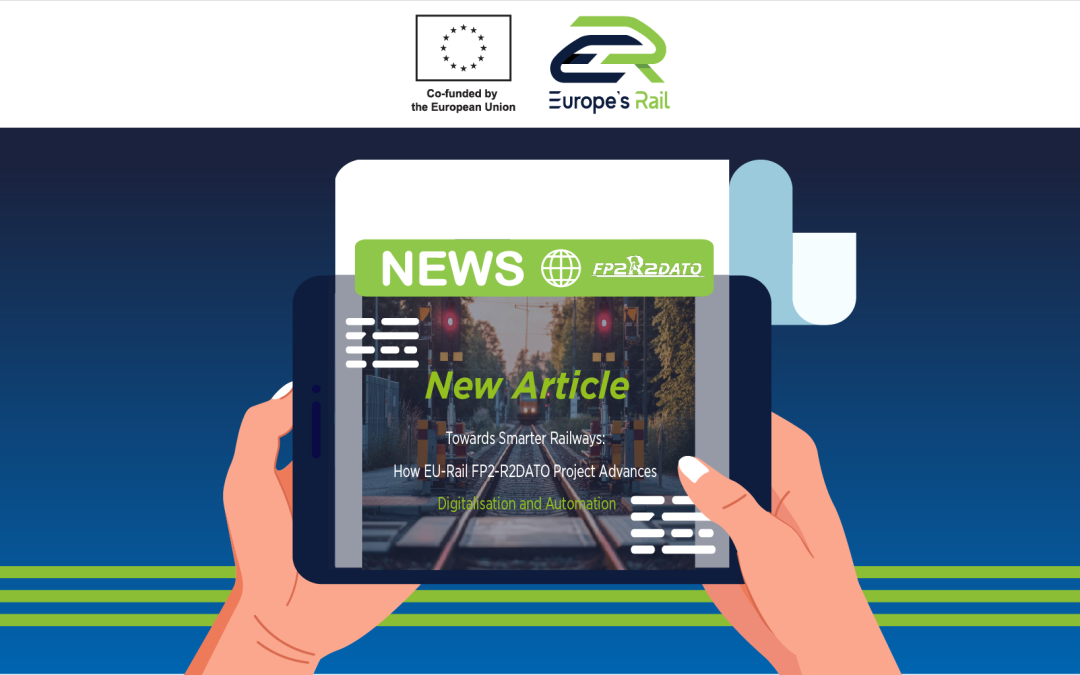
Demonstration 1: Paving the way for fully Automated Train Operation in a regional line
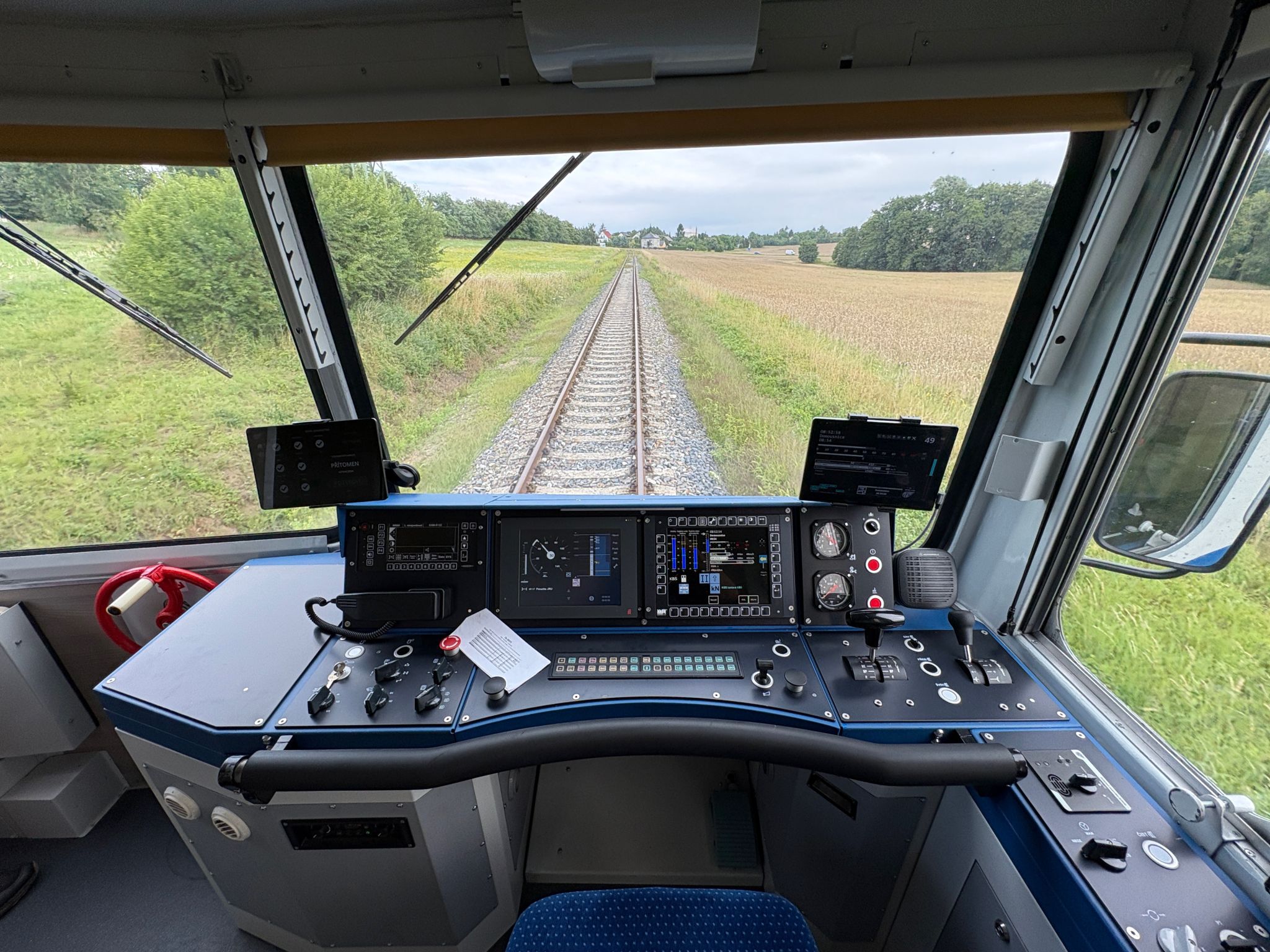
The technical enablers supporting these innovations are being validated through eight demonstrators, including a regional demonstrator, which aims to showcase ATO functionality up to GoA4 in full operation, incorporating both onboard and trackside systems. A key focus is proving that components from various suppliers, such as obstacle detection sensors, perception systems, the automatic driving module and train positioning units can function interchangeably within the same operational environment.
On 11 September 2025, AŽD Praha hosted a group of experts on the 24-kilometer test track between Dolní Bousov and the Kopidlno test line in Czech Republic.
The event featured EDITA, the first autonomous passenger train in Europe to be demonstrated in an open environment. Developed by AŽD Praha with EU-Rail support, the train is fitted with lidar, sensors and front-mounted cameras that allow it to independently detect and respond to trackside obstacles.
This initiative is part of the regional demonstrator and builds on previous ATO testing conducted under Shift2Rail, EU-Rail’s predecessor, funded through the EU’s Horizon 2020 research and innovation programme. It uses the same rolling stock and infrastructure from that earlier phase.
Once the technical enablers have been validated in this regional setting, the outcomes will be passed on to the EU-Rail FP6-FutuRe project. FP6-FutuRe will build on these results to further develop innovative rail services aimed at revitalising Europe’s regional and feeder lines.
FP2-R2DATO is also evaluating how ATO and remote train operation (RTO) can streamline tasks like shunting and train preparation by reducing the need for driver intervention.
Remote-driving technology has already undergone successful trials in Norway, the Netherlands and Switzerland. These pilot projects helped define the digital foundations for sensing, connectivity and control that will enable fully autonomous operations in the future.
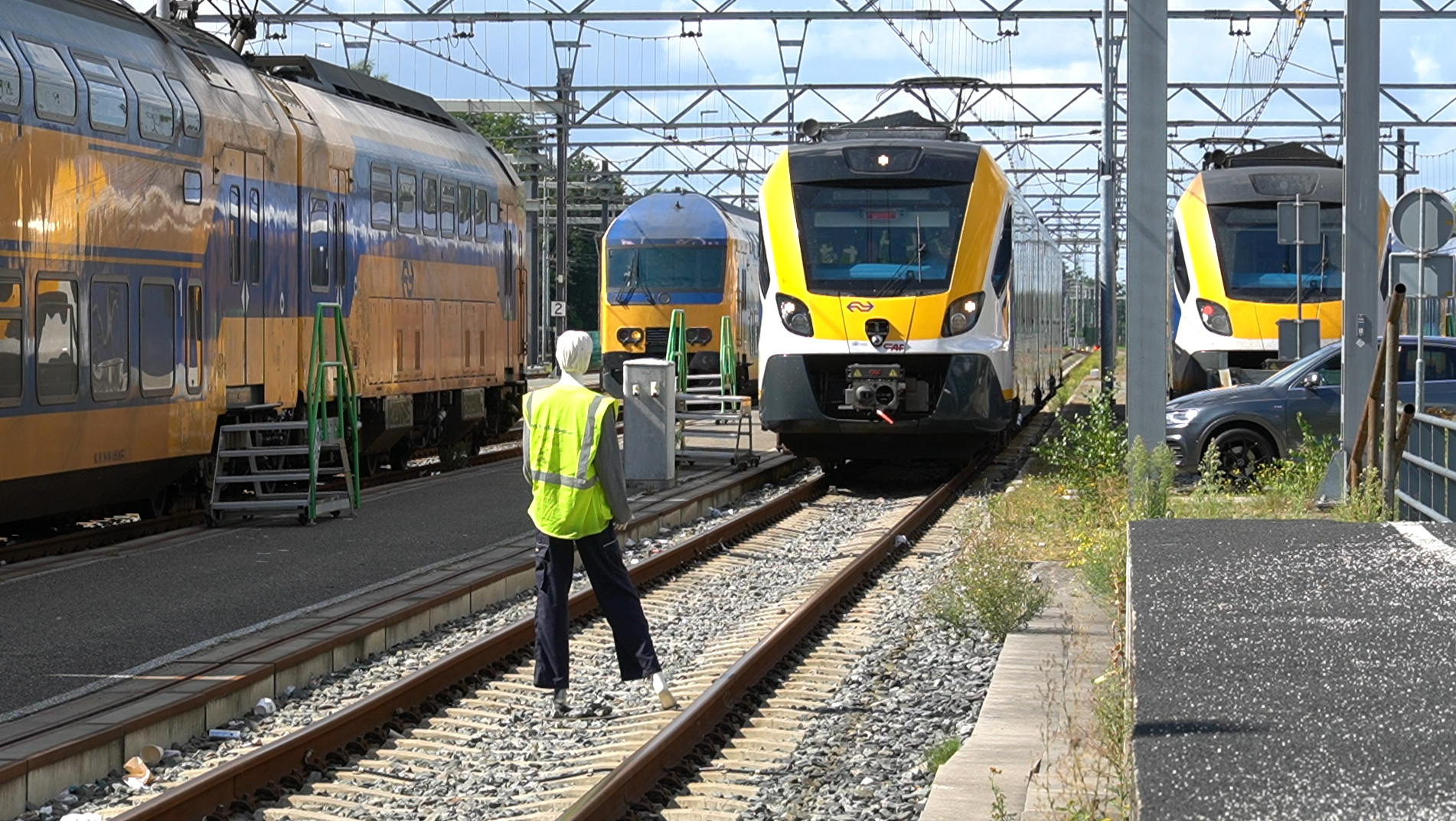
Between May and June 2025, CAF’-built New Generation Sprinter EMU from Netherlands Railways (NS) was retrofitted with perception technologies, sensors and other equipment to carry out the tests.
Another major milestone was reached in September 2025 with the successful public demonstration of Remote and Autonomous Shunting and Stabling. The event, hosted in Utrecht, showcased remote operation capabilities from the NS headquarters control centre, which managed a train located 120 kilometres away on the line between Enschede and Hengelo. The demonstration brought together operators, manufacturers and stakeholders from across the rail industry, who were able to witness first-hand the tangible progress being made in railway automation. During the event, two main operational scenarios were demonstrated, highlighting both remote driving (GoA1) and fully autonomous operation (GoA4). The first scenario involved remote-controlled coupling and uncoupling of trains, while the second focused on advanced autonomous functionalities such as cab selection and change management, mission profile execution, automatic driving in compliance with lateral signalling, and real-time obstacle detection, with the system successfully identifying buffer stops, other trains, vehicles and even test dummies along the track. The live demonstration not only confirmed the technical feasibility of remote and autonomous shunting and stabling but also underscored the collaborative and innovative spirit driving the next generation of European rail automation.
FP2-R2DATO is expected to significantly contribute to achieving the EU’s transport policy goals, including a 50% increase in rail freight and a doubling of high-speed traffic by 2030.
About the project: R2DATO’s Broader Mission
The project’s ultimate goal is to support the EU’s broader transport and climate goals by making rail a more attractive and efficient option for both passengers and freight, encouraging modal shift and reducing emissions. To achieve this, FP2-R2DATO is also focused on creating practical guidelines and cost-effective methodologies for deploying ATO across Europe. These recommendations will be shaped by lessons learned from real-world demonstrators and will account for both technical and human aspects to ensure safe, smooth implementation, including migration strategies.
Launched in December 2022 with a budget of €160.8 million, FP2-R2DATO brings together 77 partners working on requirements, specifications, prototypes and demonstrations, some of which will contribute to future update of EU Technical Specifications for Interoperability (TSI).