Europe’s Rail Newsletter – October Edition 📩 Discover the October Newsletter! 🚆 Explore the latest developments across...
EU-Rail October 2026 Newsletter
read more

A body of the
European Union

Access the list of all EU-Rail Calls for Proposals.

On 21 June 2024, the Governing Board of Europe’s Rail Joint Undertaking (EU-Rail) adopted a Call for Expression of Interest (CEI) with a view to selecting associated members with the potential to contribute to the achievement of its objectives. The Governing Board decision can be accessed here.
Discover detailed information about procurment rules and information.
Access detailed information about past tenders.

Europe's Rail regularly published Calls for Tenders. To find out about open Calls, follow link below.
Article 15 (Principle of transparency) of the EU-Rail financial rules states that the JU shall make available on its internet site no later than 30 June of the following financial year information on the recipients of funds deriving from its budget.

EU-Rail’s Innovation Pillar (IP) is tasked to deliver operational and technological solutions that contribute to a more efficient, flexible, and demand-led, yet safe and environmentally sustainable European railway system.
The System Pillar provides governance, resource, and outputs to support a coherent and coordinated approach to the evolution of the rail system and the development of the system view.

The Deployment Group advises the EU-Rail Governing Board on the market uptake of rail innovation developments and support their deployment.
For a successful and effective implementation of the Digital Automatic Coupler for European rail freight (DAC), it is of crucial importance to have open, close and efficient cooperation between rail stakeholders. The European DAC Delivery Programme enabled by Europe’s Rail, offers a unique European platform for such cooperation and collaboration.

Discover how Europe’s Rail Joint Undertaking is calling for a bold, coordinated investment strategy to simplify and modernise rail systems across the EU. This public-private partnership model – outlined in our High-Level Paper – proposes an €18 billion investment from 2028 to 2034 to strengthen European competitiveness, deliver greener transport, and drive technological sovereignty.

The Shift2Rail Joint Undertaking is the predecessor programme of the Europe's Rail Joint Undertaking (EU-Rail), established by Council Regulation (EU) 2021/2085 of 19 November 2021.
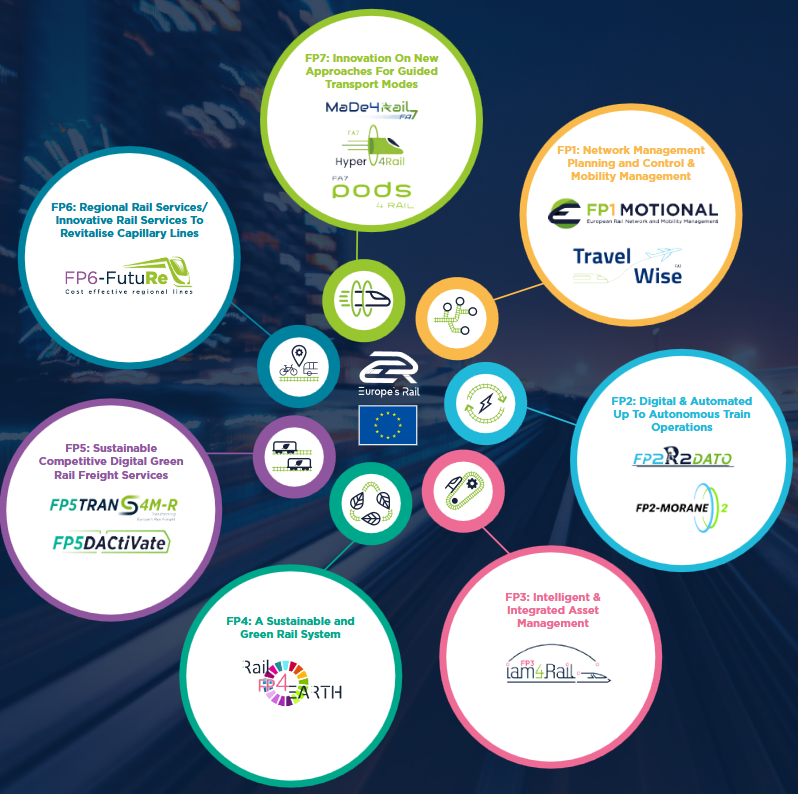
Discover detailed information on Europe's rail innovation initiatives, showcasing flagship and other projects aimed at enhancing rail systems across Europe. It highlights collaborative efforts funded by the European Union to develop sustainable, efficient, and competitive rail transport solutions.
It showcases successful research and innovation results, highlighting their potential as market-ready solutions and the benefits they offer to rail stakeholders. It also emphasises how integrating demonstrators into market solutions can drive future rail innovation capabilities.
Europe’s Rail Joint Undertaking (EU-Rail) is the European partnership on rail research and innovation established under the Horizon Europe programme (2020-2027) and the universal successor of the Shift2Rail Joint Undertaking.

Find out the full list of Europe's Rail Members.

Discover the full structure and governance of Europe's Rail, including the decisions of the Governing Board.
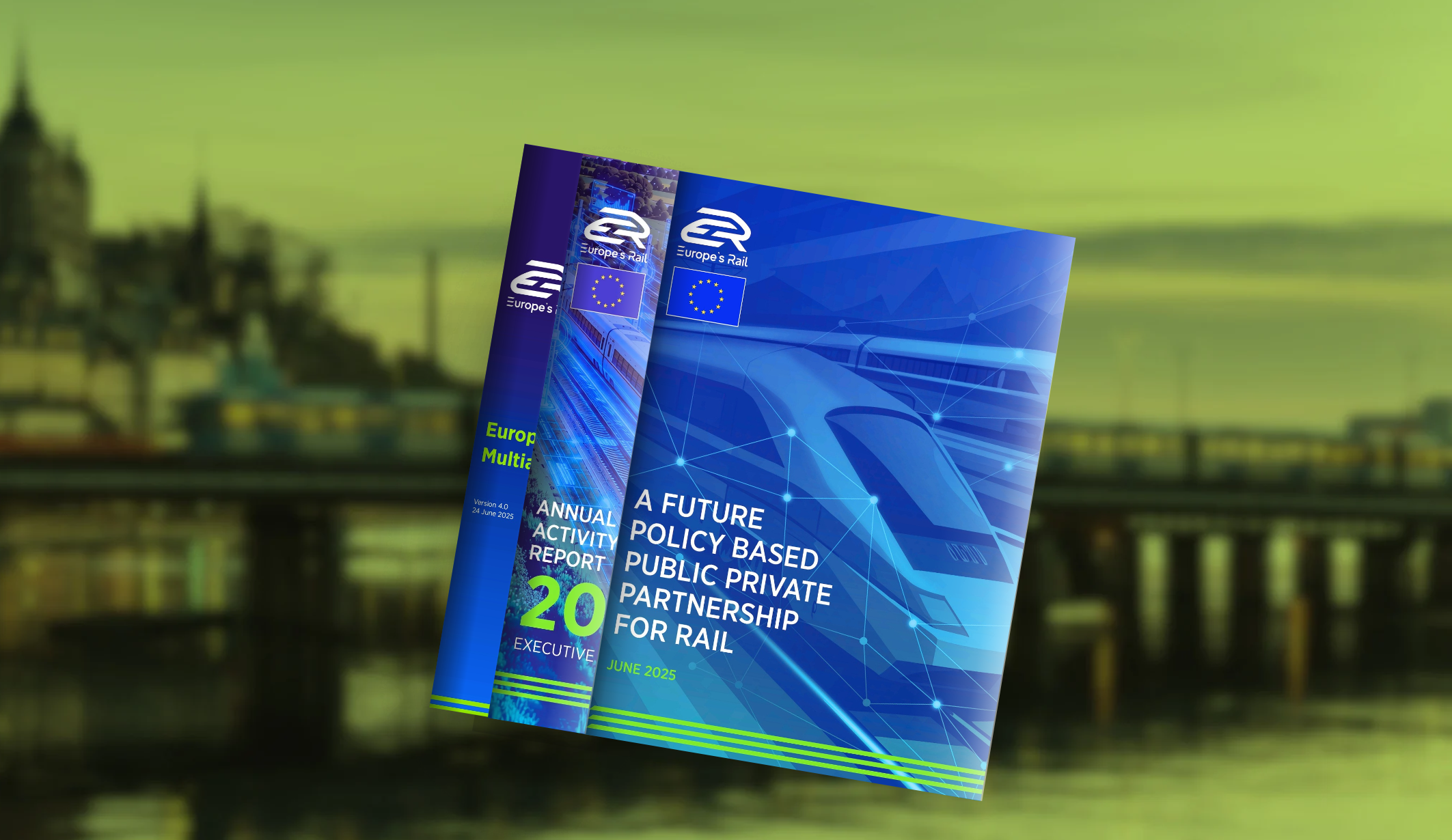
Get access to Europe's Rail main reference documents, including Annual Work Plans, Annual Activity Reports, Annual Accounts and other important information.
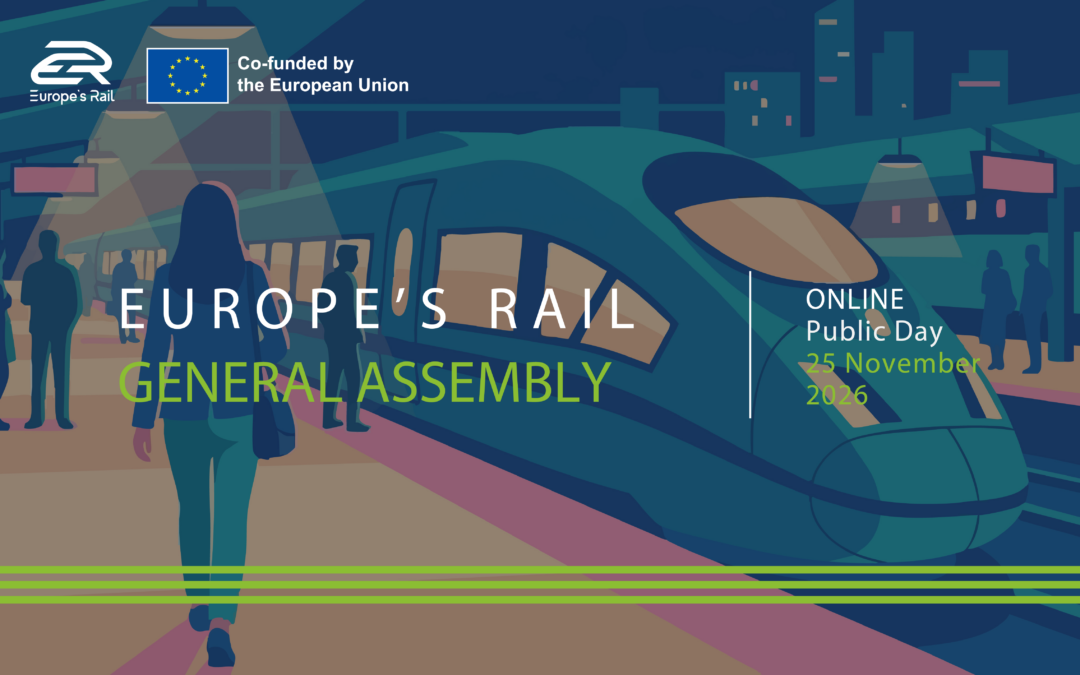
On 24-25 November, the Europe’s Rail General Assembly 2026 took place, providing an opportunity to review the achievements of the past year, assess progress across the programme and outline priorities for the future.
The event provided an opportunity for members and representatives from across the European rail sector to take stock of the Joint Undertaking’s achievements, discuss its strategic direction and reflect on its contribution to the development of the Single European Railway Area (SERA).
The first day was dedicated to the Governing Board meeting, during which members engaged in strategic discussions, including the future of the partnership under the next Framework Programme.
The second day took the form of an open online event, bringing together more than 120 participants from across the rail sector. The programme focused on the Operational Reports, featuring contributions from the advisory bodies and updates on ongoing activities and progress across the Innovation and System Pillars, as well as developments with/in the Deployment Group.
Innovation Pillar: Delivering impact across Europe
The Innovation Pillar presented the scale of its achievements since the start of the Joint Undertaking. By the end of 2026, the programme will have delivered around 800 outputs, involving 1,320 participants from 28 countries and supported by €440 million in EU funding and €520 million in in-kind contributions from private members.
The work is also continuing, with 12 new projects launched or about to be launched, including six Wave 2 Flagship Projects, each involving around 75 partners. Meanwhile, 11 projects have reached or are approaching completion by the end of 2026, marking another important milestone in the delivery of the programme.
System Pillar: Building a common vision for European rail
The System Pillar continues to support the harmonisation of railway operations and products through a modular architecture, fostering convergence towards a shared strategic vision for SERA. With the involvement of approximately 400 experts from across the sector and €55 million in EU funding, significant progress has already been achieved.
Key results include the first external release of specifications ready for use in procurement, including Cybersecurity Specifications V1.1, as well as progress on the architecture of future train and traffic control systems and contributions to the ERTMS Blueprint.
Deployment Group: Moving towards implementation
The Deployment Group provided updates on two key priorities for the European rail sector: the Future Railway Mobile Communication System (FRMCS) and Digital Automatic Coupling (DAC).
For FRMCS, work is progressing to prepare the sector for deployment. A survey covering 23 countries has identified funding, authorisation and industrial capacity as key challenges, while a cost model tool is under development, with release expected in early 2027.
Regarding DAC, the priority is to support the successful operation of Pioneer DAC Trains by 2027–2028, through the identification, verification and mitigation of the main deployment risks.
Looking ahead
The General Assembly highlighted both the tangible progress achieved by Europe’s Rail and the work that remains ahead. Building on the results presented and the continued commitment of its members and stakeholders, the partnership is preparing for its next phase, with the ambition of further strengthening its contribution to a more integrated, interoperable and competitive European railway system.