Your monthly update on innovation and deployment for Europe’s railway system of the future.At InnoTrans 2026, the...

Innovation Pillar, System Pillar and Deployment Group – August News
read more
A body of the
European Union

Access the list of all EU-Rail Calls for Proposals.

On 21 June 2024, the Governing Board of Europe’s Rail Joint Undertaking (EU-Rail) adopted a Call for Expression of Interest (CEI) with a view to selecting associated members with the potential to contribute to the achievement of its objectives. The Governing Board decision can be accessed here.
Discover detailed information about procurment rules and information.
Access detailed information about past tenders.

Europe's Rail regularly published Calls for Tenders. To find out about open Calls, follow link below.

Article 15 (Principle of transparency) of the EU-Rail financial rules states that the JU shall make available on its internet site no later than 30 June of the following financial year information on the recipients of funds deriving from its budget.

EU-Rail’s Innovation Pillar (IP) is tasked to deliver operational and technological solutions that contribute to a more efficient, flexible, and demand-led, yet safe and environmentally sustainable European railway system.

The System Pillar provides governance, resource, and outputs to support a coherent and coordinated approach to the evolution of the rail system and the development of the system view.

The Deployment Group advises the EU-Rail Governing Board on the market uptake of rail innovation developments and support their deployment.
For a successful and effective implementation of the Digital Automatic Coupler for European rail freight (DAC), it is of crucial importance to have open, close and efficient cooperation between rail stakeholders. The European DAC Delivery Programme enabled by Europe’s Rail, offers a unique European platform for such cooperation and collaboration.
Discover how Europe’s Rail Joint Undertaking is calling for a bold, coordinated investment strategy to simplify and modernise rail systems across the EU. This public-private partnership model – outlined in our High-Level Paper – proposes an €18 billion investment from 2028 to 2034 to strengthen European competitiveness, deliver greener transport, and drive technological sovereignty.

The Shift2Rail Joint Undertaking is the predecessor programme of the Europe's Rail Joint Undertaking (EU-Rail), established by Council Regulation (EU) 2021/2085 of 19 November 2021.

Discover detailed information on Europe's rail innovation initiatives, showcasing flagship and other projects aimed at enhancing rail systems across Europe. It highlights collaborative efforts funded by the European Union to develop sustainable, efficient, and competitive rail transport solutions.

Europe’s Rail Catalogue of Solutions illustrates successful R&I results in the form of possible products and solutions, while highlighting the benefits for final users, operators, infrastructure managers and/or suppliers. This publication also outlines the advantages of integrating demonstrators into market solutions so that they can deliver the rail innovation Capabilities of the future.
Europe’s Rail Joint Undertaking (EU-Rail) is the European partnership on rail research and innovation established under the Horizon Europe programme (2020-2027) and the universal successor of the Shift2Rail Joint Undertaking.

Find out the full list of Europe's Rail Members.

Discover the full structure and governance of Europe's Rail, including the decisions of the Governing Board.

Get access to Europe's Rail main reference documents, including Annual Work Plans, Annual Activity Reports, Annual Accounts and other important information.
The first mature solution proposals to support onboard modularity were approved at the System Pillar Steering Group Meeting.
The current CCS onboard communication backbone remains non-harmonised, with proprietary and optional variants that limit interoperability, increase lifecycle costs, and complicate the integration of new functionalities. The proposed package of six Change Requests (CRs) aims to consolidate these approaches into a single, standardised solution. During the meeting, the first two CRs were approved.
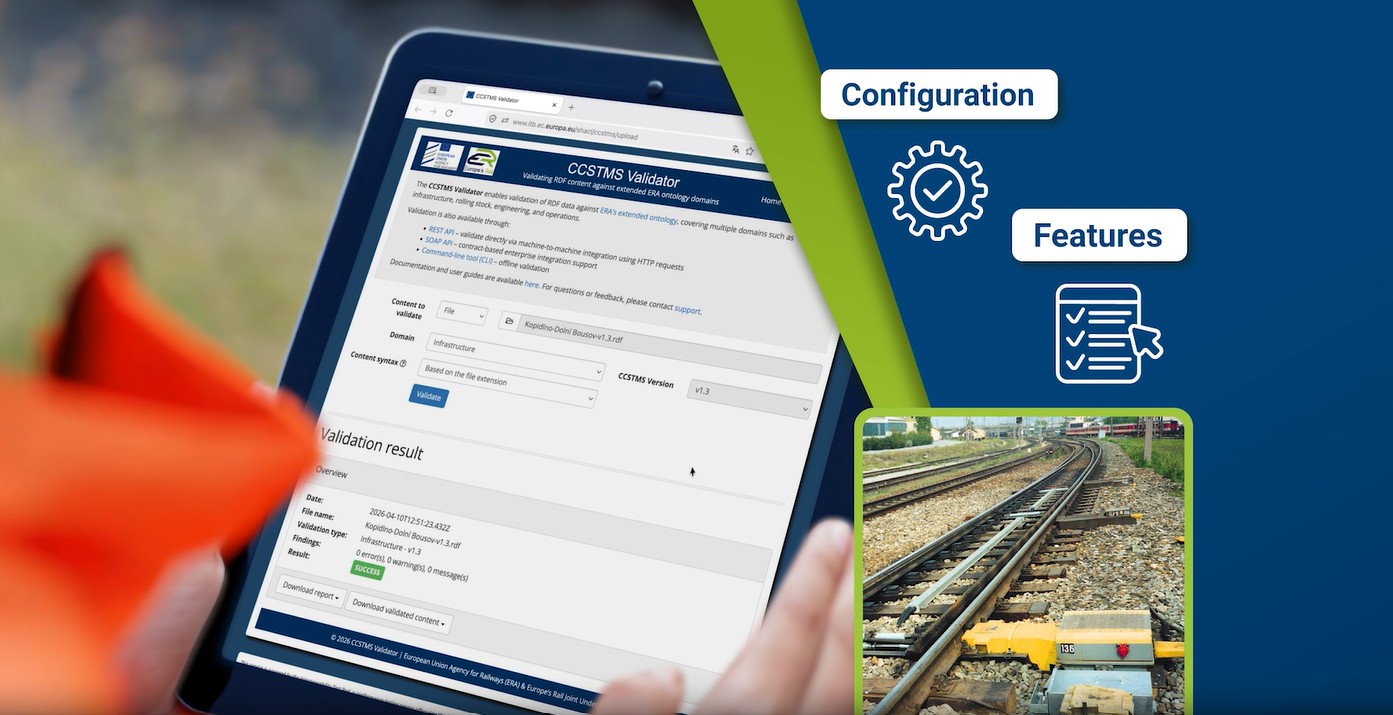
Have you ever wondered how railway systems communicate with each other? Or how a planning system interprets infrastructure data, and how engineering data becomes usable for operations? The answer lies in a shared understanding.
In Europe, this common understanding is provided by the ERA Ontology. EU-Rail has clarified its principles and promoted its use, also developing—through its System Pillar—an extension of the ontology in the Control, Command and Signalling domain.
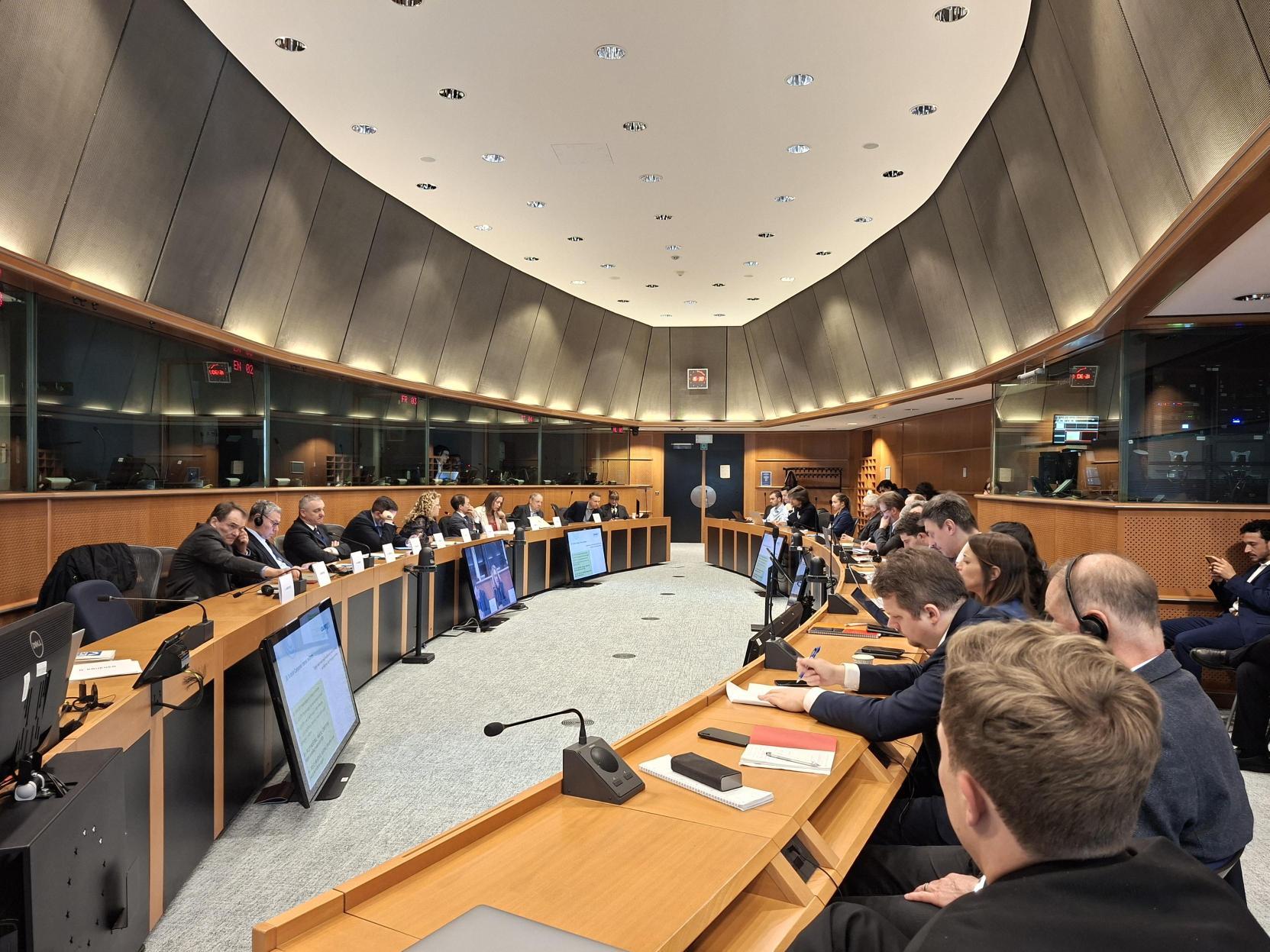
EU-Rail participated in the Final Event of the LEADER 2030 project, held on 8 April 2026 at the European Parliament.
During the conference, the project coordinator Veronica Elena Bocci (ERCI), representing the Rail value chain, and the partner Wolfgang Reimer (GKZ), representing the Raw Materials value chain, presented the highlights of the research done, and the “Policy Brief” issued for the event, which concisely outlines the ‘problem, diagnosis and possible solutions’, based on the project results.
The ‘possible solutions’ consist in 27 pages of recommendations – addressed to EU, national, regional institutions and to the European rail value chain – covering industrial, financial, regulatory, technological measures aimed at both building the European Rail value chain readiness, resilience and autonomy to deliver EU-Rail’s targeted innovations and strengthening the European Raw Materials value chain and its activities in Europe.
The topics were discussed with the Vice President of the European Parliament, MEP Antonella Sberna, the cohosting MEPs Francesco Torselli (ITRE Committee – “Industry, Research, Energy Committee), Carlo Ciccioli (TRAN Committee – “Transport and Tourism”), Francesco Ventola (VP REGI Committee – “Regional Development), and with the Executive Director of EU-Rail, Giorgio Travaini.
Following the first successful editions in 2024 and 2025, and within the framework of our EU-Rail projects Academics4Rail, PhDs EU-Rail, and SERAS, the third edition of the Summer International School on The European Railway System (SISTERS 2026) will take place at Sapienza University of Rome, Faculty of Civil and Industrial Engineering, from 14 to 22 July 2026.
The programme will feature lecturers from the European Union Agency for Railways (ERA), EURNEX, Sapienza University of Rome, SUPSI, and the University of Genoa, offering participants a high-level academic and industry perspective on the European railway system.
Participation in the summer school is free of charge and reserved for Bachelor’s, Master’s, and PhD students from universities participating in the Academics4Rail, PhDs EU-Rail, and SERAS projects, as well as from EURNEX partner universities. Students from other universities may also be admitted, with preference given to those with academic experience in the railway sector.
Applications are open until 20 May 2026.
Measurement campaigns under Europe’s Rail predecessor Shift2Rail In2Track2 and In2Track3 projects have shown that damping levels in existing railway bridges often exceed the conservative values prescribed in EN 1991–2. These studies also revealed significant scatter among similar structures, reflecting the complex influence of soil– structure interaction, vibration amplitude, and estimation methods. Given the critical role of damping in bridge dynamics, particularly near resonance, and in light of the challenges outlined above, an update of the Eurocode provisions is needed. In this context, EU-Rail launched the InBridge4EU project to support ERA and the European standardisation setting organisations to improve the representation of damping in the Eurocode framework. The paper “Towards improved normative definitions of damping in railway bridges: Insights from the InBridge4EU European experimental database” presents its main outcomes based on over 1150 traffic-induced acceleration records from nearly 90 bridges across five European countries. The analysis resulted in the first proposal since the 1990s for revised damping curves and an updated bridge typology classification that better reflects real-world variability. These results provide a more robust, data-driven basis for the forthcoming revision of EN 1991–2, enabling less conservative yet safe design approaches and contributing to more efficient and reliable dynamic assessment of railway bridges in the European network.
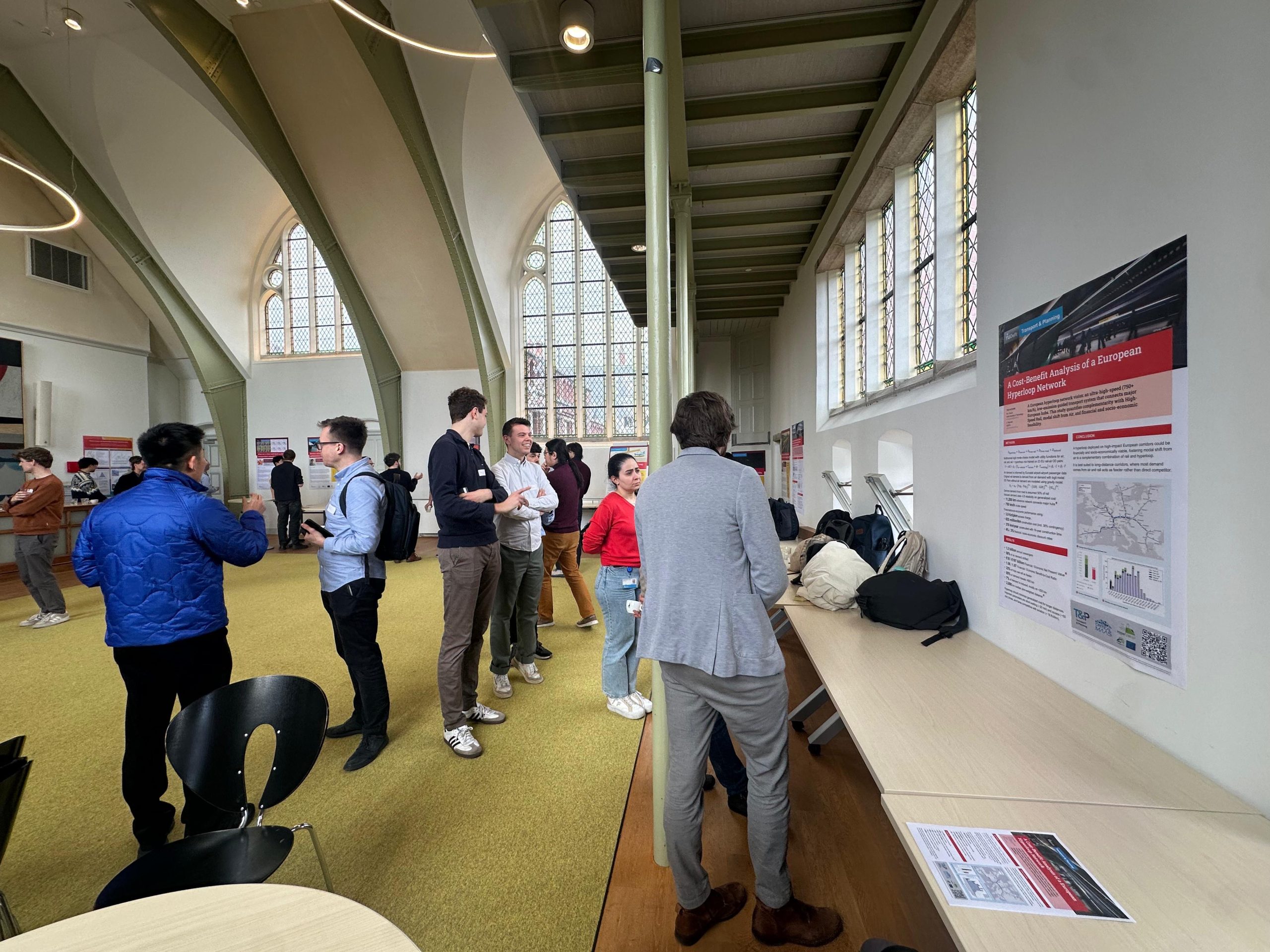
On 26 March, the Transdisciplinary Symposium on European Long-Distance Passenger Transport at the Delft University of Technology, gathered scholars and speakers from the long-distance transport market in Europe, including service providers, network planners, and revenue management experts (such as Flix, KLM Royal Dutch Airlines and RailNetEurope). The technology Director at Hardt Hyperloop Mars Geuze presented the paper “A Cost-Benefit Analysis of a European Hyperloop Network” on the potential of a European hyperloop network. Using a multinomial logit mode-choice model trained on multiple EU origin-destination pairs, the study estimates that the network could serve 1.2 billion passengers per year, and shift 56% of intra-European air travel demand to hyperloop. The paper concludes that hyperloop is best suited to long-distance corridors (85% of demand travels over 800 km), where it complements rather than competes with high-speed rail, which would serve as a feeder system.
Our EU-Rail SYMBIOSIS project is moving from concepts to action. At midyear, the project is delivering tangible results, from a review of 100+ case studies on impact assessment tools and new insights on climate risks like floods and extreme heat, to the development of a Biodiversity–CO₂ Calculator bridging carbon and ecosystem performance (in progress. The link will be available soon). Pilot activities are launching across Europe to test AI-supported biodiversity monitoring, while new findings highlight gaps in current practices and opportunities for standardisation. With upcoming presentations at TRA 2026 and a growing set of operational tools, the project is accelerating practical solutions for sustainable infrastructure.
Within the SYMBIOSIS project, EU-Rail is running a short, anonymous survey to better identify societal,
environmental, and biodiversity-related impacts of transport developments.
Underground train platforms can experience significantly poorer air quality than outdoor environments, mainly due to particles generated by braking, wheel–rail contact, and power transmission rather than exhaust emissions. Through an extensive 18-month study at the Arlanda Central Railway Station in Stockholm, our EU-Rail Rail4Earth project has generated new insights into how air quality varies over time and across different operating conditions. Using this data, researchers are developing predictive models that account for train operations, infrastructure characteristics, and environmental conditions, while also exploring machine learning to improve accuracy. The goal is to support targeted measures that can create healthier environments for both passengers and railway staff.
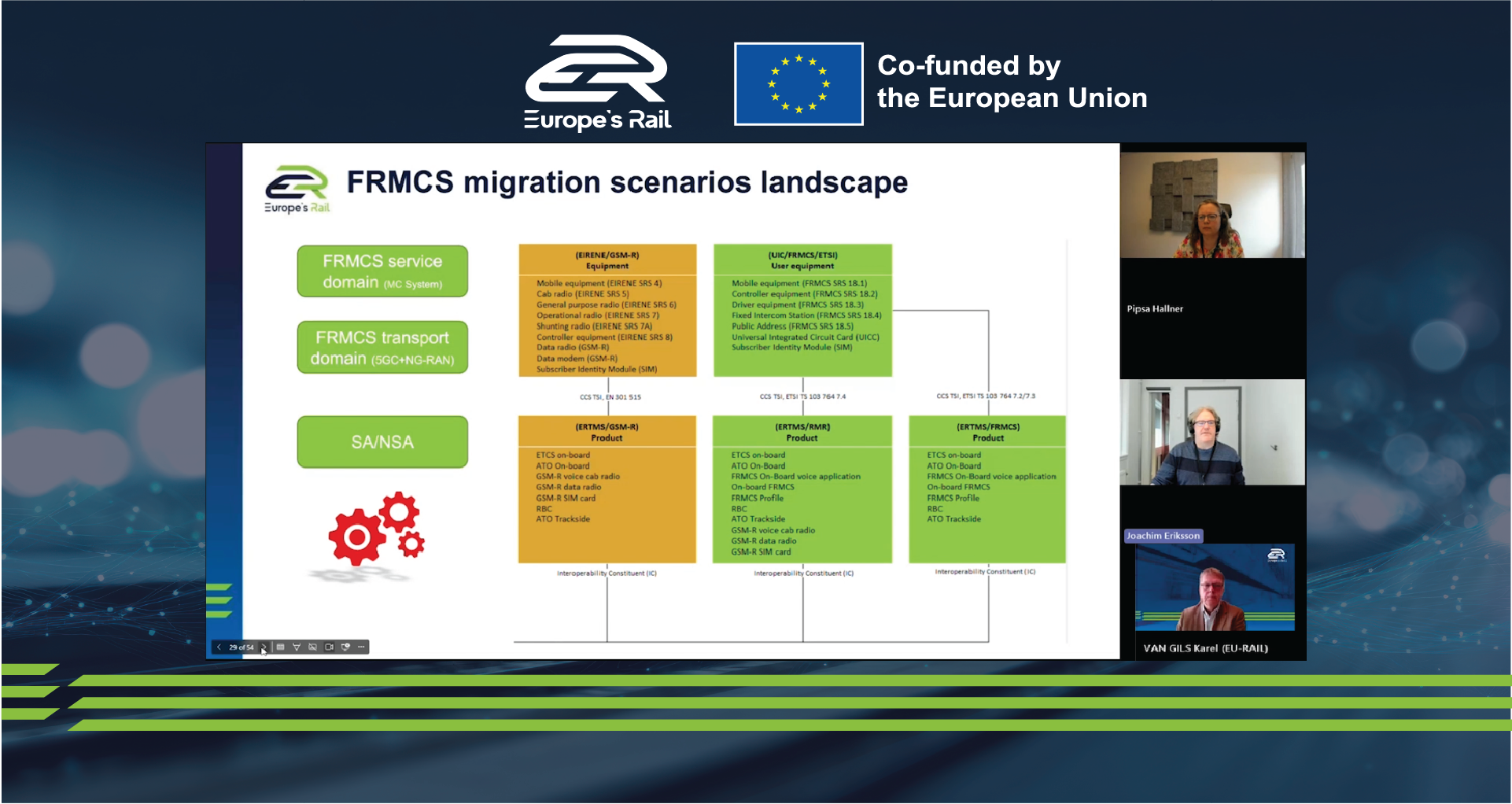
On 16 April, EU-Rail invited ERTMS Forum members to a dedicated webinar on the Future Railway Mobile Communication System (FRMCS) deployment scenarios, which gathered around 50 participants from 18 member states.
The FRMCS Deployment Group (WG3) is currently working on defining different migration scenarios. The results of the 2025 questionnaire, completed by a wide range of stakeholders, have provided valuable input on the various pathways for implementing FRMCS across Europe.
Following an introductory presentation by EU-Rail Executive Director Giorgio Travaini on the vision and structure of the Joint Undertaking, Pipsa Hallner, Chair of the FRMCS Programme at Trafikverket and leader of the FRMCS Deployment Working Group 3, together with Joachim Eriksson, Enterprise Architect at Trafikverket, presented the current state of FRMCS migration scenarios. Their intervention covered the methodology, key challenges, and main conditions for deployment.
A new questionnaire is planned for 2026, which will include targeted questions for Notified Bodies (NoBos) and Mobile Network Operators (MNOs).
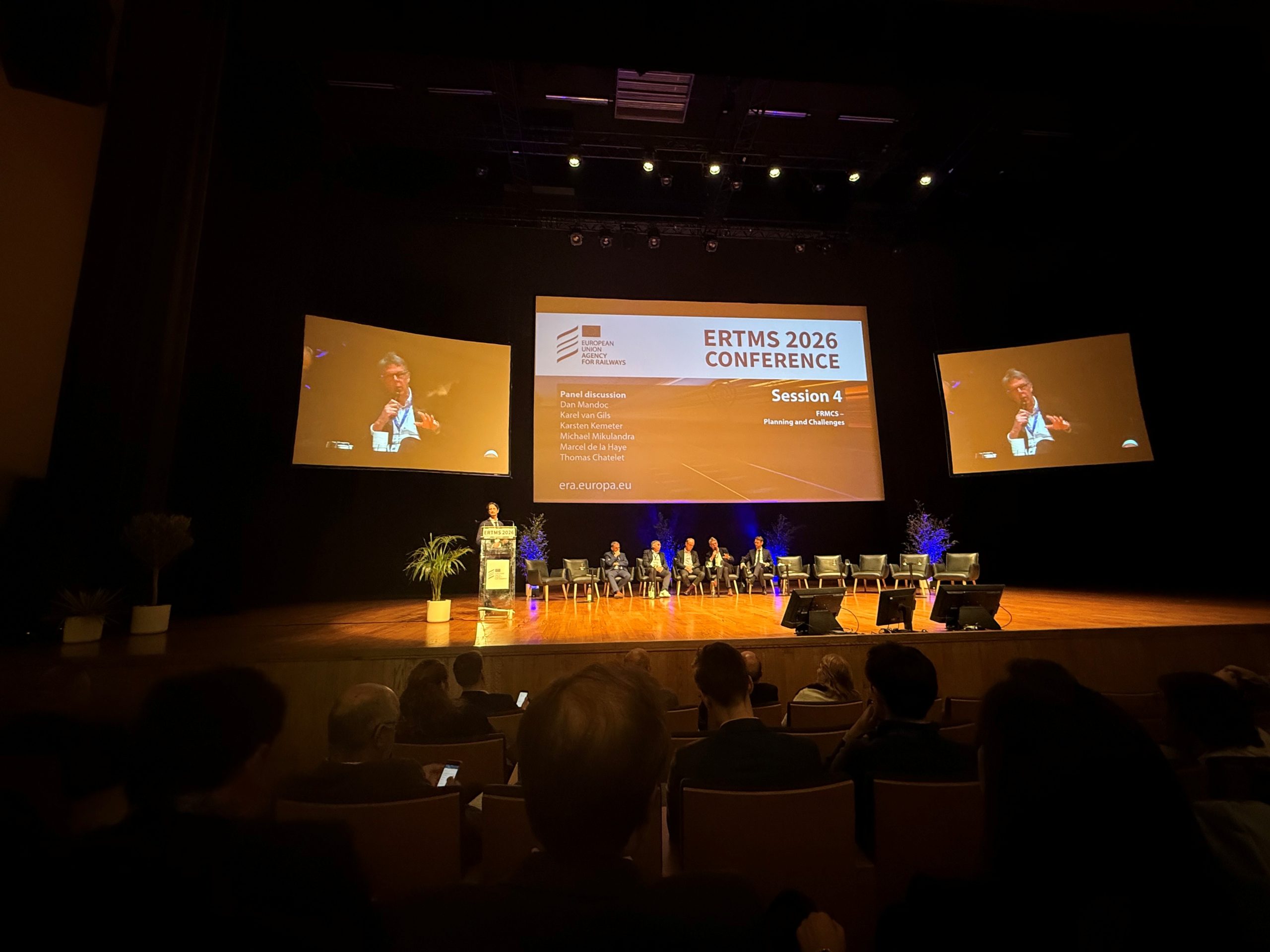
What does it take to transform the FRMCS from a forward-looking vision into a deployable, future-proof solution for Europe’s rail network? This key question was at the heart of Workshop 4 during the ERTMS 2026 Conference in Valenciennes under the title “Practical solutions to overcome FRMCS-related deployment challenges”.
With participation from more than 250 experts across the rail sector, the workshop moved beyond theory to focus on the practical steps required to make FRMCS implementation a reality in the coming years. The high level of engagement highlighted both the urgency and the shared commitment to advancing next-generation railway communications.
Participants explored several critical areas, including:
Working in small, interactive groups, attendees compared operational requirements, addressed technical constraints, and identified opportunities for innovation. This collaborative format enabled a rich exchange of ideas and perspectives, fostering alignment across stakeholders.
The workshop marked an important step forward in preparing the European rail sector for the transition to FRMCS—turning ambition into actionable progress.
It also provided valuable input that will directly inform the work of the FRMCS Subgroup in the coming months.
EU-Rail is pleased to invite you to the FP1-MOTIONAL Cross Border Operation Demonstration Event, which will feature live and recorded demonstrations from leading industry partners, showcasing concrete results from collaborative work across Europe.
The morning session (hybrid) will provide insights into:
The afternoon session (on-site only) will focus on:
When: 13 May | 10:00 AM -16:00 PM (CET)
Where: Stockholm, Sweden
Registration deadline: 7 May

At the Transport Research Arena (TRA) 2026, our EU-Rail NEXUS project the NEXUS project will actively contribute through multiple technical sessions, presentations, and poster sessions on 19–20 May, showcasing work on metro simulation models, predictive traffic control, connectivity frameworks, automation, and passenger behaviour.
The NEXUS project will also host its 3rd External Advisory Board (EAB) Workshop. The event will bring together consortium members and key stakeholders from the metro sector to review project progress, validate results, and discuss next steps.
The programme will include presentations on simulation, AI, train control, and sustainability, alongside interactive discussions and interviews, providing a valuable platform to strengthen collaboration and help shape the project’s future direction. Participation in the workshop is open to the public, although places are limited.
When: 21 May | 9:30-16:00
Where: TRA 2026, Budapest
How can Europe build an efficient, reliable, comfortable and modern night train production system?
Our EU-Rail PhDs EU-Rail project Special Session at the Transport Research Arena (TRA) 2026 will explore the future of night trains in Europe. Despite their strong potential to reduce short-haul aviation, night trains remain underutilised due to outdated governance structures and fragmented responsibilities across authorities, infrastructure managers and operators.
Bringing together speakers from industry, startups, academia, and policy, the session will examine how research and innovation can help unlock the full decarbonisation potential of night trains for medium- and long-distance travel, combining overnight journeys with efficient daytime use.
When: 19 May | from 14:00 PM (CET)
Where: TRA 2026, Budapest

Our EU-Rail FP1-MOTIONAL project is pleased to invite you to the Real-Time Intelligence Demonstration Event, a unique opportunity to experience the next generation of European railway traffic management in action.
Join leading industry partners as they present live and recorded demonstrations showcasing how real-time data exchange, decision support, automation, and AI-driven optimisation are transforming railway operations across Europe.
From seamless integration between TMS, Traffic Control, ATO, and C-DAS, to advanced decision support tools, energy-optimised driving, and AI-based conflict resolution, the event will offer practical insights based on real operational scenarios and data.
This event brings together experts, practitioners, and stakeholders committed to building a more connected, intelligent and future-ready European railway system.
When: 27 May | 08:30 – 17:00 (CET)
Where: Pylonen, Röda vägen 1, Borlänge, Sweden
Registration deadline: 20 May

Join our EU-Rail FP2-R2DATO project to gain insights and engage in discussions with experts developing the future of Digital Automated Train Operations (DATO).
The event aims to:
The programme takes place over two days:
Day 1 – Plenary Session (3 June 2026)
Villa Grébovka, Prague (hybrid session from 09:15 to 10:55; online access available until 10:55 only).
Day 2 – Demonstrations (4 June 2026)
Dětenice – “Kopidlno” AZD test line
Two demo groups: 09:45–12:30 and 11:45–14:45.
Our EU-Rail FP2-MORANE-2 partners invite you to the project Mid-Term Conference.
Participants will gain insights into technical developments and demonstration results, as well as the next steps for the project, with a particular focus on the verification of FRMCS specifications ahead of the upcoming update of the Technical Specifications for Interoperability (TSI).
Where: UIC Headquarters, Paris
When: 30 June
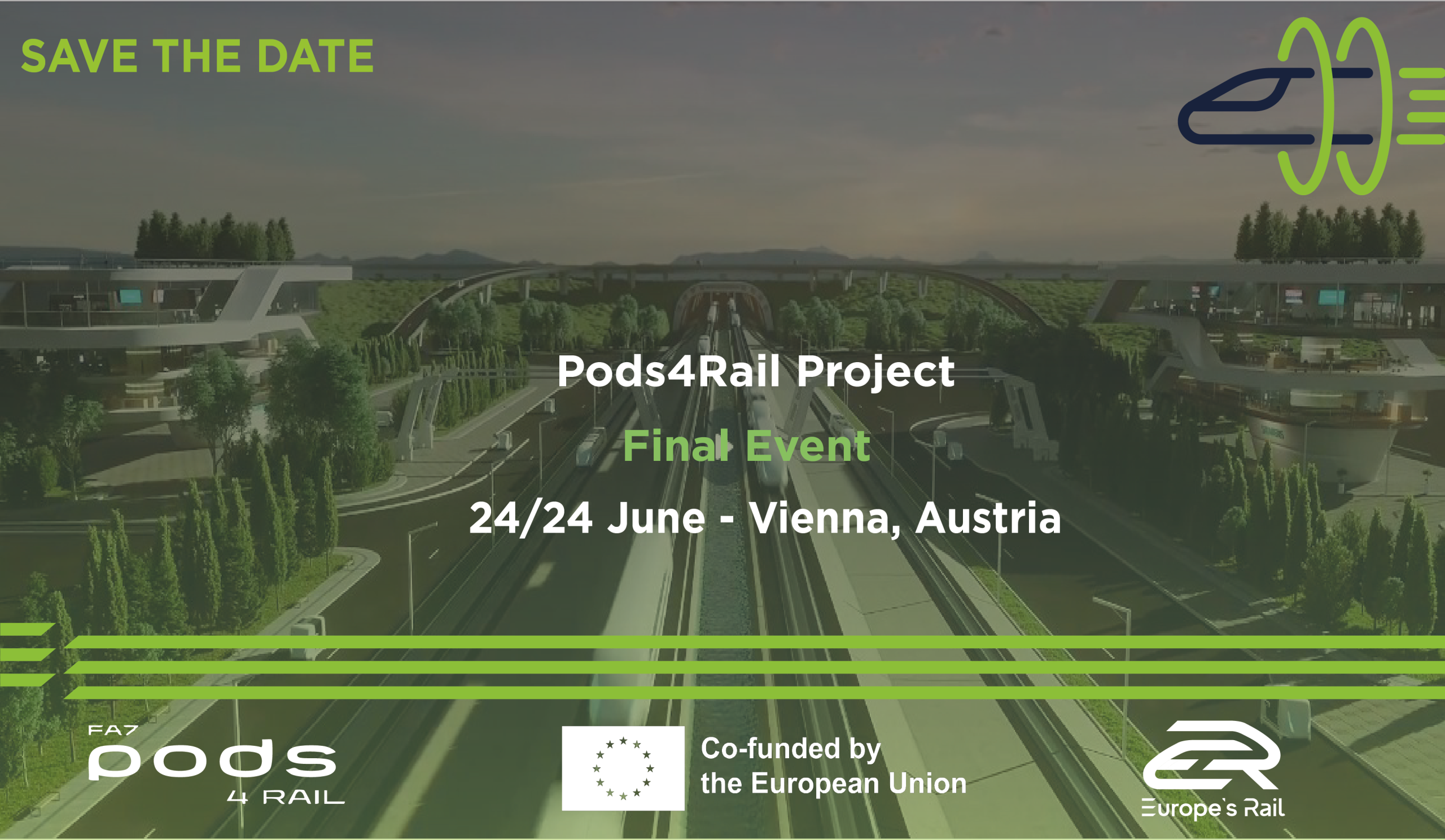
Our EU-Rail Pods4Rail project will celebrate its Final Event.
Almost three years ago, 15 partners from seven European countries launched the EU-funded research project Pods4Rail to develop new solutions for the transport of the future. The project, which brings together leading research institutions and highly innovative industrial partners, developed the concept for a digitised, decentralised mobility service with intermodal interfaces to different modes of transport.
During the event, project partners will share the motivation, goals, and results of the project and discuss the challenges of future mobility.
Interested participants are invited to join the event in person. Online participation will also be available.
Where: Vienna & Online
When: 24-25 June
Our EU-Rail FP1-MOTIONAL Final Event marks the conclusion of the project’s dissemination series, showcasing the main achievements delivered over the past four years.
Programme highlights include cross-border operations that aim to make Europe’s railways truly European, supported by real-time intelligence to enable faster and more proactive system responses. The event will also explore intelligent planning approaches that enhance decision-making through advanced algorithms and simulations, alongside solutions for seamless and inclusive mobility to support barrier-free end-to-end journeys. Finally, it will address the importance of a strong digital foundation as the backbone for future rail systems.
Where: Online
When: 30 June