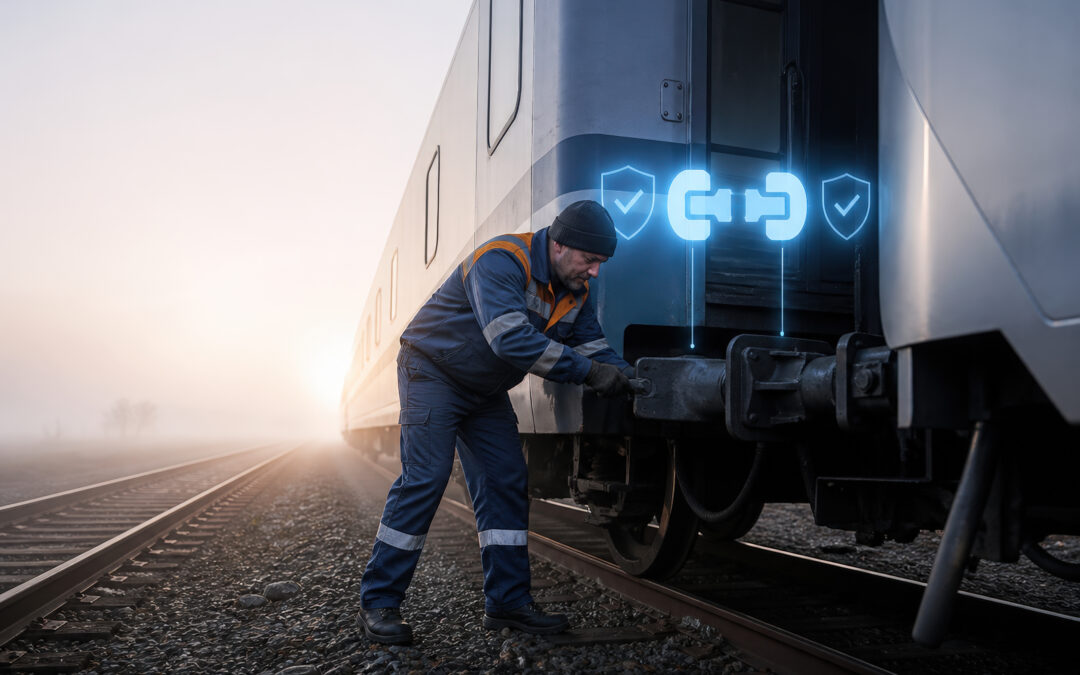
Pods4Rail D10.1 Concept development for equipment of sample vessel Pods4Rail develops a modular, autonomous transport...
Deliverables: Results Published in October 2026
read more
A body of the
European Union

Access the list of all EU-Rail Calls for Proposals.

On 21 June 2024, the Governing Board of Europe’s Rail Joint Undertaking (EU-Rail) adopted a Call for Expression of Interest (CEI) with a view to selecting associated members with the potential to contribute to the achievement of its objectives. The Governing Board decision can be accessed here.
Discover detailed information about procurment rules and information.
Access detailed information about past tenders.

Europe's Rail regularly published Calls for Tenders. To find out about open Calls, follow link below.

Article 15 (Principle of transparency) of the EU-Rail financial rules states that the JU shall make available on its internet site no later than 30 June of the following financial year information on the recipients of funds deriving from its budget.

EU-Rail’s Innovation Pillar (IP) is tasked to deliver operational and technological solutions that contribute to a more efficient, flexible, and demand-led, yet safe and environmentally sustainable European railway system.

The System Pillar provides governance, resource, and outputs to support a coherent and coordinated approach to the evolution of the rail system and the development of the system view.
The Deployment Group advises the EU-Rail Governing Board on the market uptake of rail innovation developments and support their deployment.
For a successful and effective implementation of the Digital Automatic Coupler for European rail freight (DAC), it is of crucial importance to have open, close and efficient cooperation between rail stakeholders. The European DAC Delivery Programme enabled by Europe’s Rail, offers a unique European platform for such cooperation and collaboration.
Discover how Europe’s Rail Joint Undertaking is calling for a bold, coordinated investment strategy to simplify and modernise rail systems across the EU. This public-private partnership model – outlined in our High-Level Paper – proposes an €18 billion investment from 2028 to 2034 to strengthen European competitiveness, deliver greener transport, and drive technological sovereignty.

The Shift2Rail Joint Undertaking is the predecessor programme of the Europe's Rail Joint Undertaking (EU-Rail), established by Council Regulation (EU) 2021/2085 of 19 November 2021.

Discover detailed information on Europe's rail innovation initiatives, showcasing flagship and other projects aimed at enhancing rail systems across Europe. It highlights collaborative efforts funded by the European Union to develop sustainable, efficient, and competitive rail transport solutions.

Europe’s Rail Catalogue of Solutions illustrates successful R&I results in the form of possible products and solutions, while highlighting the benefits for final users, operators, infrastructure managers and/or suppliers. This publication also outlines the advantages of integrating demonstrators into market solutions so that they can deliver the rail innovation Capabilities of the future.
Europe’s Rail Joint Undertaking (EU-Rail) is the European partnership on rail research and innovation established under the Horizon Europe programme (2020-2027) and the universal successor of the Shift2Rail Joint Undertaking.

Find out the full list of Europe's Rail Members.

Discover the full structure and governance of Europe's Rail, including the decisions of the Governing Board.

Get access to Europe's Rail main reference documents, including Annual Work Plans, Annual Activity Reports, Annual Accounts and other important information.
D20.2: Improved aerodynamic, development & demonstration intermediate report n°2
The FP4-Rail4EARTH project aims to improve the sustainability performance of Europe’s railway system and contributes to the objective of a climate-neutral Europe by 2050. Within this framework, Work Package 20 focuses on improving the aerodynamic performance of regional trains. The activities aim to develop accurate numerical methods to predict the aerodynamic behaviour of trains and to better understand how specific components influence aerodynamic loads and energy consumption. The work combines advanced computational simulations with experimental testing in wind tunnel facilities. Researchers are analysing airflow behaviour around a generic regional train model to refine and validate predictive methods. In parallel, the influence of roof components and pantographs on aerodynamic drag is being investigated. Various roof configurations are being tested experimentally and numerically to identify solutions that reduce drag and improve train efficiency. In addition, a modular full-scale pantograph model has been designed and tested to study its aerodynamic behaviour and optimise the interaction with overhead power lines. These investigations support the development of improved designs that reduce drag, enhance power transfer efficiency, and minimise wear of components.
How it brings us closer to achieving better rail for Europe: By improving the aerodynamic design of trains and key components such as roof equipment and pantographs, this work contributes to reducing energy consumption, operational costs, and CO₂ emissions in railway operations.
Target audience: Rail stakeholders, Member States, Researchers
More information on this topic: FP4-Rail4EARTH
D10.2: Energy storage solution for AC railway grid: A description document for the optimal design and control strategies of energy storage and interface converter for AC infrastructure
The FP4-Rail4EARTH project aims to improve the sustainability performance of Europe’s railway system and contributes to the objective of a climate-neutral Europe by 2050. Within this framework, the activities focus on developing a comprehensive system-level simulation model of the Swedish railway traction power system based on real-world operational data. The model integrates detailed representations of key components, including static frequency converters, electrical locomotives, catenary systems, high-voltage feeder lines, and traction transformers. Using this simulation environment, different energy storage solutions and interface converter technologies have been analysed for potential deployment in railway applications. The study evaluates several energy storage technologies, including lithium-ion batteries, supercapacitors, flywheel energy storage systems, and Superconducting Magnetic Energy Storage (SMES). In addition, a dedicated DC-AC converter topology has been designed to facilitate the integration of energy storage systems, improve voltage stability, and enhance the recovery of regenerative braking energy. The work also proposes an innovative method to integrate energy storage systems into existing static frequency converters, enabling peak power shaving and improved utilisation of regenerative energy, demonstrated through simulation scenarios and case studies.
How it brings us closer to achieving better rail for Europe: By exploring advanced energy storage technologies and power system integration strategies, this work supports more efficient and resilient railway energy systems.
Target audience: Rail stakeholders, Member States, Researchers
More information on this topic: FP4-Rail4EARTH
D1.2: Energy Management & Pre-Standardisation for alternative drive trains and related railway system intermediate report n°2
The FP4-Rail4EARTH project aims to improve the sustainability performance of Europe’s railway system and contributes to the objective of a climate-neutral Europe by 2050. As part of Europe’s Rail Flagship Area 4 – Sustainable and Green Rail Systems, the project focuses on advancing greener technologies across rolling stock, infrastructure, stations, and their related sub-systems (such as traction systems, bogies, brakes, energy storage systems, and HVAC). The work conducted so far within WP1 has focused on pre-standardisation activities supporting the deployment of alternative propulsion systems in rail, including batteries and hydrogen. These activities include identifying and discussing standardised battery interfaces, analysing interfaces between trains and operations as well as trains and the infrastructure, and developing energy management strategies for alternative drive trains. In addition, methodologies are being developed to optimise energy management at the railway system level, supported by use cases and scenarios such as the first-generation battery train application in France. The report also identifies relevant standards for alternative drive components and interfaces and contributes to their integration into the Standardisation and TSI Input Plan (STIP) for the wider FP4-Rail4EARTH project.
How it brings us closer to achieving better rail for Europe: With the standardisation and system integration of alternative propulsion technologies such as battery and hydrogen trains, the FP4-Rail4EARTH project supports the transition towards more sustainable, energy-efficient, and interoperable rail systems.
Target audience:Rail stakeholders, Member States, Researchers
More information on this topic: FP4-Rail4EARTH
D6.5: ATO GoA3-4 Specifications and modelling
The FP2-R2DATO project aims to improve rail safety and efficiency by developing Automatic and Autonomous Train Operation (ATO) technologies that are moving toward higher Technology Readiness Levels. The project task 6.5 focuses on updating and modelling the specifications for ATO up to Grade of Automation 3 and 4. The deliverable D6.5 synthesises results from previous projects, like the Shift2Rail X2Rail4 project, and integrates new findings generated by FP2-R2DATO project. Its objective is to provide a comprehensive description of advanced GoA3/4 ATO functionality, detailing core functions of automated and autonomous train operation, interfaces and interactions with other key subsystems like Automatic Train Protection (ATP), Train Control and Monitoring System (TCMS) and trackside signalling equipment. Additionally, a semiformal modelling method is used enabling railways operators and suppliers to work together using a shared tool and system architecture. The deliverable also updates the logical structure of the ATO system, including perception and action modules that emulate the driver’s behaviour. Finally, based on technical discussions, the deliverable includes a system view focused on components interaction.
How it brings us closer to achieving better rail for Europe: By improving and harmonising the ATO GoA3/4 specifications, this work supports the development of future automated and autonomous train operations. The updated specification becomes a key reference for other work packages and demonstrators in FP2-R2DATO by supporting the digitalisation and automation of the next generation Automatic Train Control (ATC) and the scalable digital and automatic (up to autonomous) train operation capabilities. This contributes to increase capacity, improve punctuality and reduce operational costs by leading to a rail system that is more interoperable, energy efficient, digital and automated.
Target audience: Rail stakeholders, Member States, Policymakers, National Safety Authorities, Notified Bodies
More information on this topic: FP2-R2DATO
D2.1: Hyperloop Technologies, Opportunities and Applications
The Hyper4Rail project objectives are to harmonize and realize a concept design of the hyperloop system (TRL 2) and to validate the subsystem technologies required for the development of transport systems in a low-pressure environment (TRL 4), defining a common roadmap for the integration of hyperloop technology into the Trans-European network. The study identifies critical transportation challenges in Europe and identifies opportunities for hyperloop as a new potential transport solution. The document serves as a first step of the Hyper4Rail project in developing the harmonized hyperloop system; several proposed hyperloop solutions and underlying technologies have been identified.
How it brings us closer to achieving better rail for Europe: This new transport solution is expected to contribute to strengthening the European transport system by reducing congestion and proving a potentially fast and environmental friendly transport mode in a low-pressure tube.
Target audience: Hyperloop and Rail stakeholders, Member States, Policymakers
More information on this topic: Hyper4Rail