Pods4Rail D10.1 Concept development for equipment of sample vessel Pods4Rail develops a modular, autonomous transport...
Deliverables: Results Published in October 2026
read more

A body of the
European Union

Access the list of all EU-Rail Calls for Proposals.

On 21 June 2024, the Governing Board of Europe’s Rail Joint Undertaking (EU-Rail) adopted a Call for Expression of Interest (CEI) with a view to selecting associated members with the potential to contribute to the achievement of its objectives. The Governing Board decision can be accessed here.
Discover detailed information about procurment rules and information.
Access detailed information about past tenders.

Europe's Rail regularly published Calls for Tenders. To find out about open Calls, follow link below.

Article 15 (Principle of transparency) of the EU-Rail financial rules states that the JU shall make available on its internet site no later than 30 June of the following financial year information on the recipients of funds deriving from its budget.

EU-Rail’s Innovation Pillar (IP) is tasked to deliver operational and technological solutions that contribute to a more efficient, flexible, and demand-led, yet safe and environmentally sustainable European railway system.

The System Pillar provides governance, resource, and outputs to support a coherent and coordinated approach to the evolution of the rail system and the development of the system view.

The Deployment Group advises the EU-Rail Governing Board on the market uptake of rail innovation developments and support their deployment.
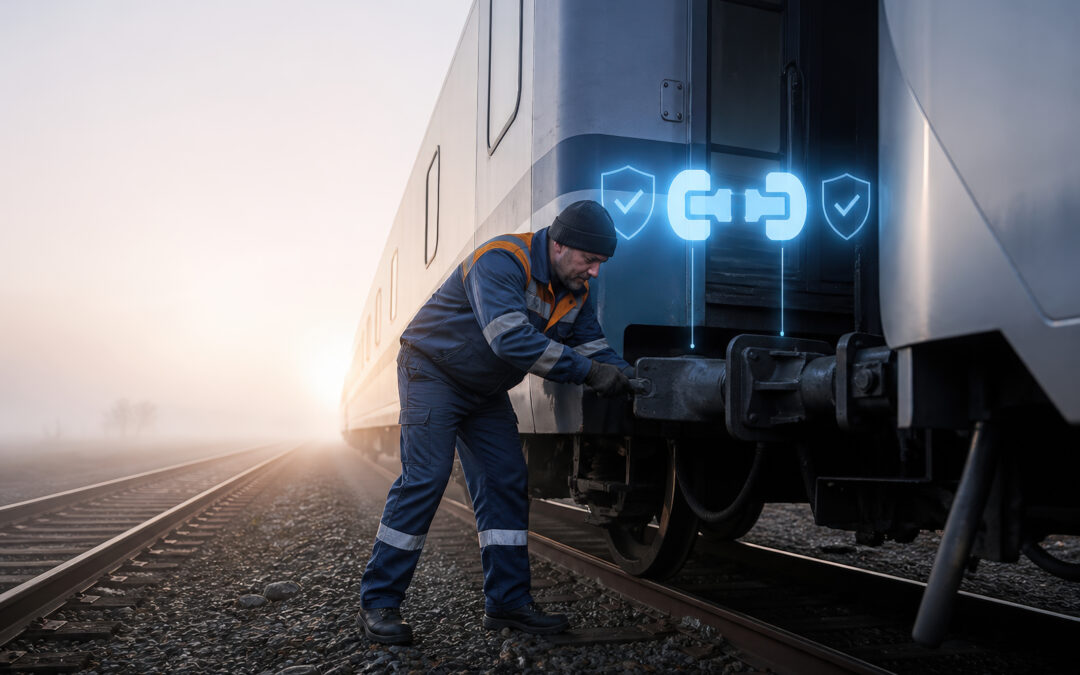
For a successful and effective implementation of the Digital Automatic Coupler for European rail freight (DAC), it is of crucial importance to have open, close and efficient cooperation between rail stakeholders. The European DAC Delivery Programme enabled by Europe’s Rail, offers a unique European platform for such cooperation and collaboration.
Discover how Europe’s Rail Joint Undertaking is calling for a bold, coordinated investment strategy to simplify and modernise rail systems across the EU. This public-private partnership model – outlined in our High-Level Paper – proposes an €18 billion investment from 2028 to 2034 to strengthen European competitiveness, deliver greener transport, and drive technological sovereignty.

The Shift2Rail Joint Undertaking is the predecessor programme of the Europe's Rail Joint Undertaking (EU-Rail), established by Council Regulation (EU) 2021/2085 of 19 November 2021.

Discover detailed information on Europe's rail innovation initiatives, showcasing flagship and other projects aimed at enhancing rail systems across Europe. It highlights collaborative efforts funded by the European Union to develop sustainable, efficient, and competitive rail transport solutions.

Europe’s Rail Catalogue of Solutions illustrates successful R&I results in the form of possible products and solutions, while highlighting the benefits for final users, operators, infrastructure managers and/or suppliers. This publication also outlines the advantages of integrating demonstrators into market solutions so that they can deliver the rail innovation Capabilities of the future.
Europe’s Rail Joint Undertaking (EU-Rail) is the European partnership on rail research and innovation established under the Horizon Europe programme (2020-2027) and the universal successor of the Shift2Rail Joint Undertaking.

Find out the full list of Europe's Rail Members.

Discover the full structure and governance of Europe's Rail, including the decisions of the Governing Board.

Get access to Europe's Rail main reference documents, including Annual Work Plans, Annual Activity Reports, Annual Accounts and other important information.
Together, these deliverables mark important progress in moving from a shared operational concept towards the structured follow-up needed for future specification work and stakeholder alignment.
The proposed ERTMS Blueprint will largely be based on EU-Rail System Pillar results. A first bundle of results is planned for end 2027: some elements are expected to be mature and ready for use in procurement, while others will still require testing, validation and further specification finalisation.
The ERTMS Blueprint aims to provide a European reference for a more harmonised and standardised CCS system, going beyond the current TSI scope. It is intended to enable an industrialised approach to deployment, with common engineering rules, harmonised operational concepts, cybersecurity specifications, trackside asset interfaces, Traffic Control and Supervision, and the interface to the Traffic Management System.
The event provided an opportunity to present the project’s results, exchange knowledge and discuss the next steps towards their practical application. Discussions covered five key themes:
Acoustics: 3 November 2026, 09:00–12:30 CET
Format: Online session via Microsoft Teams
Agenda: https://www.quieterrail.eu/wp-content/uploads/2026/10/QuieterRail-Webinar-2-Acoustics-Topics-V2.pdf
As part of Europe’s Rail innovation programme, CLIFRAIL-EU will develop and validate innovative approaches to climate finance instruments, finance-grade monitoring, reporting and verification (MRV) methodologies, EU Taxonomy– and CSRD-aligned reporting, and rail-specific investment evidence packs. The project will also address the recognition of modal-shift benefits and avoided emissions within climate finance frameworks.
By developing finance-grade methodologies, assessing existing barriers and identifying opportunities for rail-specific climate finance approaches, CLIFRAIL-EU will contribute to ongoing discussions on how sustainable rail investments can be better recognised within European climate and investment frameworks.
The first one, “Review on the modelling of modular POD-based passenger and goods transportation” is the first comprehensive review on modularity, multimodality, and co-modality in public transport.
Based on 45 peer-reviewed articles, the review covers transport system design, modularity implementation and optimisation methods. Key gaps: research focuses on road-based and corridor-based systems, leaving multi-modal and flexible network designs underexplored; co-modality lacks systematic modular analysis; and analytical methods dominate over simulation-based and AI-based approaches.
The review offers the first structured overview of these aspects and outlines directions for future research.
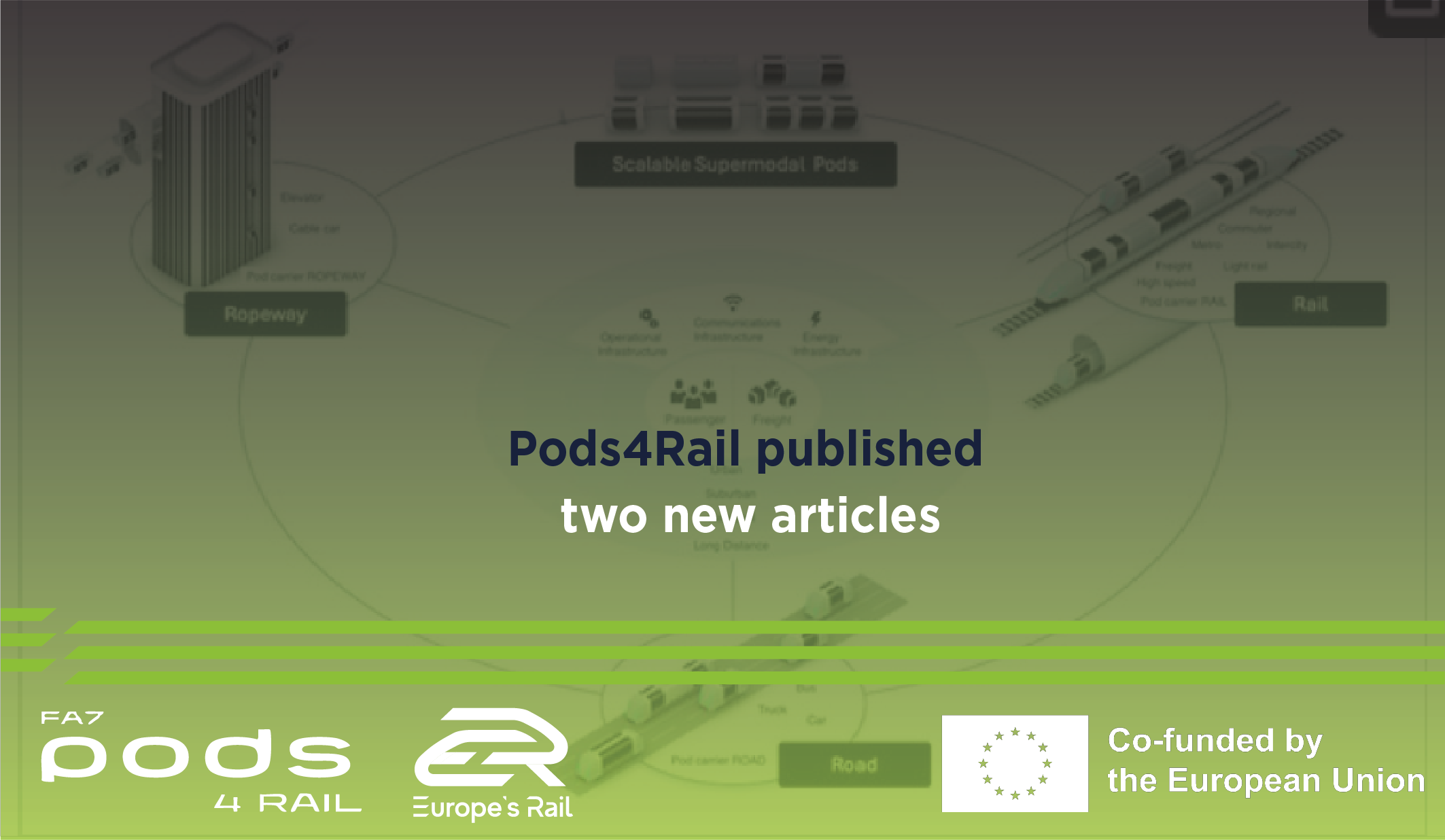
The showcase illustrated the project’s contribution towards reducing operational and infrastructure costs while maintaining safety and performance levels. The activity increased project visibility among railway operators, infrastructure managers, suppliers, research organisations and public authorities, supporting dissemination and stakeholder engagement objectives.
The demonstration also supported discussions with potential adopters and sector stakeholders regarding future deployment opportunities of the technologies developed within the project.
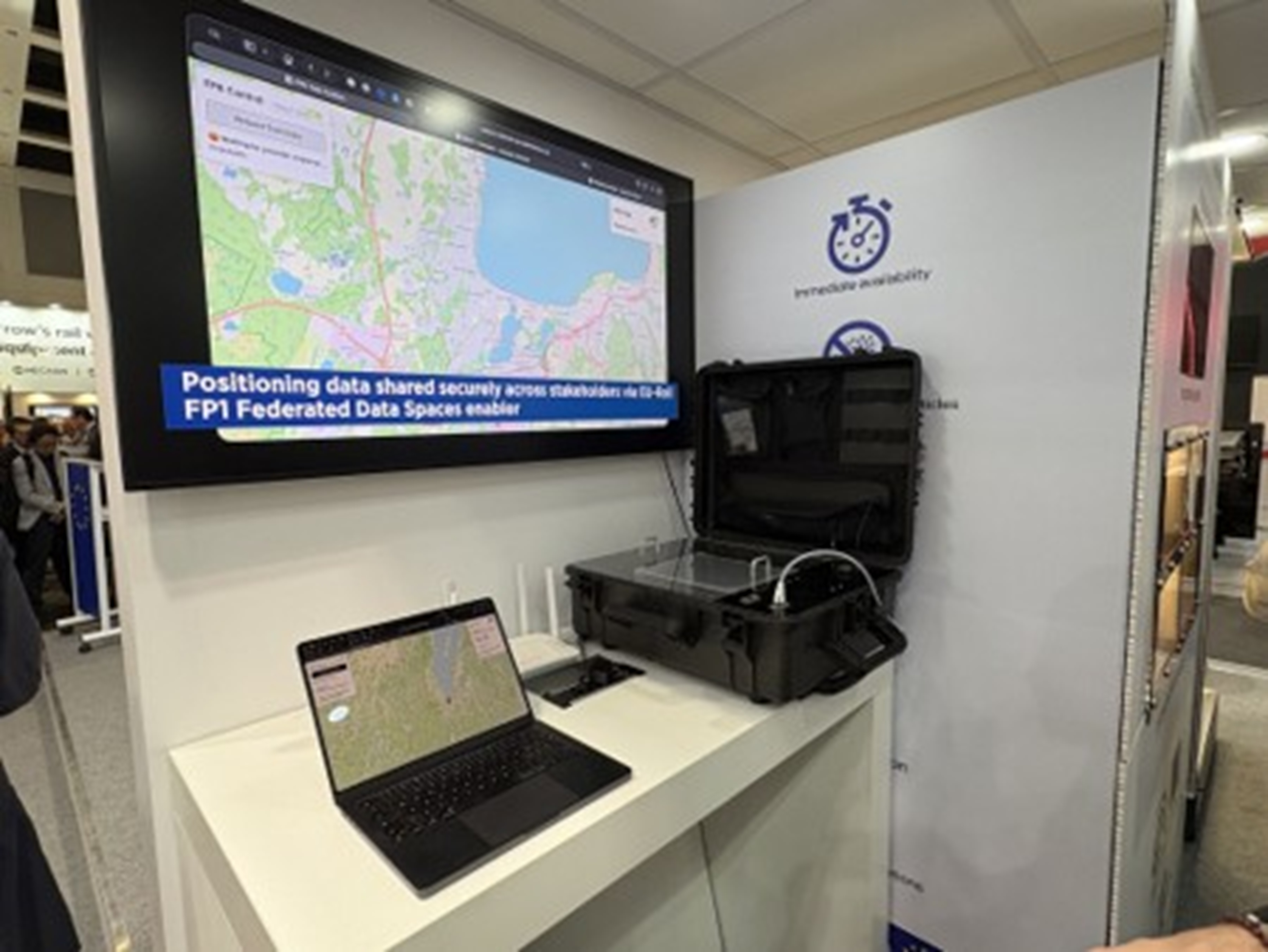
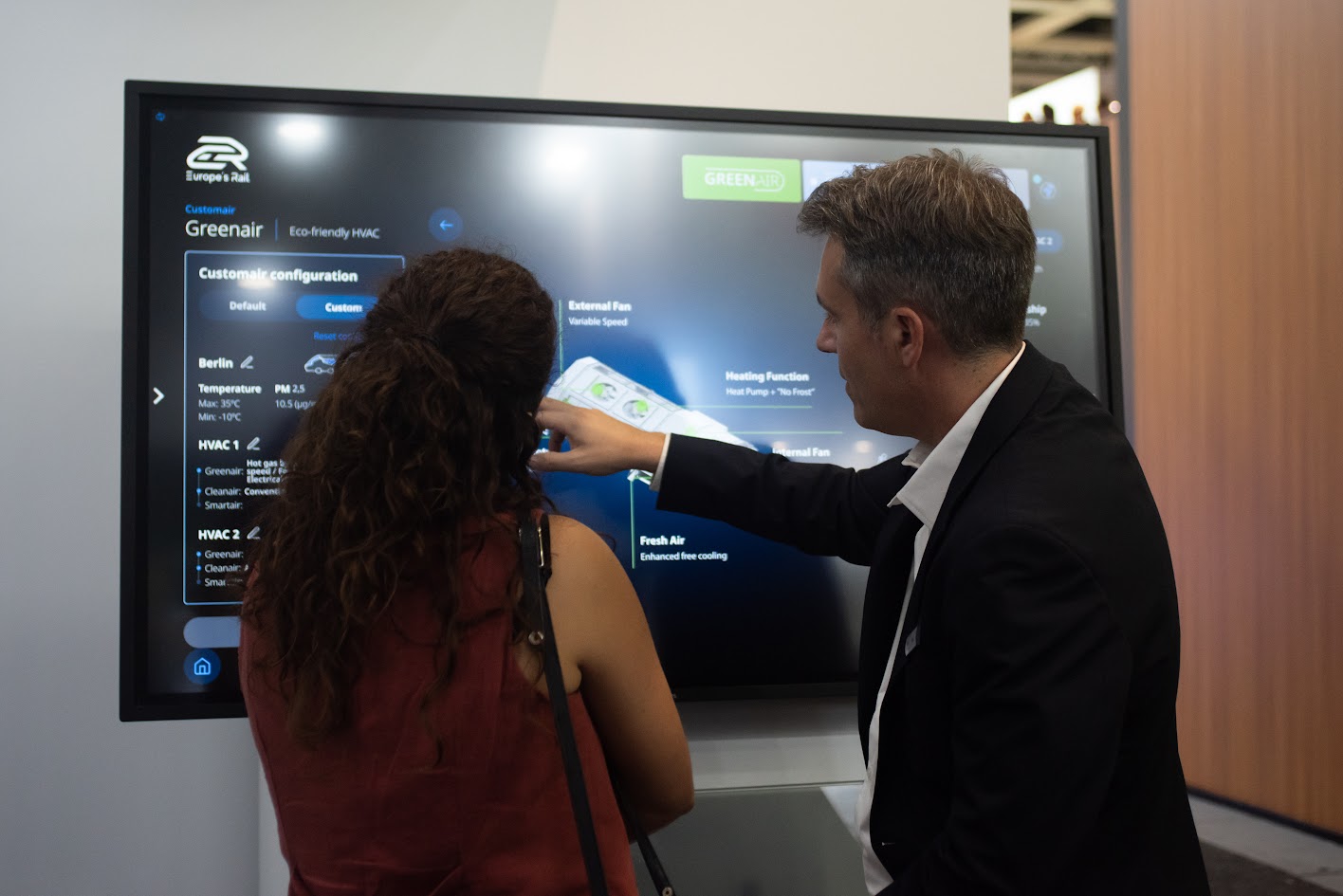
At the European booth, visitors encountered solutions addressing some of the key challenges facing rail transport today. These included pollutant reduction and air quality monitoring, a Digital Twin supporting energy management at Málaga María Zambrano station, and an electro-mechanical brake mock-up showcasing the air-less train concept.
The project’s achievements were also visible across partner booths. PKP presented a video covering its work on green modular stations, hydrogen refuelling stations and Energy Hubs. CEIT displayed the direct-drive motor developed within the project, while DLR showcased a demonstrator including technology to reduce infection risks through efficient aerosol removal. TALGO presented its universally accessible toilet, and Alstom highlighted modularity in rail.
The combined exhibition presence highlighted the range of project-related developments contributing to more sustainable, energy-efficient and accessible railway systems.
-Climate resilience
Milestone MS9, “Preliminary draft of integrated ecological connectivity, biodiversity and climate risk mapping developed with stakeholder feedback”, has been achieved. The work includes European railway risk maps for flooding and extreme heat, helping identify where climate adaptation and biodiversity enhancement should be prioritised.
The “Impact Assessment Tools for Linear Infrastructures” deliverable has also been approved. It reviews more than 100 recent case studies and includes a Delphi study with railway professionals across Europe.
-Biodiversity and CO₂ calculator
Partners are integrating carbon emissions assessment with biodiversity indicators, supported by geospatial data and case studies. Building on the “Impact Assessment Tools for Linear Infrastructures” findings, the calculator aims to combine methodological robustness with practical usability for infrastructure managers.
It will bring carbon and biodiversity considerations together in a single tool, producing results that are meaningful for business and regulatory purposes and supporting railway infrastructure decision-making.
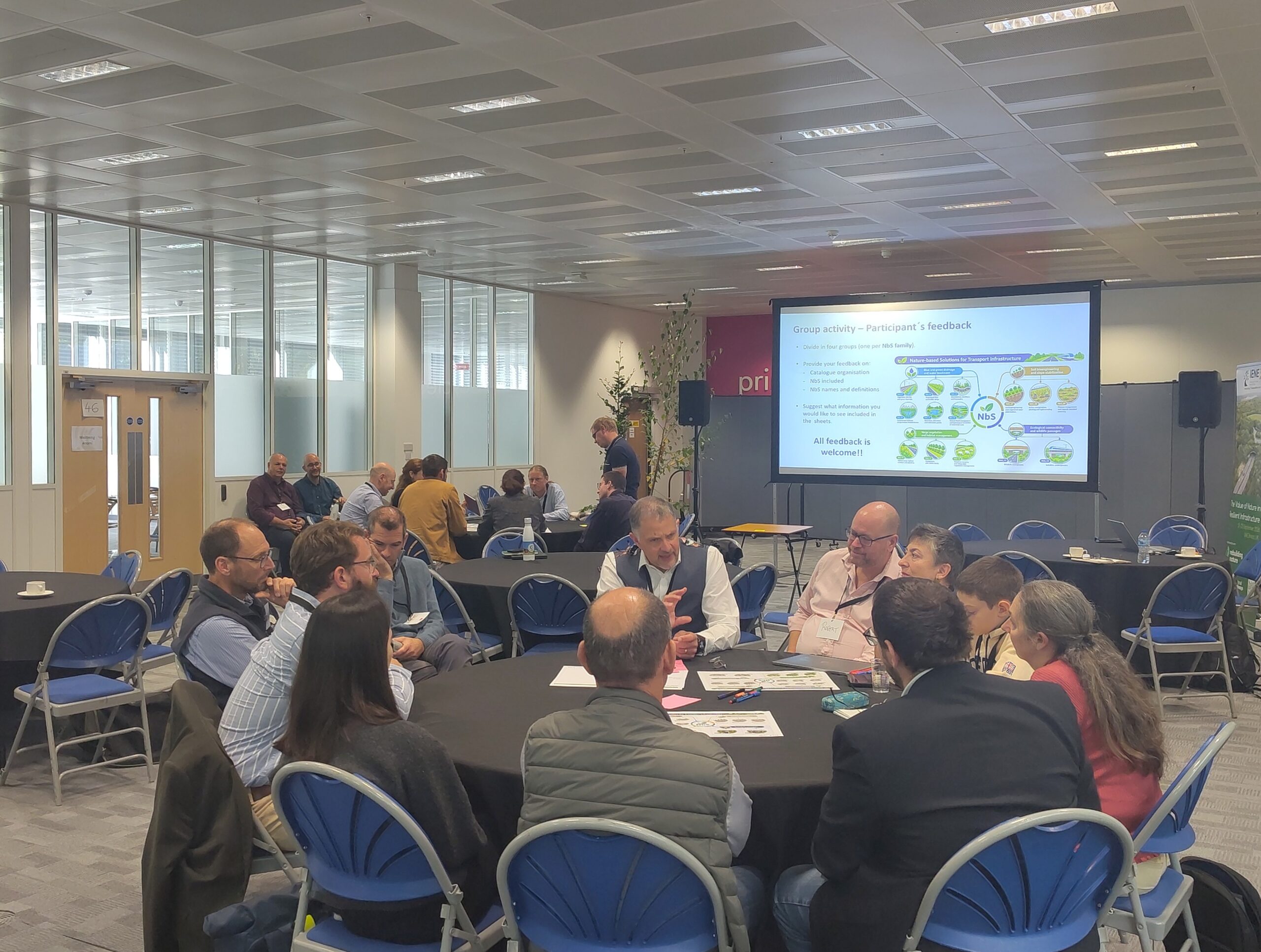
Sharing knowledge and building capacity
The project will also host three free, interactive 90-minute webinars in November and December 2026 for infrastructure professionals in Sub-Saharan Africa.
Through expert insights, real-world case studies and facilitated group discussions, the sessions will explore practical ways to integrate biodiversity conservation and climate resilience into infrastructure planning. Participants will have the opportunity to exchange experiences and identify solutions suited to Sub-Saharan African contexts.
More information on dates and agendas is coming soon.
Join EU-Rail for the final webinar of the 2026 FRMCS series.
Mario Sela, Lead of Working Group 2, will present the findings of the analysis of the main cost drivers associated with FRMCS migration for both trackside infrastructure and rolling stock.
Over the past few months, the FRMCS Deployment Group has carried out a detailed analysis of these cost drivers. Building on this work, a cost modelling tool has been developed to provide greater transparency on how different factors influence the overall cost of FRMCS migration.
The webinar will present the key cost drivers in a clear and accessible way and introduce the first phase of the cost modelling tool.
The event is aimed at representatives of Railway Undertakings (RUs), Infrastructure Managers (IMs), and national and European authorities.
When: 17 November 2026, 10:00–12:00
Where: Online
Registration deadline: 15 November 2026

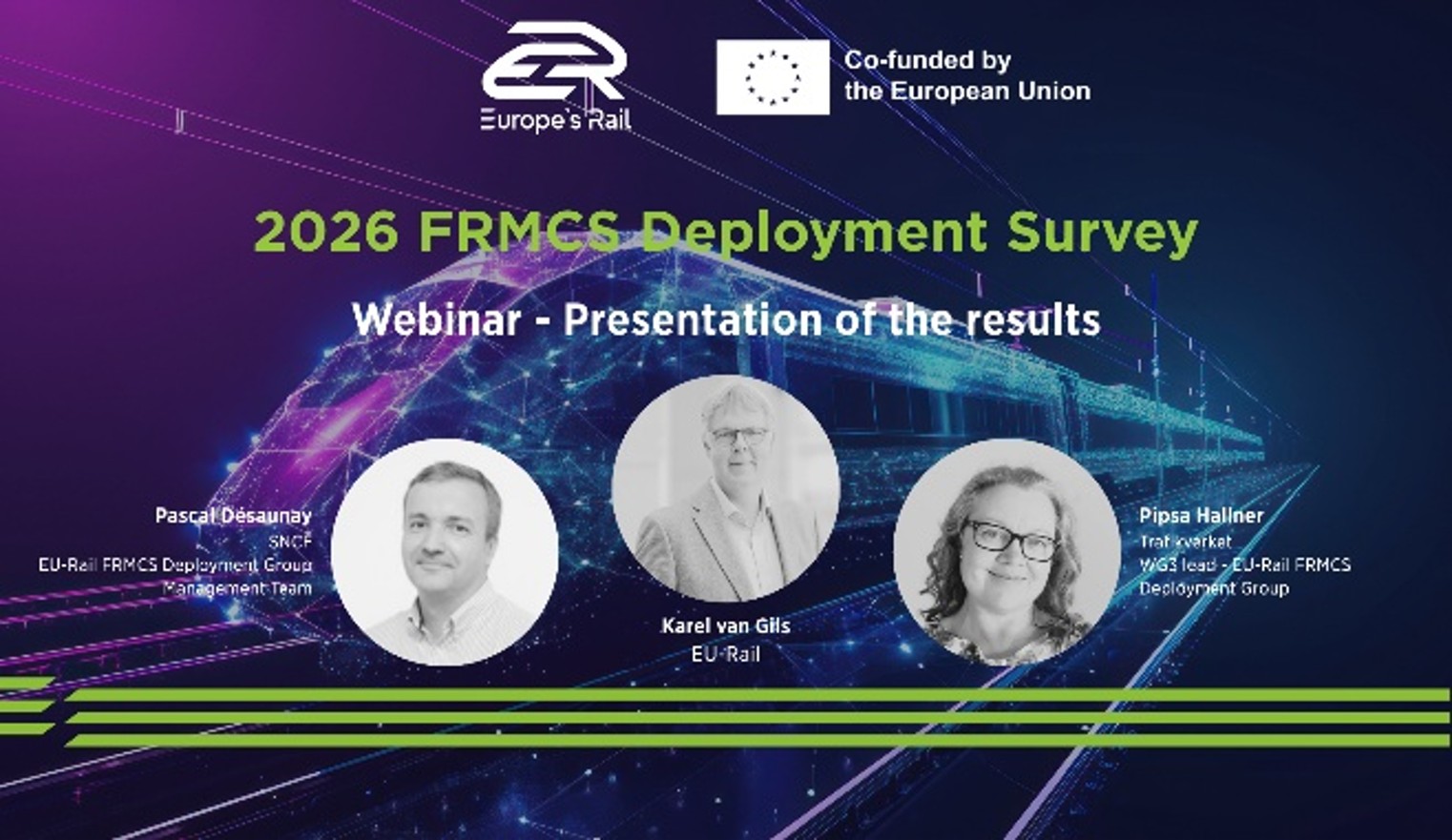
On 7 October, more than 120 gathered for the presentation of the results of the Deployment Survey as the third EU-Rail FRMCS webinar took place. With FRMCS specifications being finalised and testing progressing, the survey shows a clear shift from awareness to active involvement across the sector.
Karel van Gils, EU-Rail Senior Programme Manager/Seconded National Expert, presented the work of the FRMCS Deployment Group, while Pipsa Hallner (Trafikverket) and Pascal Désaunay (SNCF) presented the key findings on behalf of EU-Rail.
What stood out? First, Infrastructure Managers and industry showed very strong interest in MNOs. Second, half of the trainsets to be equipped with FRMCS will never be equipped with ETCS. Furthermore, funding remains unresolved, and authorisation is still a burden, with fast processes expected for Voice-only trains and for error correction, including cybersecurity threats. Industrial capacity for deployment also needs further investigation.