Europe’s Rail Newsletter – October Edition 📩 Discover the October Newsletter! 🚆 Explore the latest developments across...
EU-Rail October 2026 Newsletter
read more

A body of the
European Union

Access the list of all EU-Rail Calls for Proposals.

On 21 June 2024, the Governing Board of Europe’s Rail Joint Undertaking (EU-Rail) adopted a Call for Expression of Interest (CEI) with a view to selecting associated members with the potential to contribute to the achievement of its objectives. The Governing Board decision can be accessed here.
Discover detailed information about procurment rules and information.
Access detailed information about past tenders.

Europe's Rail regularly published Calls for Tenders. To find out about open Calls, follow link below.
Article 15 (Principle of transparency) of the EU-Rail financial rules states that the JU shall make available on its internet site no later than 30 June of the following financial year information on the recipients of funds deriving from its budget.

EU-Rail’s Innovation Pillar (IP) is tasked to deliver operational and technological solutions that contribute to a more efficient, flexible, and demand-led, yet safe and environmentally sustainable European railway system.
The System Pillar provides governance, resource, and outputs to support a coherent and coordinated approach to the evolution of the rail system and the development of the system view.

The Deployment Group advises the EU-Rail Governing Board on the market uptake of rail innovation developments and support their deployment.
For a successful and effective implementation of the Digital Automatic Coupler for European rail freight (DAC), it is of crucial importance to have open, close and efficient cooperation between rail stakeholders. The European DAC Delivery Programme enabled by Europe’s Rail, offers a unique European platform for such cooperation and collaboration.

Discover how Europe’s Rail Joint Undertaking is calling for a bold, coordinated investment strategy to simplify and modernise rail systems across the EU. This public-private partnership model – outlined in our High-Level Paper – proposes an €18 billion investment from 2028 to 2034 to strengthen European competitiveness, deliver greener transport, and drive technological sovereignty.

The Shift2Rail Joint Undertaking is the predecessor programme of the Europe's Rail Joint Undertaking (EU-Rail), established by Council Regulation (EU) 2021/2085 of 19 November 2021.
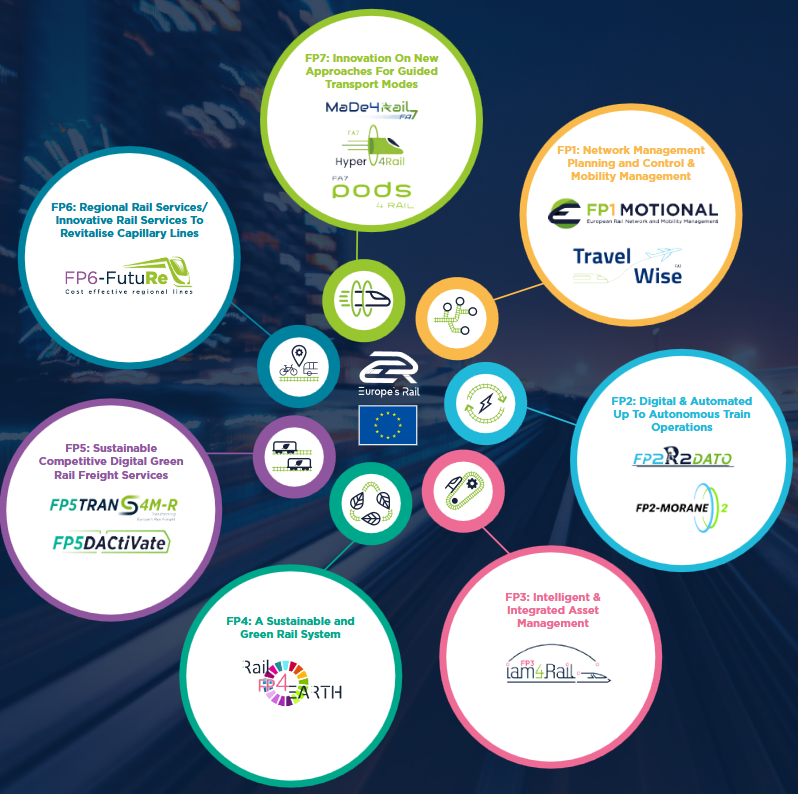
Discover detailed information on Europe's rail innovation initiatives, showcasing flagship and other projects aimed at enhancing rail systems across Europe. It highlights collaborative efforts funded by the European Union to develop sustainable, efficient, and competitive rail transport solutions.
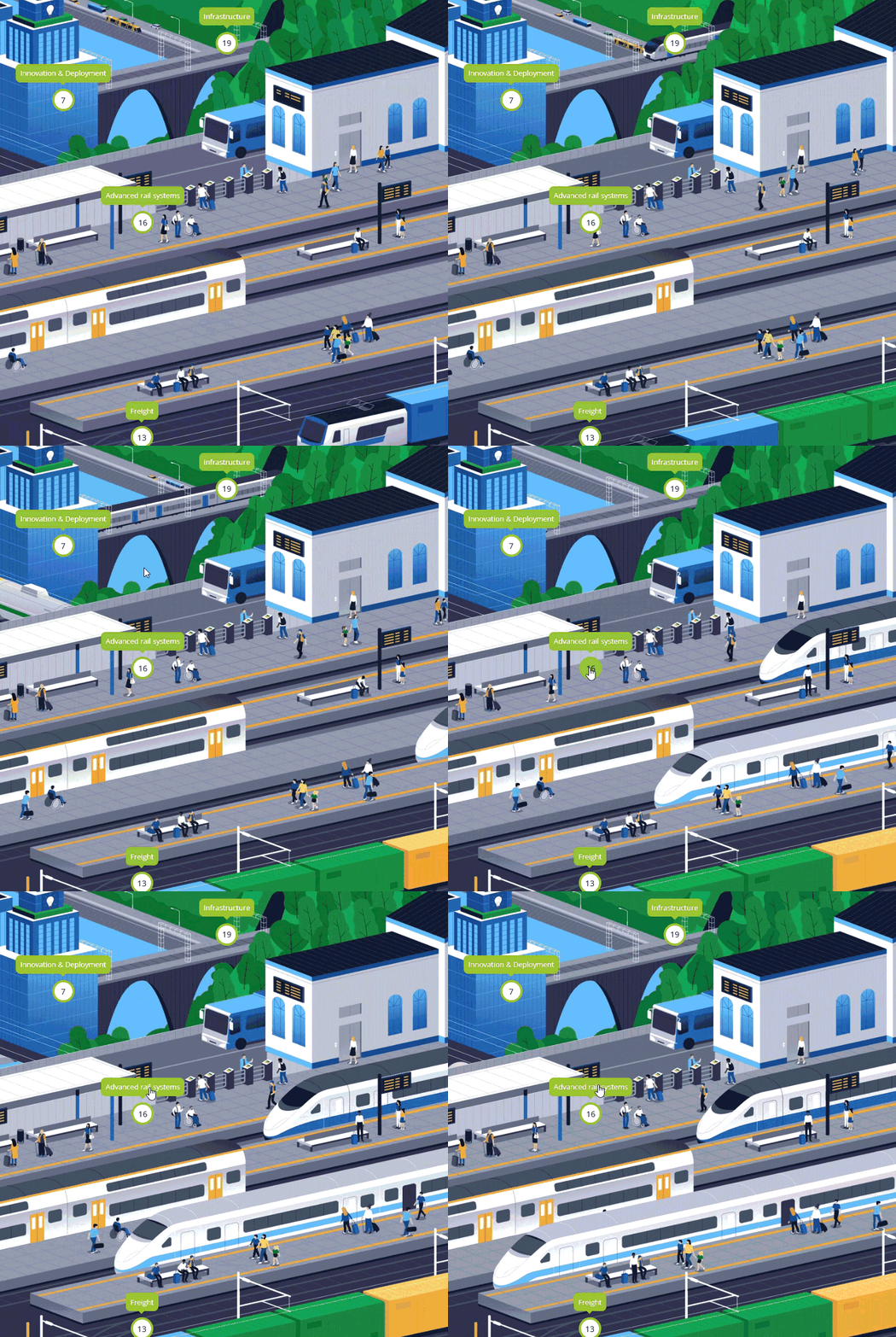
It showcases successful research and innovation results, highlighting their potential as market-ready solutions and the benefits they offer to rail stakeholders. It also emphasises how integrating demonstrators into market solutions can drive future rail innovation capabilities.
Europe’s Rail Joint Undertaking (EU-Rail) is the European partnership on rail research and innovation established under the Horizon Europe programme (2020-2027) and the universal successor of the Shift2Rail Joint Undertaking.

Find out the full list of Europe's Rail Members.

Discover the full structure and governance of Europe's Rail, including the decisions of the Governing Board.
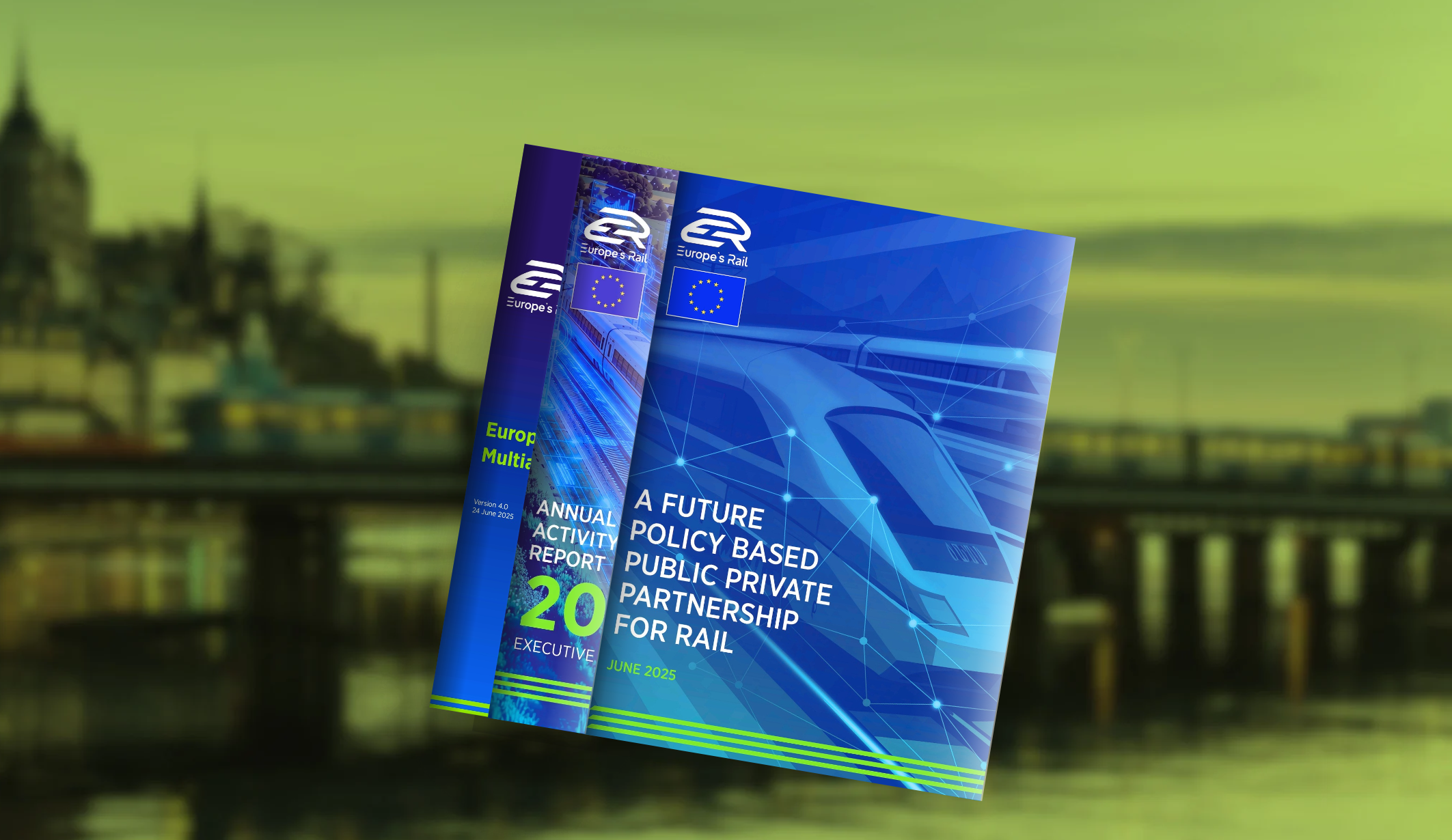
Get access to Europe's Rail main reference documents, including Annual Work Plans, Annual Activity Reports, Annual Accounts and other important information.
Europe’s Rail Joint Undertaking (EU-Rail) is established by Council Regulation (EU) 2021/2085 of 19 November 2021. It is the new European partnership on rail research and innovation established under the Horizon Europe programme (2020-2027) and the universal successor of the Shift2Rail Joint Undertaking.

OUR VISION

This partnership aims to accelerate research and development in innovative technologies and operational solutions.
Support the fulfilment of European Union policies and objectives relevant for the railway sector and the competitiveness of the rail sector and the European rail supply industry.
EU-Rail will accelerate the penetration of integrated, interoperable and standardised technological innovations necessary to support the Single European Railway Area (SERA).
Objective to reach climate neutrality by 2050.
Sets medium-term greenhouse gas emissions reduction objectives.
Sets the path to bring Europe to the forefront of digitalisation and automation.
Articulates the pathways towards digitalising and greening the transport sector and sets specific milestones for the railway sector.
Aims at enhancing Europe’s industrial competitiveness, including in sectors at the forefront of the green and digital transitions such as the rail supply industry.
These Union policy goals are a major reason for the railway sector to undergo a significant transformation – increasing its capacity for passenger and goods transport, enabling an increase in the use of rail transport, and reducing further the greenhouse gas emissions of the railway sector itself. To achieve this change, the sector must address different challenges such as the change in customer requirements, the need for improved performance and capacity, climate change, or the increase of competition.

IMPACT
EU-Rail will provide technological and operational solutions to lead the transformation of the rail sector, working towards the twin green and digital transition of Europe.
The delivery of the objectives will contribute towards addressing the identified challenges of rail and is expected to impact the rail sector in different ways.
Through the development of cutting edge technologies designed to be implemented across the whole EU rail network, EU-Rail will help increase capacity and support smart and cost-efficient rail connectivity, key to future sustainable mobility systems
EU-Rail outputs are expected to help improve the efficiency of the rail system and reduce overall lifecycle costs, including on less used lines. This will be achieved while contributing to a more sustainable transport and mobility system.
Increasing the research and innovation intensity of the European rail supply industry will enhance its capacity to retain its global leadership.
EU-Rail will support the sector in coordinating on a common evolution of the system, and a greater harmonisation to support the delivery of the Single European Rail Area.